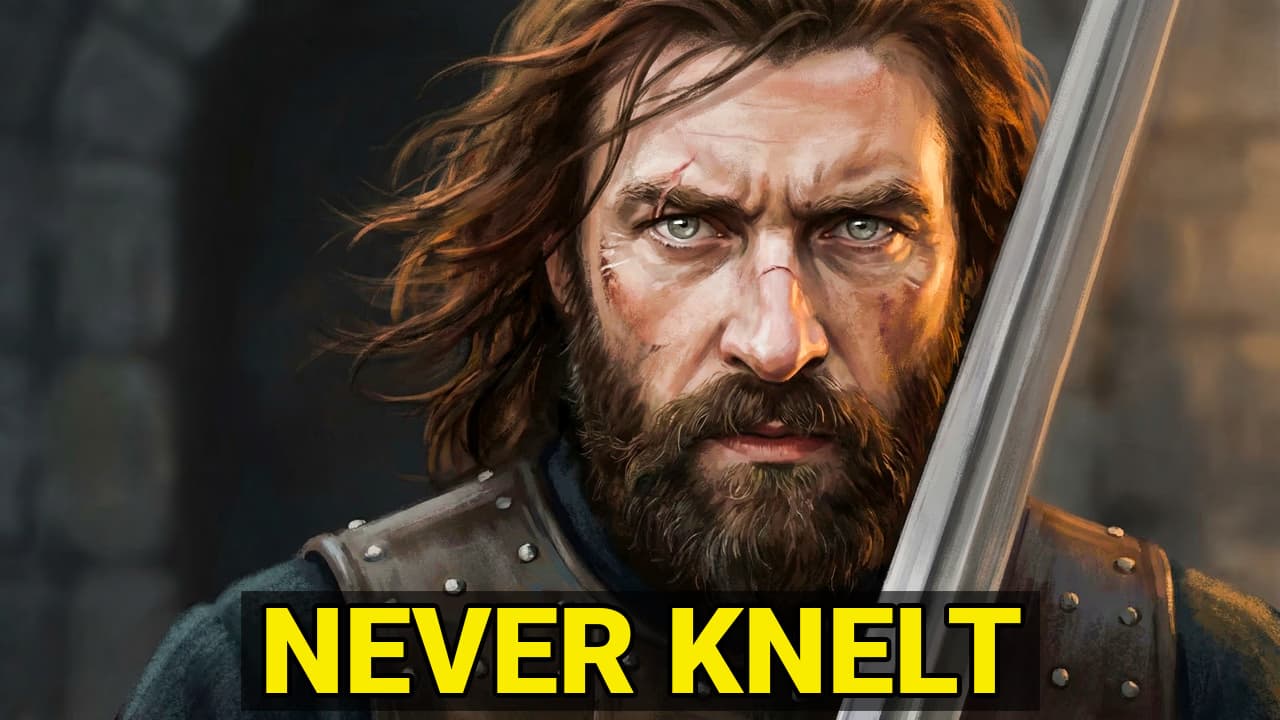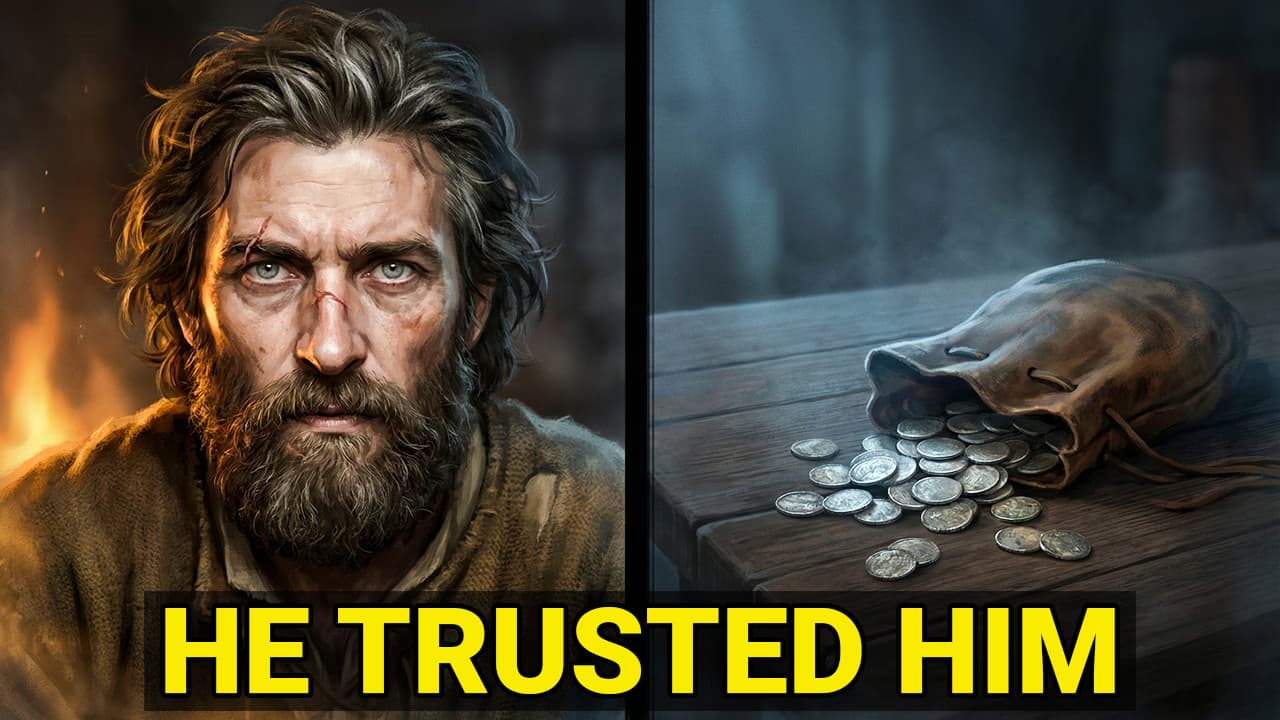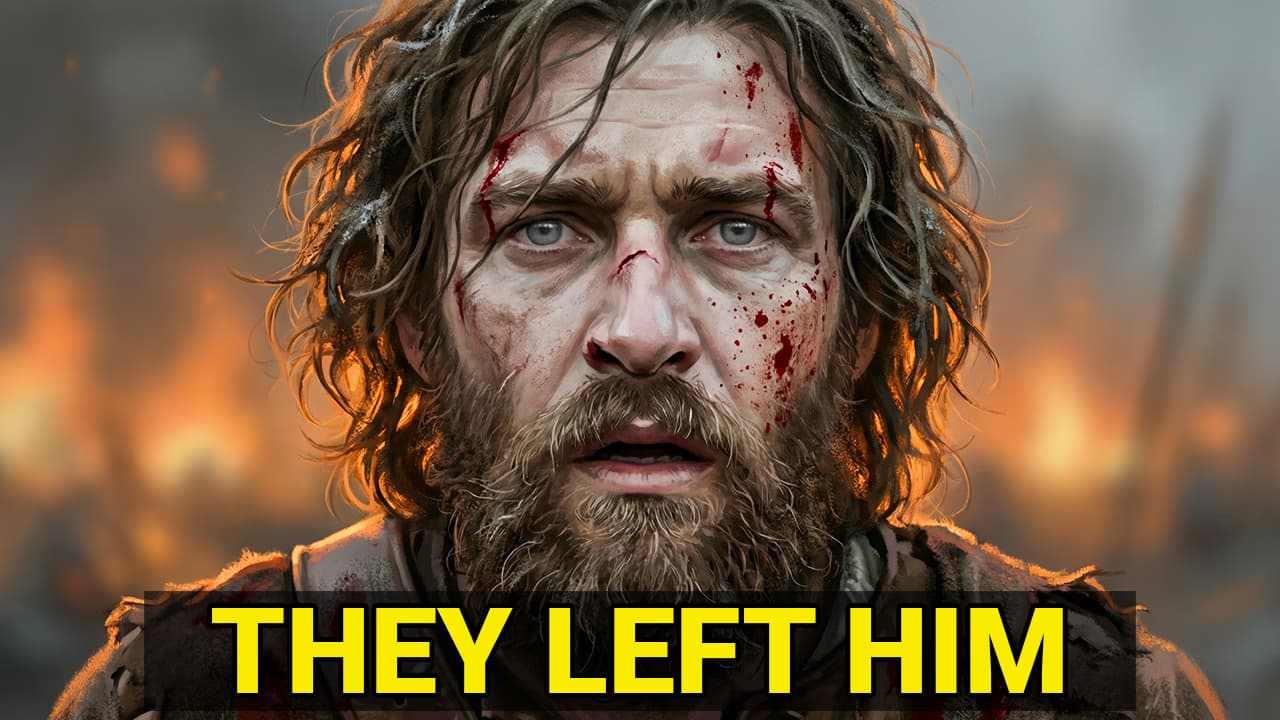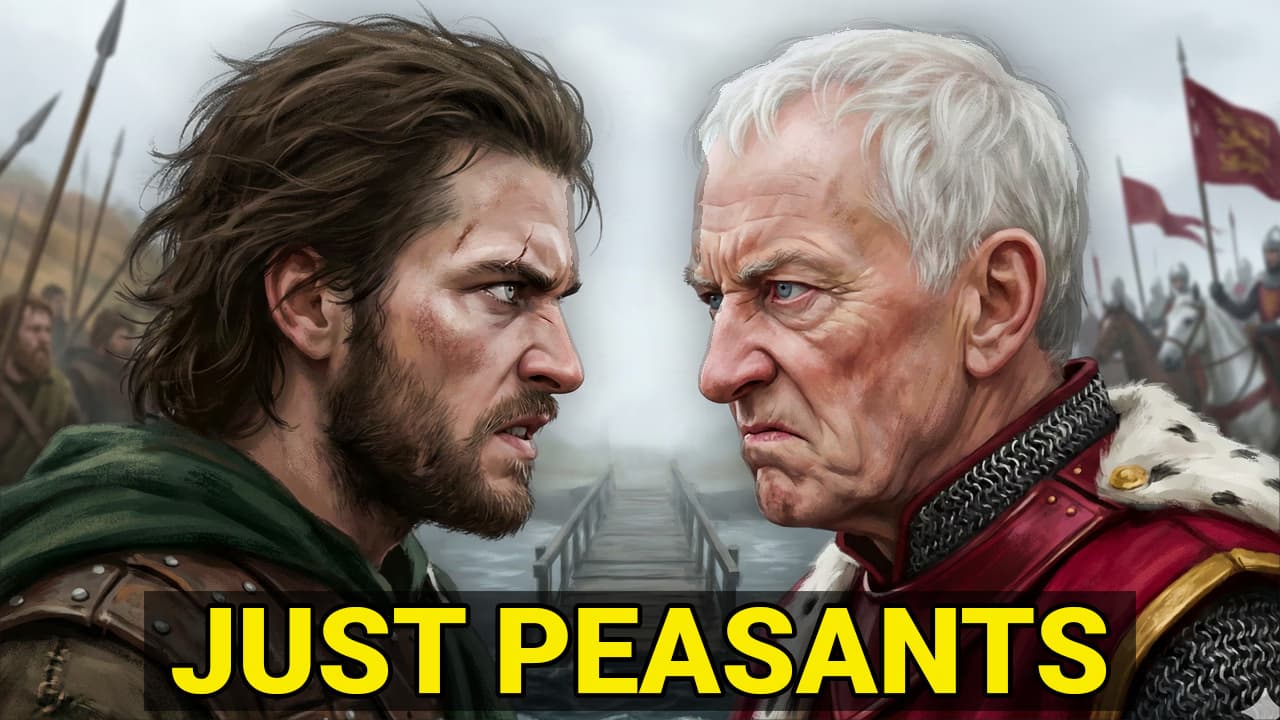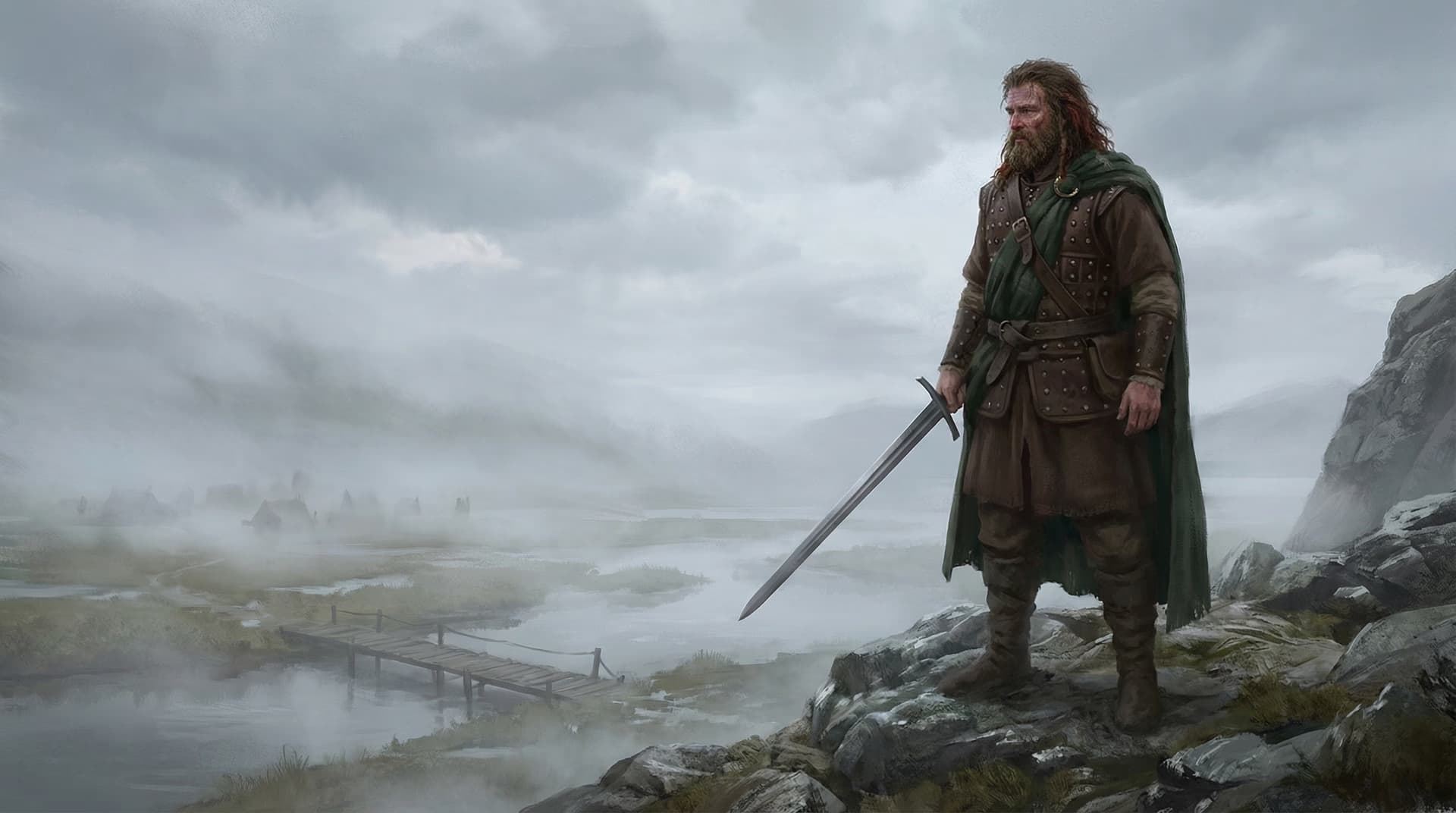
- Known for
- Leading the Scottish rebellion and victory at the Battle of Stirling Bridge
- Fatal flaw
- Trusted the wrong people, betrayed by the nobles he fought for and the servant who slept beside him
The Story
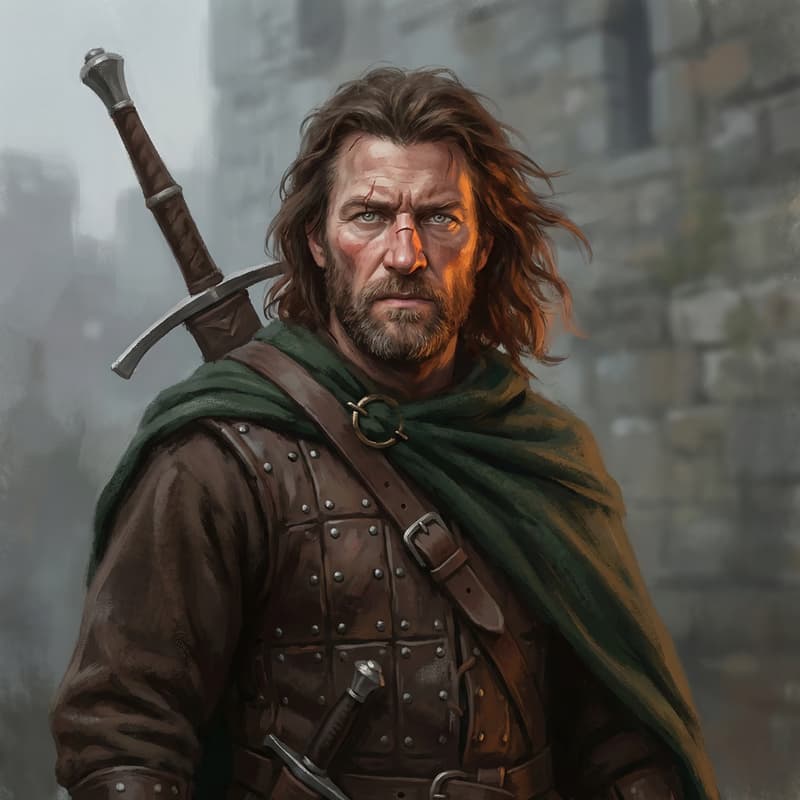
May 1297. A tall man walks out of a sheriff's quarters in Lanark with blood on his hands and a dead Englishman behind him. He has no army, no title, no political connections. He is the second son of a minor knight, the kind of man who inherits nothing and matters to no one.
Within four months, he will command eight thousand men. He will lure ten thousand English soldiers onto a narrow bridge and slaughter five thousand of them in three hours. He will skin the English treasurer alive and wear the man's flesh as a sword belt. He will be knighted, named Guardian of Scotland, and become the most feared name in Britain.
Within seven years, he will be dead. Hanged, disemboweled, beheaded, and quartered. His body parts nailed up in four cities. His head rotting on a spike above London Bridge.
William Wallace's story is not a story about victory. It is a story about what happens when the wrong man, the right man, fights a war that the people who should have fought it refused to fight. He won the battle that no one thought could be won. He lost the war because the men above him decided that losing to England was preferable to winning under a commoner.
He was born around 1270 in Elderslie, Renfrewshire. His father was a minor landholder who owed service to James Stewart, the High Steward of Scotland. William was the second son, destined for the church or the sword, but never for land, never for power, never for the histories. A priest uncle taught him Latin. His brother taught him to fight. Scotland was peaceful then, and neither skill seemed likely to matter.
Then King Alexander III's horse stumbled on a cliff path in 1286, and the king broke his neck. And the peace broke with it.
Personality & Motivations
Wallace was not a politician. He was not a diplomat. He was a man who killed the Sheriff of Lanark with such violence that the chronicles struggle to describe it, then gathered thirty men and kept killing until there was no one left to kill or until someone killed him first.
What drove him was not ambition. A man seeking power would have knelt at Irvine with the nobles, taken English gold, and lived to old age. What drove him was rage. The English had stolen Scotland's crown, garrisoned its castles, taxed its people into ruin, and erased its independence from the map. The nobles who should have resisted chose surrender. Wallace could not. Something in him, stubbornness, pride, fury, patriotism, or some alloy of all four, made submission impossible.
He led from the front. He shared the mud and the hunger with the farmers who followed him. He had the charisma to convince men who owned nothing but a spear that they could kill armored knights. At his trial in Westminster Hall, denied the right to speak, he spoke anyway: "I could not be a traitor to Edward, for I was never his subject." It was legally true. It was also the most dangerous thing a commoner could say to a king. Wallace said it with the same certainty he had carried since Lanark, that Scotland existed, that it deserved to exist, and that someone had to fight for it even if everyone else had stopped.
What Most People Get Wrong
Most people think William Wallace was a poor Highland farmer who painted his face blue and wore a kilt into battle. That image comes from Braveheart, and almost none of it is true.
Wallace was not a peasant. He was the son of a knight, minor nobility, educated by a priest uncle who taught him Latin and French. He could read and write in an era when most kings couldn't. The kilt didn't exist in 13th-century Scotland. Neither did the blue face paint. That tradition belonged to the Picts, a thousand years earlier. And the title "Braveheart" was never Wallace's. It belonged to Robert the Bruce. After Bruce died in 1329, his friend James Douglas carried the king's embalmed heart on crusade and hurled the casket at the enemy, crying "Lead on, Brave Heart, Douglas will follow thee or die." Hollywood gave Wallace another man's nickname, another era's costume, and a peasant's backstory. The real Wallace was more interesting: a literate, Latin-speaking minor nobleman who chose to fight when every man of higher rank chose to kneel.
Key Moments
Lanark, May 1297. The killing of Sheriff William Heselrig was the match that lit the fire. The chronicles hint at a personal motive, a woman, perhaps killed by Heselrig's men. Whatever the trigger, Wallace did not merely kill the sheriff. He butchered him. And then he did not run. He gathered men and attacked the English garrison at Scone, driving out the justiciar William de Ormesby. The rebellion had begun.
Stirling Bridge, September 11, 1297. The masterpiece. Wallace and Andrew Moray positioned eight thousand Scots on the high ground of Abbey Craig and waited while the English funneled across a bridge too narrow for two horses. When half the English army had crossed, Wallace sealed the bridge and slaughtered them in the marshland below. Five thousand English dead. The treasurer Hugh Cressingham flayed and his skin cut into strips. Wallace knighted and named Guardian. It was the most complete Scottish victory in living memory, won by farmers against professional soldiers, by a commoner against an empire.
Falkirk, July 22, 1298. The disaster. Edward I marched north with fifteen thousand men, including Welsh longbowmen who would change warfare forever. Wallace's scorched earth strategy had Edward's army starving and days from retreat, until two Scottish earls, Umfraville and Dunbar, rode into Edward's camp and revealed Wallace's position. On an open field, with no bridge to funnel the enemy, the schiltrons that had been unbreakable at Stirling became targets. The Scottish cavalry under John Comyn fled without fighting. English arrows fell like rain on men who had no armor. Wallace's closest friend, Sir John de Graham, died in the carnage. Wallace escaped, but everything he had built was destroyed in an afternoon.
The Exile, 1299-1303. After resigning as Guardian, Wallace sailed for France carrying letters begging for foreign aid. King Philip IV received him at court. He may have traveled to Rome to petition Pope Boniface VIII. No help came. The deposed King John Balliol was released into French custody and never returned. Wallace came home with nothing to a Scotland that had surrendered completely. Every noble had submitted, every castle flew English banners.
Robroyston, August 3, 1305. Jack Short, Wallace's own servant, sold his location to Sir John de Menteith for thirty pounds. Menteith's men broke down the door while Wallace slept. No fight. No last stand. The most wanted man in Britain taken in his nightclothes by a man he had trusted.
The Detail History Forgot
Weeks after slaughtering five thousand Englishmen at Stirling Bridge, Wallace sat down and wrote a letter to the merchants of Lubeck and Hamburg in Germany. Not a war declaration. Not a plea for military aid. A trade letter.
Dated October 11, 1297, the Lubeck Letter informed German merchants that "the kingdom of Scotland, thanks be to God, has been recovered by war from the power of the English" and invited them to resume trading. It was signed by both Wallace and Andrew Moray, bearing Wallace's personal seal, which, curiously, gives his father's name as Alan Wallace, contradicting later accounts that named him Malcolm. The letter survived by accident: Lubeck's medieval archives ended up in a Soviet archive after World War II, were returned to Germany in 1990, and the letter was rediscovered. It remains the only original document bearing Wallace's seal. The man who had just skinned an English treasurer and worn his flesh as a belt was, weeks later, calmly negotiating international commerce. He was not just a warrior. He was trying to run a country.
The Downfall
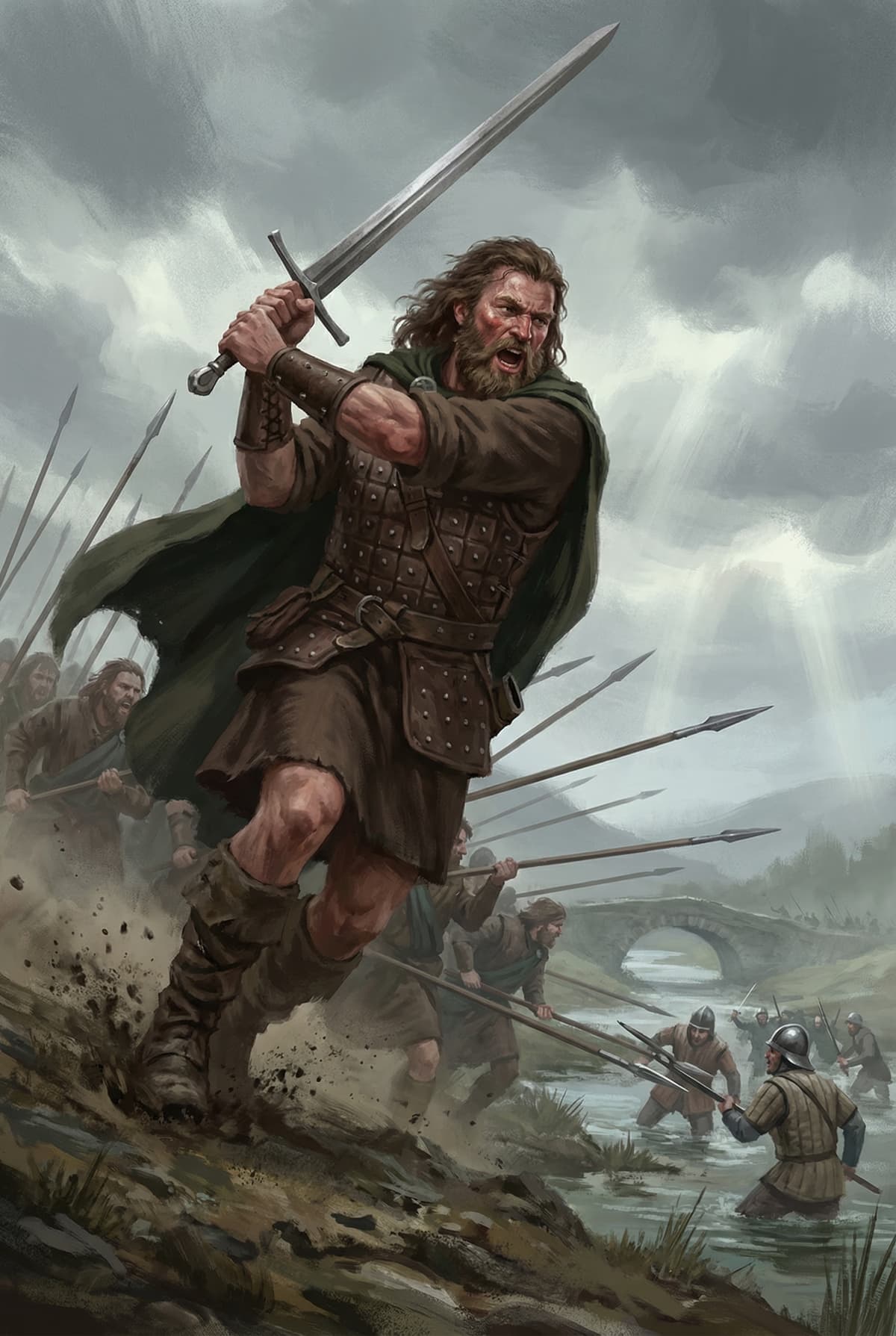
Wallace's fatal flaw was not tactical. It was social. He was a commoner leading a country whose power structure demanded noble blood. He won the most spectacular victory Scotland had ever seen, and the earls still despised him. He burned seven hundred English villages, and the lords still considered him beneath them. He was Guardian of Scotland, and the men who should have been his allies spent their energy undermining him instead.
At Falkirk, the betrayal was not accidental. The earls who revealed his position to Edward chose destroying Wallace over defeating England. The cavalry that fled the field chose Wallace's failure over their own risk. The nobles had calculated that an English-controlled Scotland with them in power was better than a free Scotland led by a man who had no right to lead.
After Falkirk, Wallace spent seven years as a fugitive. He could have submitted. Every other Scottish leader had. Edward would have given him land, a title, a comfortable life. Wallace refused. He went back to raiding, ambushing, fighting a one-man war against an empire that had already won. He did this not because he thought he could win, but because he could not accept the alternative.
When they finally caught him, they made his death a spectacle. Dragged naked through London. Hanged until nearly dead. Castrated. Disemboweled while conscious, his entrails burned before his eyes. Beheaded. Quartered. His head tarred and spiked on London Bridge. His limbs sent to Newcastle, Berwick, Stirling, and Perth.
Edward designed the execution to end the rebellion. Instead, he created the martyr that would reignite it. Within six months, Robert Bruce murdered his rival and crowned himself king. Within nine years, Scotland crushed the largest English army ever assembled at Bannockburn. The commoner who was never supposed to matter had proven that Scotland would fight. The king who came after him proved that Scotland could win.
Wallace never saw it. His head was still rotting above the Thames when the freedom he died for was finally taken by someone the nobles considered worthy of holding it.