
- Known for
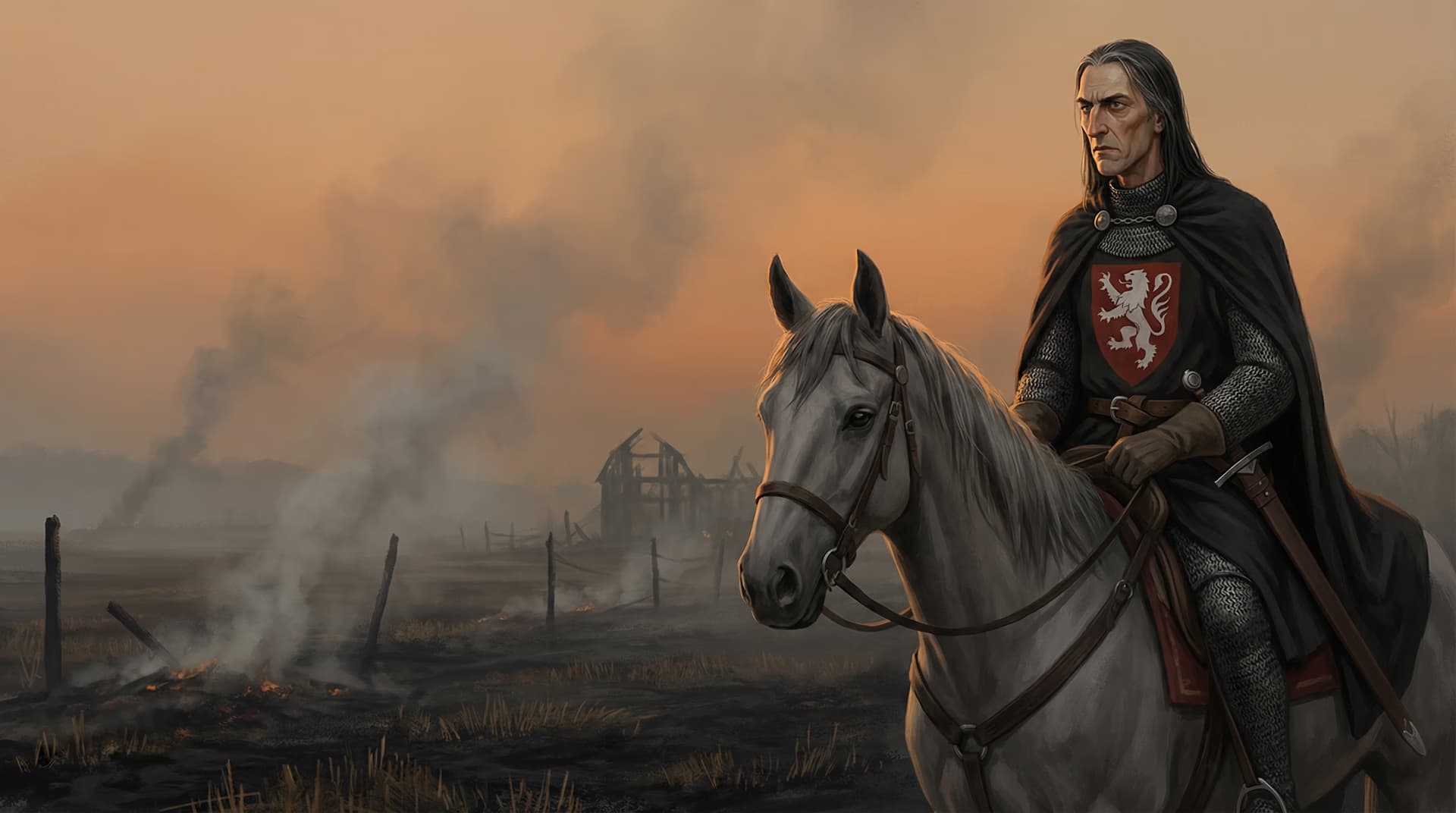
- Betraying William Wallace's position to Edward I before Falkirk, a lifetime of switching sides, and founding a dynasty that survived by never committing to one
- Fatal flaw
- Survival at any price, he kept his earldom through every betrayal but left a name that nobody trusts
The Story
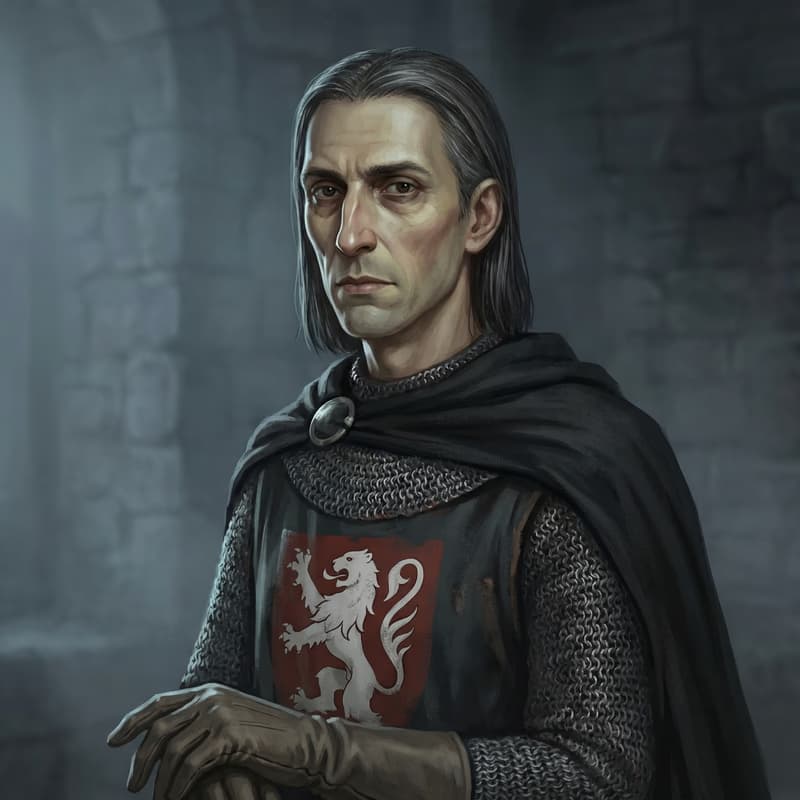
March 25th, 1296. Wark, Northumberland. Patrick, Earl of Dunbar and March, kneels before King Edward I of England and swears fealty. He is among the first Scottish nobles to submit, months before the main Ragman Rolls ceremony forces the rest of the kingdom to kneel. His timing is not accidental. Patrick always moves first.
While he kneels at Wark, his wife Marjory Comyn is opening the gates of Dunbar Castle to the Scottish army. The most strategically important fortress on the eastern Scottish coast, Patrick's own home, is being garrisoned against the king to whom Patrick has just sworn loyalty. When the English army arrives at Dunbar in April, Marjory's brother Alexander Comyn, Earl of Buchan, is among the prisoners taken in the catastrophic Scottish defeat outside the walls.
Patrick's wife has defied him. His brother-in-law has been captured in a battle fought at his own castle. And Patrick is standing on the English side, watching it happen.
This is the essential Patrick. A man who always picks a side, never stays on it, and somehow keeps his estates through every reversal. He swore to Edward in 1296. He switched to Wallace in 1297. He switched back to Edward in 1298, just in time to ride into the English camp and reveal exactly where Wallace was hiding. Three changes of loyalty in two years. And when the killing at Falkirk was over, Patrick was still standing, still an earl, still holding the most important border territory in Scotland.
Personality & Motivations
The Earls of Dunbar were not ordinary Scottish nobles. They were the border itself. Their lands stretched across Berwickshire, Peeblesshire, Selkirkshire, and Roxburghshire, the entire eastern Scottish frontier. Dunbar Castle commanded the coast road between England and Scotland. Whoever held Dunbar controlled the main invasion route.
Patrick's family had been managing this impossible position for two hundred years. They descended from Gospatric, the Anglo-Saxon Earl of Northumbria, who fled England after the Norman Conquest and received the Dunbar lordship from King Malcolm III around 1072. The family held English lands too, the barony of Beanley in Northumberland, recorded with three knights' fees. They were cross-border magnates, collecting rents in two kingdoms, and survival meant never fully committing to either one.
Patrick took this strategy to its logical extreme. He was one of the "seven earls of Scotland," a body that claimed the ancient right to elect kings in disputed successions. He had even entered a formal claim to the Scottish throne during the Great Cause of 1291, arguing descent from King William the Lion through his great-grandmother Ada. The claim was weak and he withdrew it in November 1292, but the fact that he filed it at all reveals a man who believed his blood was royal and his importance undeniable.
He married into the Comyn family, the most powerful noble house in Scotland. His wife Marjory was the daughter of Alexander Comyn, Earl of Buchan. This should have locked him into the Comyn-Balliol faction that dominated Scottish politics. Instead, he treated the marriage as one more asset to be leveraged, fighting on the English side while his wife fought on the Scottish one.
What Most People Get Wrong
Most people treat Patrick as a simple traitor, a coward who sold out Wallace for English favor. The reality is that Patrick was doing what his family had done for two centuries: surviving. The Earls of Dunbar held the most exposed position in Scotland, directly on the border with England. Every time an English army marched north, it came through their territory. Every time a Scottish army marched south, it gathered on their lands.
The family's survival strategy was deliberate hedging. Patrick swore to Edward early because Edward's army was coming through his front door. He switched to Wallace after Stirling Bridge because English power in Scotland had collapsed. He switched back to Edward before Falkirk because the English army was back and Wallace's scorched-earth strategy was burning Patrick's own estates. Every switch was rational. Every switch served the earldom. The fact that thousands of men died at Falkirk because of his last switch was, from Patrick's perspective, someone else's problem.
Key Moments
The Great Cause, 1291. Patrick formally enters his claim to the Scottish throne, one of thirteen Competitors. His case rests on descent from an illegitimate daughter of King William the Lion. He withdraws in November 1292, but the claim establishes his family's pretension to royal blood and their place among Scotland's most powerful earls.
Wark, March 1296. Patrick is among the first Scottish nobles to swear fealty to Edward I, doing so at Wark in Northumberland alongside Gilbert de Umfraville, Robert Bruce the Elder, and Robert Bruce, Earl of Carrick. He picks the English side before the war has properly begun.
Dunbar Castle, April 1296. Patrick's wife Marjory Comyn opens Dunbar Castle to the Scottish army, defying her husband's English allegiance. The Battle of Dunbar follows. The Scots are routed and over a hundred Scottish lords are captured, including Marjory's own brother. Patrick's castle has been used against his chosen side by his own wife.
Scotland, 1297. After Wallace's victory at Stirling Bridge transforms the political landscape, Patrick abandons Edward and returns to the Scottish fold. He is "favourably received by Sir William Wallace," the chronicles note, despite having been on the English side the previous year. Wallace needs every earl he can get. Patrick needs to be on the winning side.
Falkirk, July 1298. Patrick and Umfraville ride to Edward's camp. They reveal Wallace's position near Falkirk and his plan for a night attack. Edward force-marches his army through the darkness. By dawn on July 22nd, the trap is set. Patrick's son, also named Patrick, fights alongside his father in the English army at the battle.
Caerlaverock, 1300. Patrick and his son serve in Edward's army at the siege of Caerlaverock Castle in Galloway. The contemporary French poem about the siege describes both men's heraldic arms, father and son fighting side by side for the English Crown.
The Detail History Forgot
Patrick's claim to the Scottish throne in 1291 was not as absurd as it appears. The Earls of Dunbar traced their lineage to Gospatric, the Anglo-Saxon Earl of Northumbria, who was himself descended from both the house of Bamburgh through Uchtred the Bold and possibly from Crinan of Dunkeld, father of King Duncan I. Through his great-grandmother Ada, Patrick also claimed descent from King William the Lion, who reigned from 1165 to 1214.
The Dunbars had royal blood on both sides of the border. Gospatric II, the second earl, was listed among the "seven earls of Scotland" in 1115, a body that claimed the ancient right to elect a king in disputed successions. Patrick was asserting a privilege his family had held for nearly two hundred years. He did not think of himself as a minor border lord playing politics. He thought of himself as a kingmaker who happened, through bad luck and bad timing, to be standing on the wrong side of the border when the wrong army came through.
The Downfall
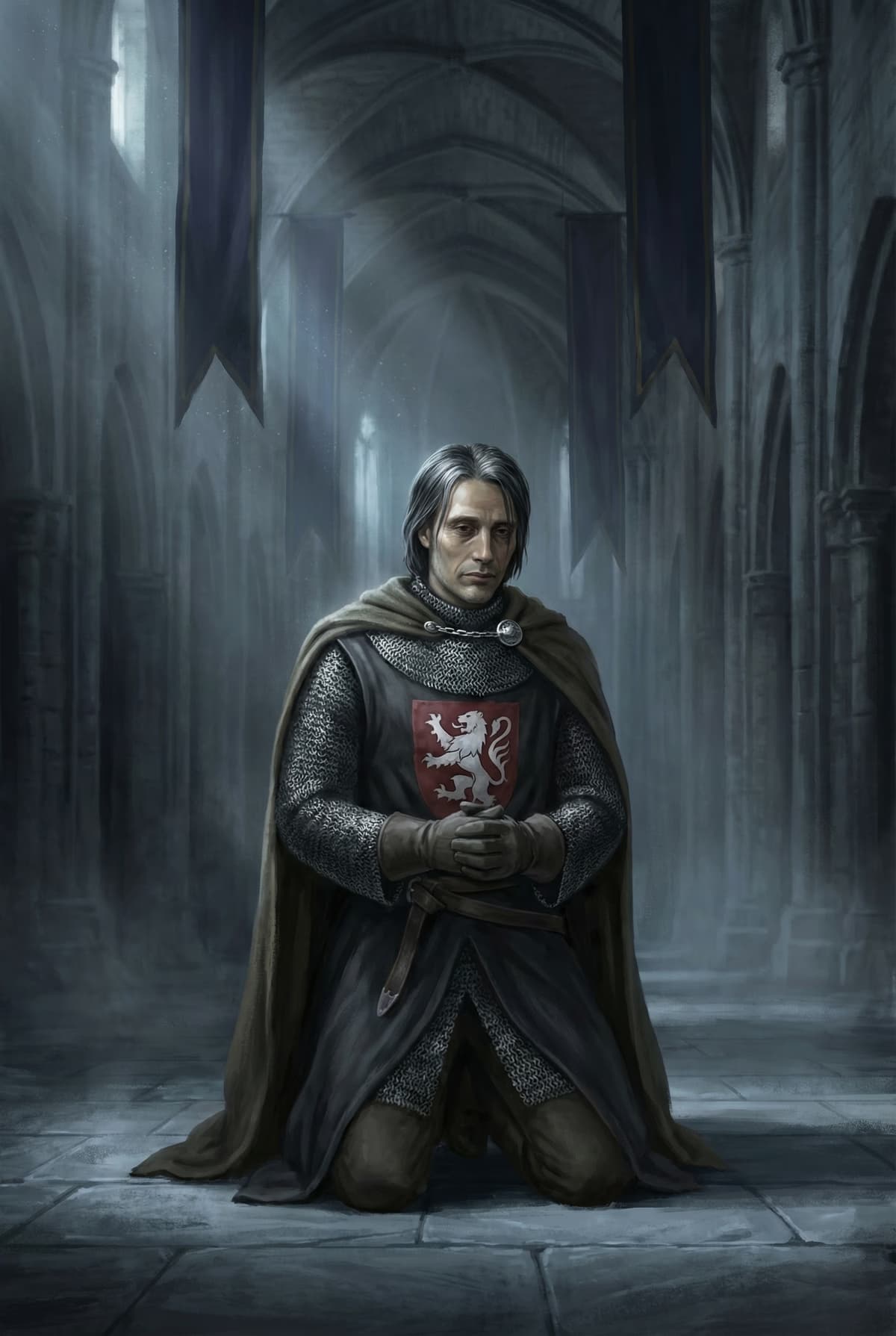
Patrick's strategy worked, if survival is the only measure of success. He died on 10 October 1308, approximately sixty-six years old, still Earl of Dunbar and March, still in possession of his lands on both sides of the border. He outlived Wallace by three years. He outlived Edward I by one.
But survival is not the same as honor, and Patrick left a legacy that his descendants spent generations trying to repair. His son, the 9th Earl of Dunbar, continued the family tradition of switching sides, hosting the defeated Edward II at Dunbar Castle after Bannockburn in 1314 and arranging the English king's escape by boat, then switching to the Scottish side by 1318 and signing the Declaration of Arbroath in 1320.
The son's wife redeemed the family name in a way Patrick never could. Agnes Randolph, called "Black Agnes," defended Dunbar Castle against a five-month English siege in 1338 with a garrison of men against the Earl of Salisbury's army. She stood on the walls and had her servants dust the battlements with handkerchiefs after each English bombardment, mocking the attackers. She became one of the most celebrated figures in Scottish history.
It took a woman who married into the family to give the Dunbar name the courage that Patrick, for all his political cunning, never demonstrated. He kept the earldom. He kept the castle. He kept his lands and his life and his title. He lost the one thing that mattered in an age that valued honor above everything: the respect of the men who died because he told the English where to find them.
Wallace's scorched-earth strategy was working. Edward's army was starving, deserting, days from retreating. A few more days of patience, and the English invasion would have collapsed under its own weight. Patrick chose to end that strategy, not because he believed in the English cause, but because Wallace's burning was destroying Patrick's own estates. He betrayed an army to protect his property. Thousands died on the field at Falkirk so that the Earl of Dunbar's farms would stop burning.