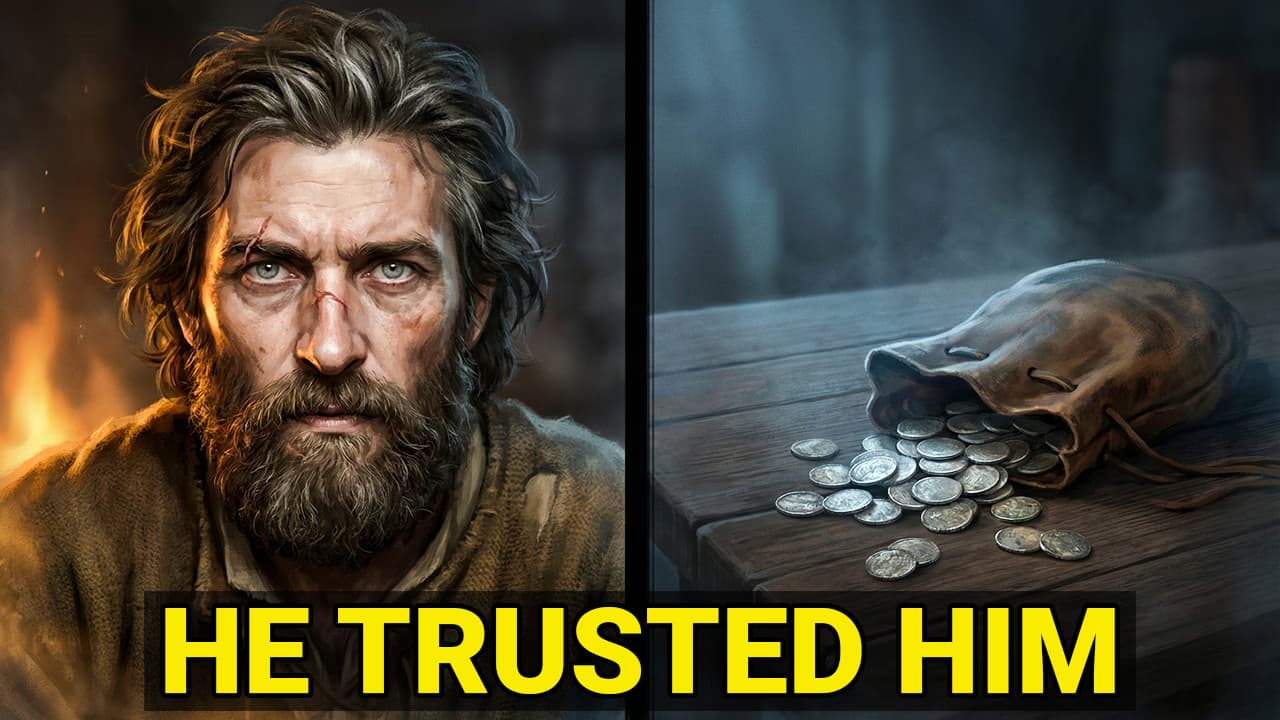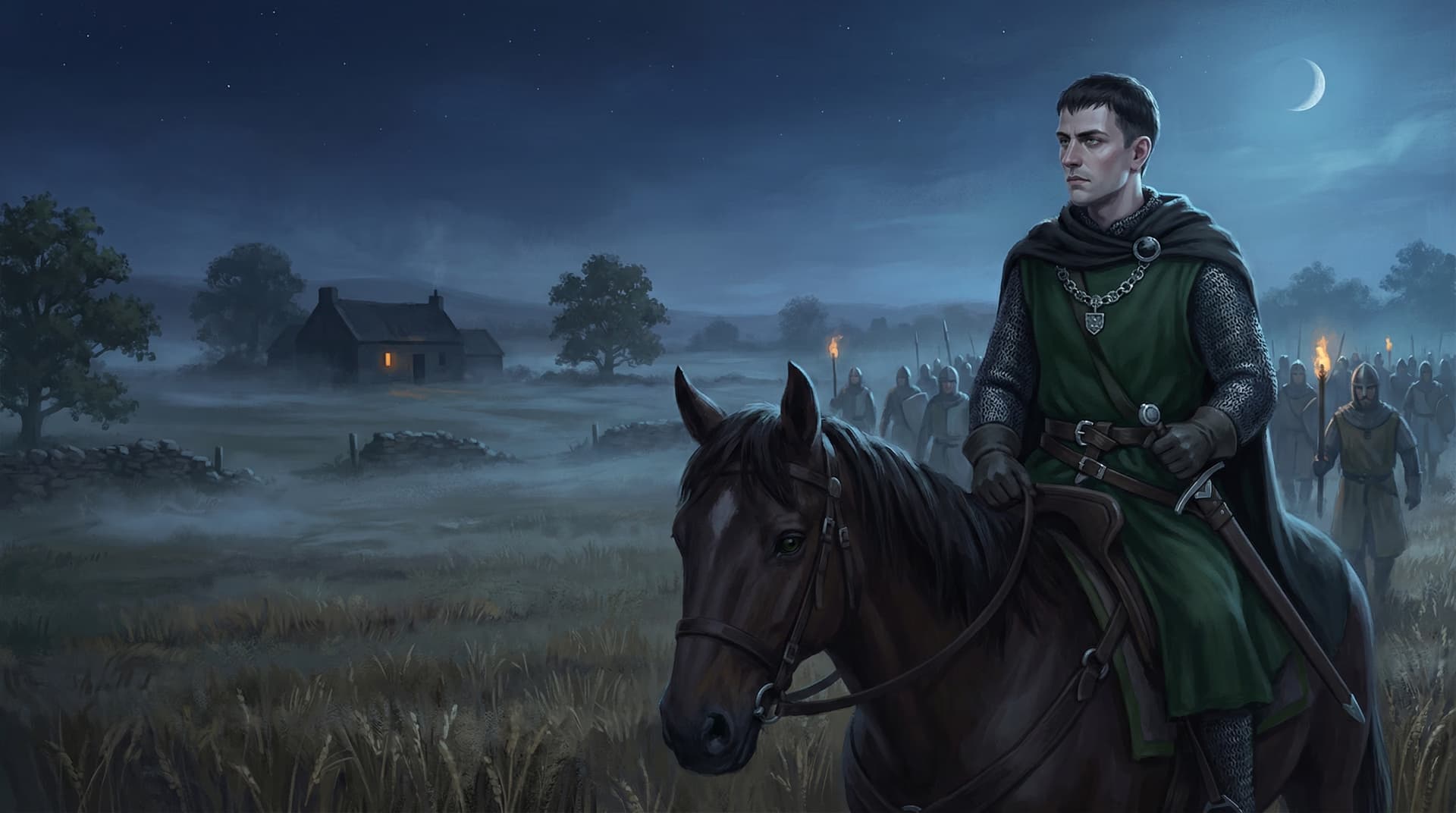
- Known for
- Capturing William Wallace at Robroyston in August 1305, delivering Scotland's greatest hero to an English death
- Fatal flaw
- A survivor who served every master and betrayed every cause, leaving a name that became Scotland's synonym for treachery
The Story
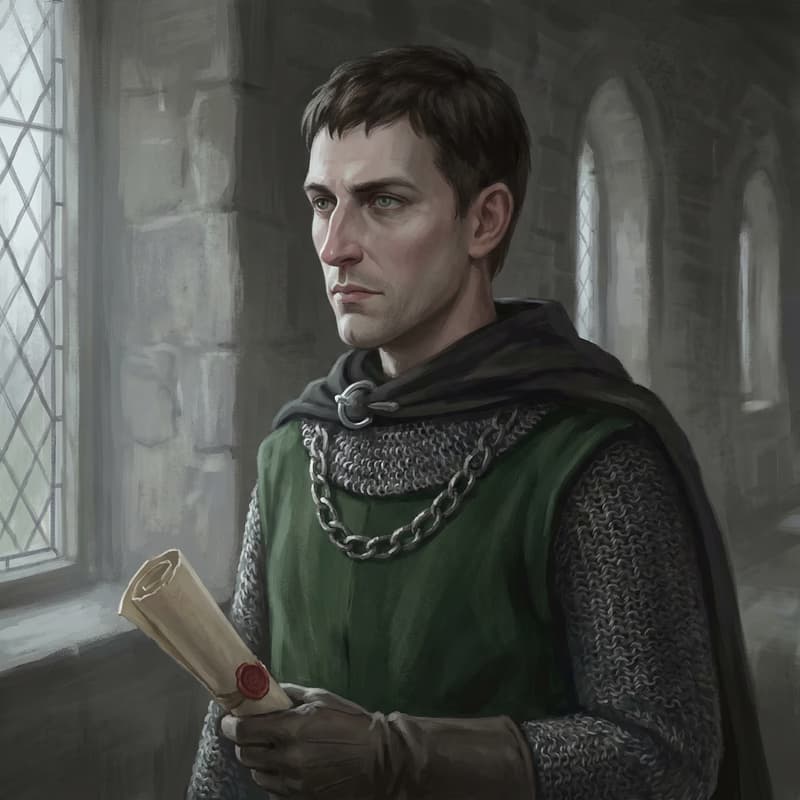
August 3rd, 1305. A house near Robroyston, outside Glasgow. The night is still warm, the air thick with the smell of cut barley from the surrounding fields.
Inside, William Wallace sleeps. He has been running for seven years. Every noble in Scotland has submitted to Edward I. Every castle flies English banners. Wallace is the last man standing, a fugitive with no army, no title, no protection. He sleeps deeply tonight because exhaustion has finally overtaken caution.
Outside, Sir John de Menteith waits in the darkness with sixty armed men. He knows exactly which house. He knows exactly which room. A servant named Jack Short has sold that information for thirty pounds. Menteith, the Sheriff of Dumbarton, has been tasked with one job above all others: deliver Wallace to the English. Tonight, he will earn his reward.
The door splinters inward. Torchlight floods the room. Wallace surges from his bed, reaching for his sword, but there are too many of them. They bear him down by sheer weight. The most dangerous man in Scotland is taken in his nightclothes, blinking in the firelight, by a man who once fought on the same side.
Within twenty days, Wallace will be dragged through London, hanged, disemboweled, beheaded, and quartered. His head will rot on a spike above London Bridge. And John de Menteith will collect his estates, keep his sheriffdom, and live for another twenty-four years, his name forever branded with the word the Scots gave him: Fause. False.
Personality & Motivations
Menteith was not a zealot for either side. He was a calculator, a man who read the political weather and adjusted his sails accordingly. Born into Scottish nobility as the younger son of Mary, Countess of Menteith, and Walter Bailloch Stewart, he had no inheritance to fall back on and no great estate to anchor his loyalties. Everything he had, he would have to earn or take.
He fought against the English at first. At the Battle of Dunbar in April 1296, he and his older brother Alexander charged with the Scottish cavalry and were captured when the battle collapsed. Alexander was released after swearing fealty. John was imprisoned at Nottingham Castle. Captivity taught him something that Wallace never learned: defiance had a price, and pragmatism had a pension.
By 1303, Menteith had submitted to Edward I. By March 1304, he was appointed Warden of Dumbarton Castle and sheriff of the surrounding lands. He enforced English law, collected English taxes, and hunted English enemies. He did this not because he believed in England's cause, but because England's cause was winning. Menteith did not pick sides. He picked winners.
What Most People Get Wrong
Most people assume Menteith was a simple traitor, a Judas who sold Wallace for silver. The reality is more complicated and, in some ways, worse.
By 1305, Wallace was a declared outlaw. Every Scottish noble had submitted to Edward I the previous year. The surrender terms of 1304, negotiated by John Comyn, specifically named Wallace as excluded from any peace. This meant that every sheriff in Scotland had a legal obligation to arrest Wallace on sight. Menteith was not defying Scottish solidarity. There was no Scottish solidarity left to defy. He was enforcing the law as it stood, the law that Scotland's own leaders had agreed to. Modern historians like Lord Hailes and Mark Napier have argued that Menteith was simply doing his job as sheriff, arresting a wanted man. The treachery narrative comes largely from Blind Harry's poem "The Wallace," written nearly two centuries later, which transformed Menteith into a pantomime villain. The truth is that Menteith did not betray a nation. He enforced the surrender that a nation's leaders had already signed. That distinction matters, even if it makes the story harder to tell.
Key Moments
Dunbar, April 27, 1296. The war started badly. Menteith fought on the Scottish side at Dunbar, where an overconfident Scottish cavalry charge disintegrated against the English lines. He was captured alongside his brother Alexander and hundreds of other Scottish knights. While most were released after swearing fealty to Edward I, Menteith was held at Nottingham Castle through the summer. The experience marked him. He watched from an English cell as Edward I stripped Scotland of its crown, its stone, and its dignity. He decided that the next time the wind changed, he would not be standing on the wrong side of it.
Dumbarton, March 1304. Edward I rewarded Menteith's submission with the most strategically important castle in western Scotland. As Warden of Dumbarton and sheriff of the surrounding lands, Menteith controlled the gateway between the Highlands and the Lowlands. He collected taxes, enforced English law, and administered justice in Edward's name. It was a comfortable position for a younger son with no inheritance. The price was his reputation. The payment was power.
Rutherglen, Summer 1305. The conspiracy that defined his life took shape in a parish church. Menteith met with Aymer de Valence, the Earl of Pembroke, and Robert Clifford, one of Edward's most trusted barons, to plan Wallace's capture. The English knew Wallace was operating in the Glasgow area. They needed a Scottish hand to reach him. Menteith had the authority, the local knowledge, and the motivation. When Jack Short, Wallace's own servant, came to him with the location, Menteith moved within days.
Robroyston, August 3, 1305. Menteith led his men through the fields in darkness. They surrounded the house where Wallace slept, broke down the door, and seized him before he could reach his sword. Wallace's companion Kerlie was killed in the struggle. Wallace himself was bound and transported to Dumbarton Castle, then handed over to English soldiers who began the long, deliberate parade to London. Menteith received his estates and kept his sheriffdom. The servant Jack Short received thirty pounds. Wallace received a death that would make grown men sick to read about seven centuries later.
The Switch, 1307-1308. When Robert Bruce crowned himself king and launched his rebellion, Edward I appealed to Menteith in December 1307 to resist the revolt. Menteith looked at the situation, calculated the odds, and abandoned his English-granted earldom of Lennox to join Bruce's side. The man who had captured Wallace for English gold now fought for Scottish independence under a Scottish king. Bruce, needing every sword he could get, welcomed him. Menteith received large grants of land in Knapdale and Kintyre. Survival, as always, had its rewards.
The Detail History Forgot
On April 6th, 1320, at Arbroath Abbey, thirty-nine Scottish barons affixed their seals to a letter addressed to Pope John XXII. The Declaration of Arbroath is the most celebrated document in Scottish history, a ringing assertion that Scotland was a free nation and would remain so "as long as but a hundred of us remain alive."
John de Menteith's seal was among the thirty-nine. The man who had captured William Wallace, the man whose name was a Scottish byword for treachery, signed his name to the most famous declaration of Scottish freedom ever written. Fifteen years after delivering Wallace to his death, Menteith stood in an abbey and declared that Scotland would never submit to English rule. No one objected. No one refused to let him sign. Bruce needed his nobles united, and Menteith was, by then, a loyal Bruce man. He even served as one of the negotiators of the thirteen-year truce with England in 1323. The betrayer of Scotland's greatest patriot helped negotiate Scotland's peace. History is rarely as clean as the stories we tell about it.
The Downfall
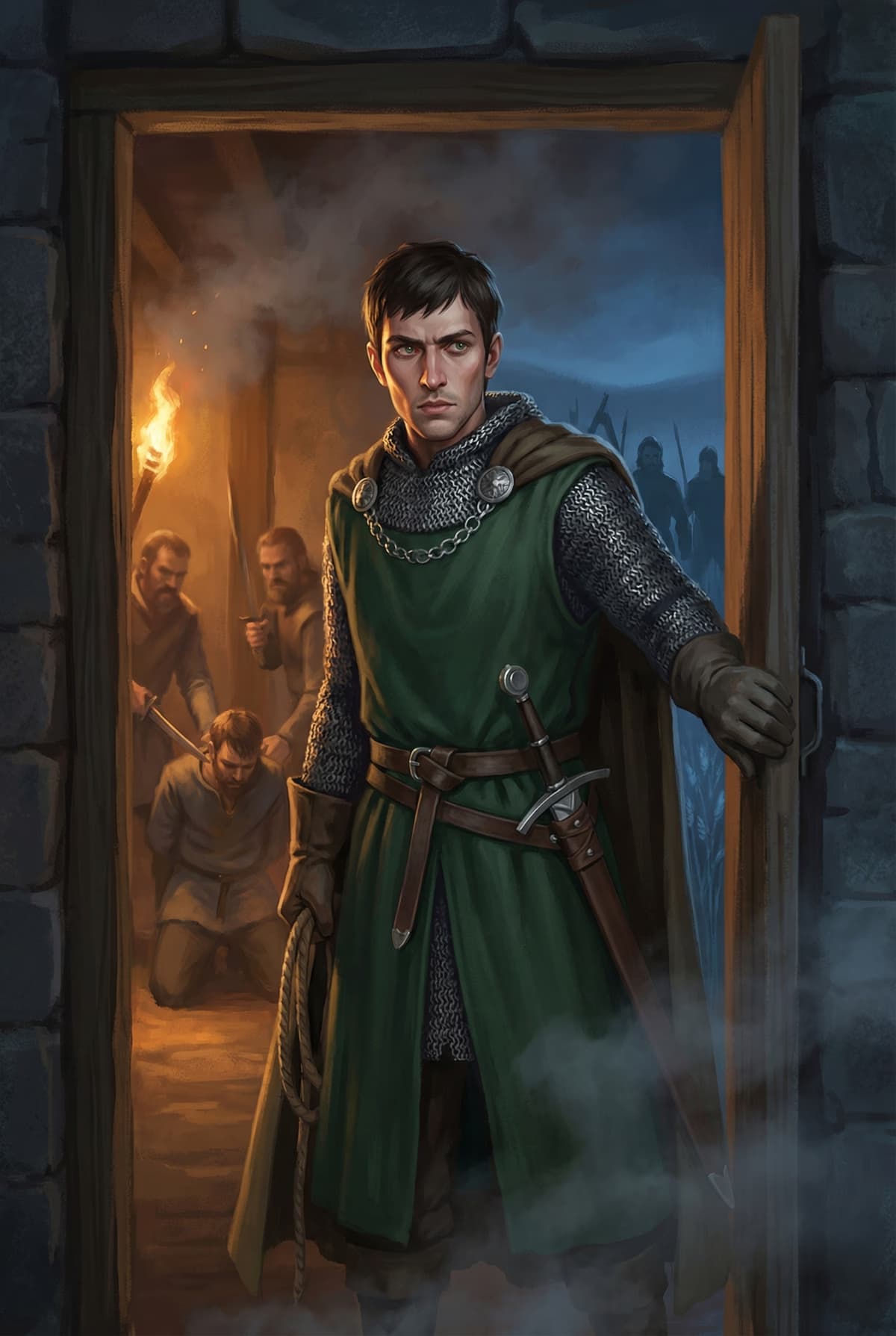
Menteith's story does not end with a dagger or a battlefield or a dramatic reckoning. It ends with old age, land grants, and a name that outlived him in all the wrong ways.
He survived every crisis of his era. He survived the English conquest, the Wallace wars, the Bruce revolution, the years of guerrilla fighting, and the long diplomatic grind that followed Bannockburn. He died around 1329, likely in his mid-fifties, on the estates that Bruce had given him in Knapdale and Kintyre. He left behind two sons, John the younger and Walter, and a daughter Johanna who would marry an earl. By any material measure, he won.
But the name stuck. Blind Harry's poem "The Wallace," written around 1477, transformed Menteith into Scotland's Judas, the false friend who sold a hero for English gold. The label "Fause Menteith" passed from the poem into the language itself, a phrase Scots used for centuries to describe the lowest form of betrayal. Menteith had spent his life picking the winning side. He calculated every move, switched every allegiance at the right moment, and died wealthy and comfortable. But calculation is not the same as conviction. He served Scotland when Scotland was winning and served England when England was winning and served Bruce when Bruce was winning, and in the end, Scotland remembered not the service but the switching. His fatal flaw was not that he betrayed Wallace. It was that he would have betrayed anyone, given the right price. A man who serves every master serves none of them. And Scotland needed its villains as much as its heroes. Menteith, who wanted nothing more than to survive, became the name Scotland used to teach its children what dishonor looked like.