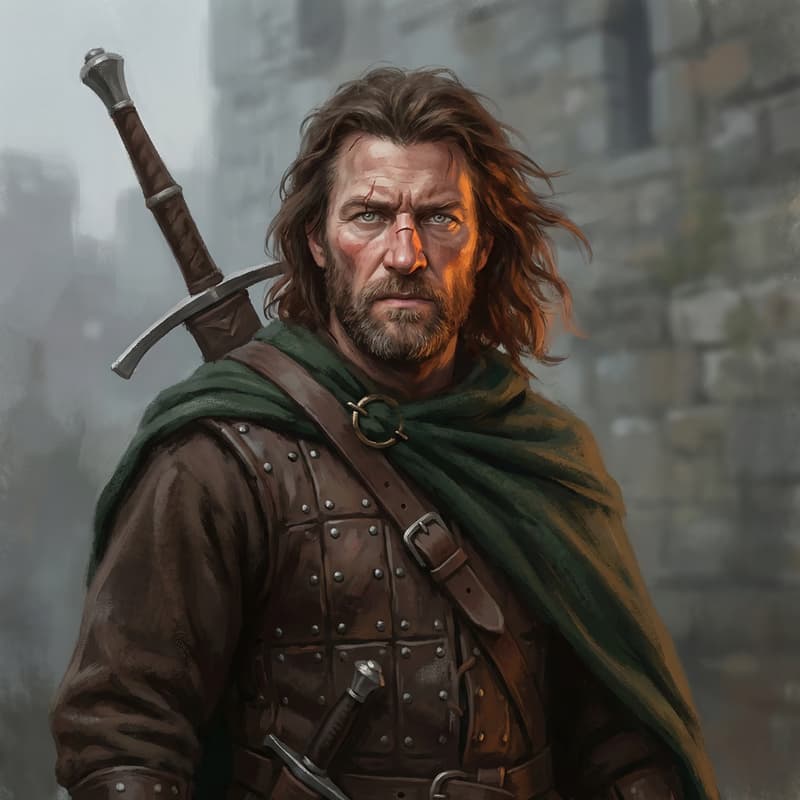
The Trap That Almost Worked
July 1298. Somewhere in central Scotland, fifteen thousand Englishmen are starving.
King Edward I can smell his own army rotting. The horses died first--slaughtered for meat when the supply ships failed to arrive. Now his men are eating what's left of the carcasses, fighting over scraps of horseflesh that have turned green in the summer heat. His Welsh infantry rioted two nights ago. His cavalry had to kill eighty of them to restore order.
And somewhere out there, beyond the smoke rising from every burned farm and poisoned well, William Wallace is waiting.
For weeks, Wallace has refused to fight. He retreats before every English advance, torch in hand, burning everything that might feed an invader. Edward's army is dying on its feet. A few more days, and he'll have no choice but to turn back.
Then two Scottish earls ride into his camp. They know exactly where Wallace is hiding.
The trap that should have won the war is about to become a massacre.
The Guardian
Ten months earlier, Wallace had stood at the peak of his power.
He had been knighted after Stirling Bridge--by which earl, the chronicles disagree. He had taken the title Guardian of the Kingdom of Scotland, ruling in the name of the deposed King John Balliol. The outlaw of May had become the governor of December.
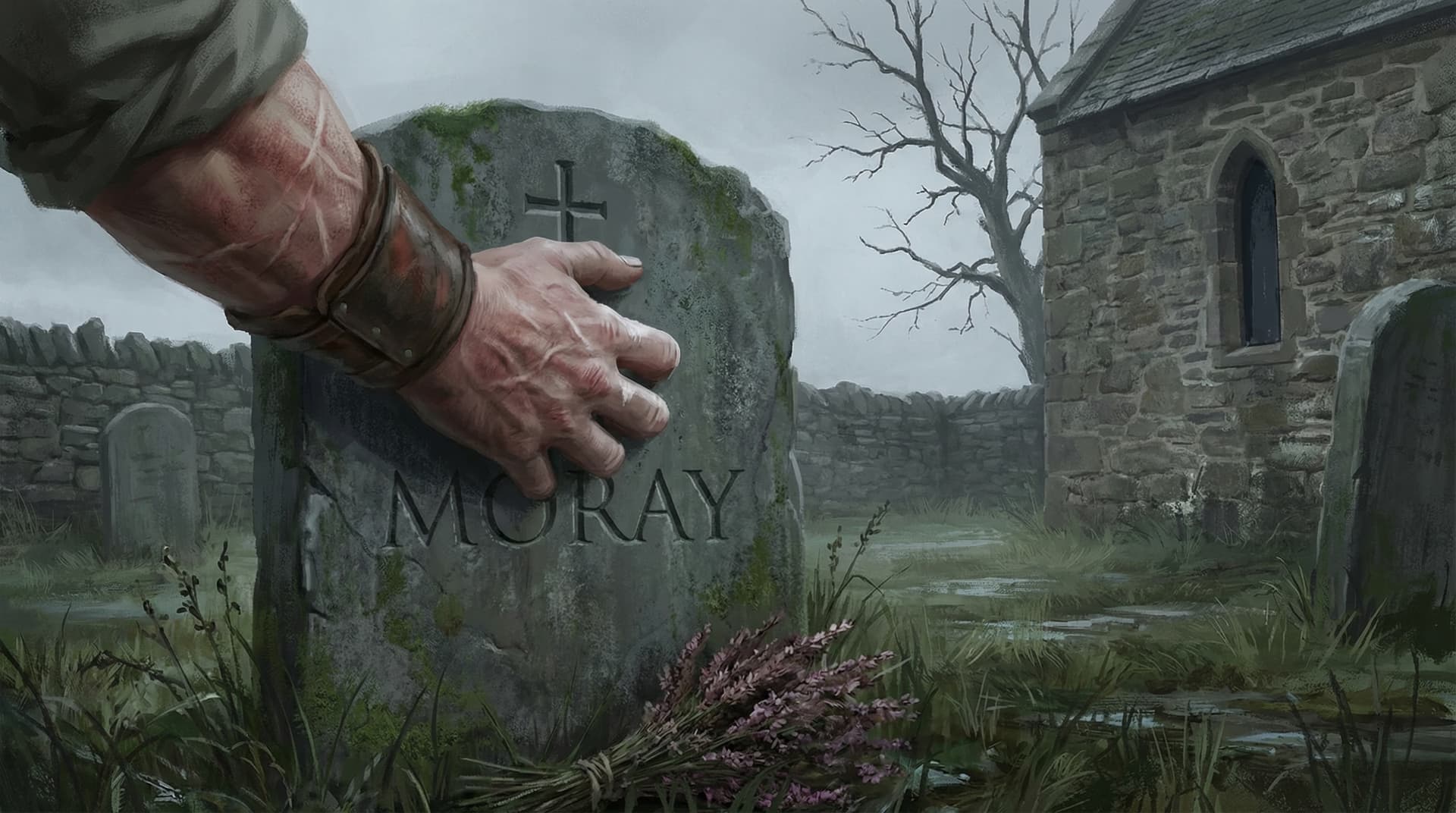
But Andrew Moray was dead. His co-commander at Stirling Bridge, the nobleman who had given Wallace credibility with the Scottish aristocracy, had died of wounds taken in the battle. Without Moray, Wallace was a commoner giving orders to earls.
The earls despised him for it.
They followed him because he had won. Because the English were gone. Because there was no one else. But Wallace could feel their contempt in every council meeting, every sideways glance, every order that took too long to obey. His authority rested on a single victory. One defeat, and they would abandon him.
He needed another victory. Something so decisive that the nobles would have no choice but to fall in line.
Into England
In October 1297, barely a month after Stirling Bridge, Wallace led his army across the border.

The raid was savage. Seven hundred villages burned in Northumberland alone. His forces swept west into Cumberland, pillaging to Cockermouth. Smoke rose so thick that the sun turned red at noon. Farmers who tried to hide their grain were cut down in their barns. Livestock that couldn't be driven north was slaughtered in the fields and left to rot.
Wallace watched his men work and felt nothing. This was what war looked like. The English had done worse to Scotland. He was simply teaching them how it felt.
He returned laden with plunder--enough to pay his army through the winter, enough to prove that Scotland could strike back. But his soldiers were exhausted, and the campaign had given Edward exactly what he needed: a reason to return.
The Hammer Returns
Edward Longshanks had been in Flanders when Stirling Bridge happened. Fighting the French. Managing the politics of European kingdoms. Scotland was supposed to be quiet.
The news reached him like a knife in the gut. His treasurer, Hugh Cressingham--flayed. His army, routed. His garrisons, abandoned. A peasant calling himself Guardian of Scotland.
Edward was sixty years old. His joints ached in the cold. His physicians had warned him about another campaign. None of it mattered.
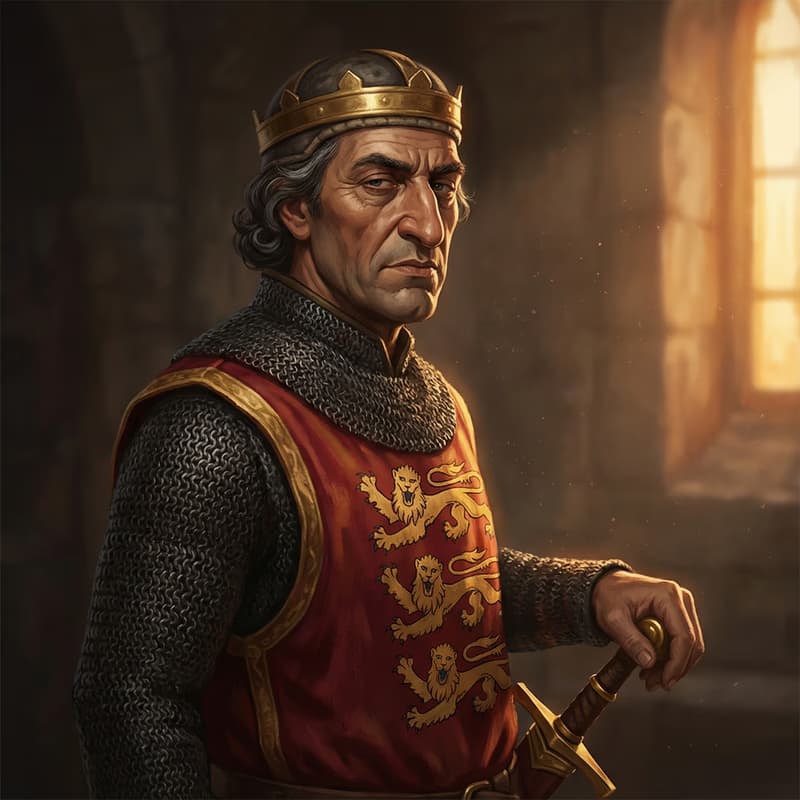
In the spring of 1298, he assembled his army. It was the largest force Scotland had ever faced--fifteen thousand men, including 2,500 armored knights and thousands of Welsh longbowmen. Veterans of the Welsh wars. Men who had broken mountain resistance and razed villages and knew exactly how to crush a rebellion.
Edward came himself. He would not trust this to subordinates.
Subscribe to Nightfall History on YouTube
Join our community on YouTube for more historical deep dives and visual storytelling
Scorched Earth
Wallace did not meet him at the border.
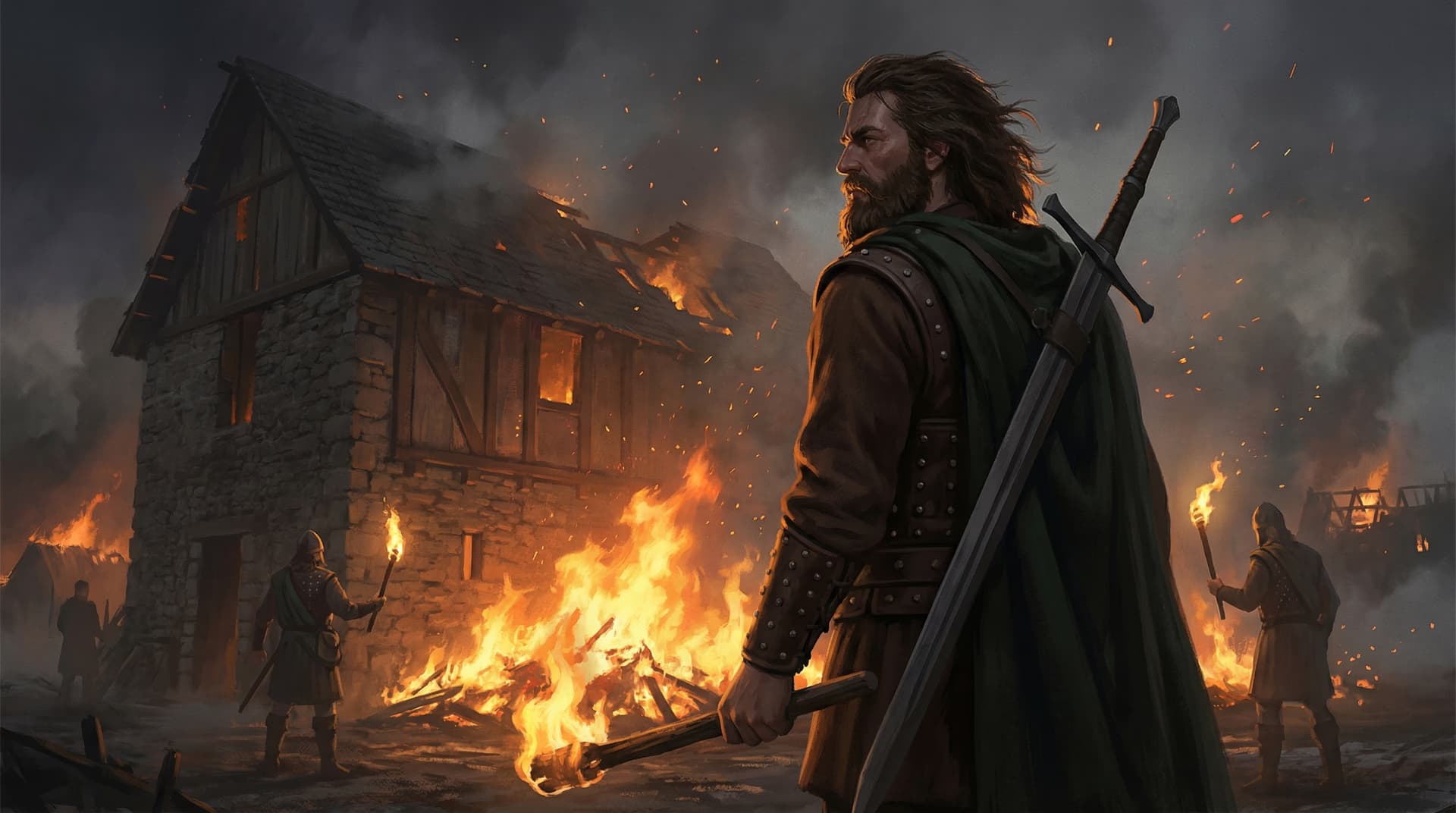
He retreated north, and as he retreated, he burned. Every barn, every granary, every storehouse that might feed an English soldier went up in flames. His men slaughtered cattle they couldn't drive and poisoned wells they couldn't guard. Central Scotland became a wasteland.
"Let them eat the land," Wallace told his commanders. "There's nothing left."
Edward pushed forward anyway, trusting his supply ships to arrive at the Firth of Forth. They didn't. Storms scattered the fleet. The army ate through its reserves, then through its horses. Men began to desert. The stench of dying animals hung over the English camp like a fog.
By mid-July, Edward was facing disaster. His army was exhausted, starving, held together by discipline and fear. He had marched deep into Scotland and found nothing to fight, nothing to eat, nothing but smoke and empty villages.
Wallace was winning without drawing his sword.
The Betrayal
Then Gilbert de Umfraville, Earl of Angus, and Patrick, Earl of Dunbar, rode into Edward's camp.
Both men had been at Irvine the year before, when the Scottish nobles chose surrender over fighting alongside a commoner. Both had English estates they wanted to protect. Both had relatives held hostage by Edward. Both hated Wallace with the cold precision of men who had been made to look like cowards.
"The Guardian is at Falkirk," Umfraville said. "By the River Carron. He plans to attack your camp tomorrow night."
Edward smiled for the first time in weeks. "Then we attack him tonight."
He force-marched his starving army through the darkness. By dawn on July 22nd, the English had found the Scottish position. Wallace's scorched earth strategy--the strategy that had nearly won--meant nothing now.
Two earls had decided that destroying Wallace was more important than defeating England.
The Forest of Spears
Wallace had no choice now. He could not retreat--Edward would run him down. He could not hide--his position was known. He could only fight and hope that what worked at Stirling Bridge would work again.
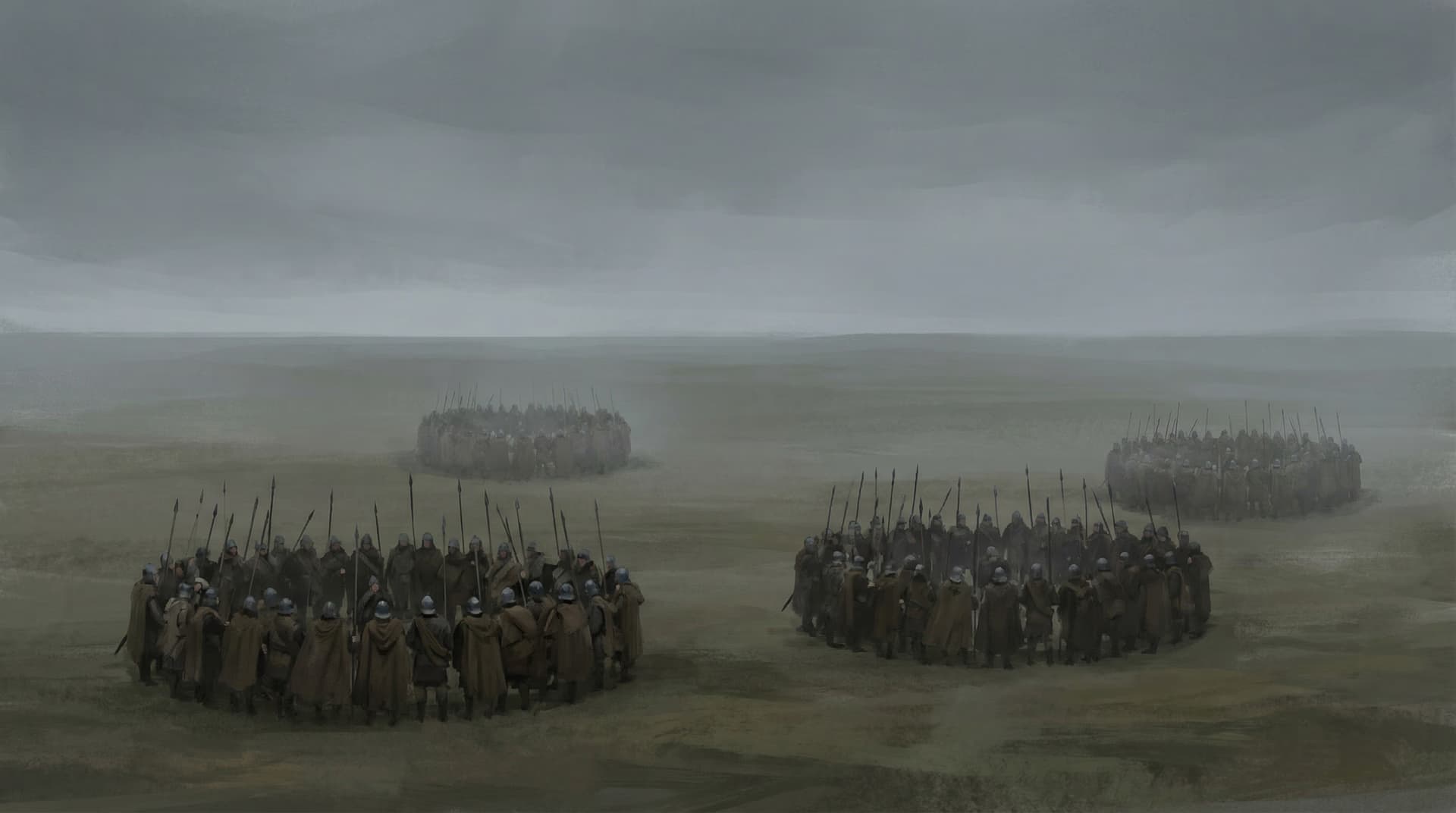
He arranged his army into four great schiltrons--circular formations of spearmen, their twelve-foot weapons bristling outward in every direction. The men packed together so tightly that their shoulders touched. From a distance, each schiltron looked like a hedgehog made of iron.
At Stirling Bridge, these formations had been unbreakable. But Stirling Bridge had been fought beside a narrow crossing, on boggy ground, against an enemy stupid enough to divide itself in half.
Falkirk was an open field.
Wallace walked the line before the battle, looking into the faces of men who had followed him from the beginning. Farmers. Tradesmen. Men who had never held a spear until last year, who had learned to kill because no one else would fight for them.
"I have brought you to the ring," he told them. "Now see if you can dance."
Stay in the Loop
Get notified when new articles and videos drop. Unsubscribe anytime.
The Arrows Fall
The battle began with thunder.
English cavalry charged in waves, lances leveled, the ground shaking beneath thousands of hooves. Wallace watched them come--the armored knights, the warhorses bred for killing, the most terrifying weapon medieval warfare had ever produced.
The schiltrons held.
Horses impaled themselves on the forest of spears. Knights were thrown and trampled. One hundred and eleven horses died in the first charges alone, their screams echoing across the valley. The spear walls stood like islands in a sea of thrashing, dying animals.
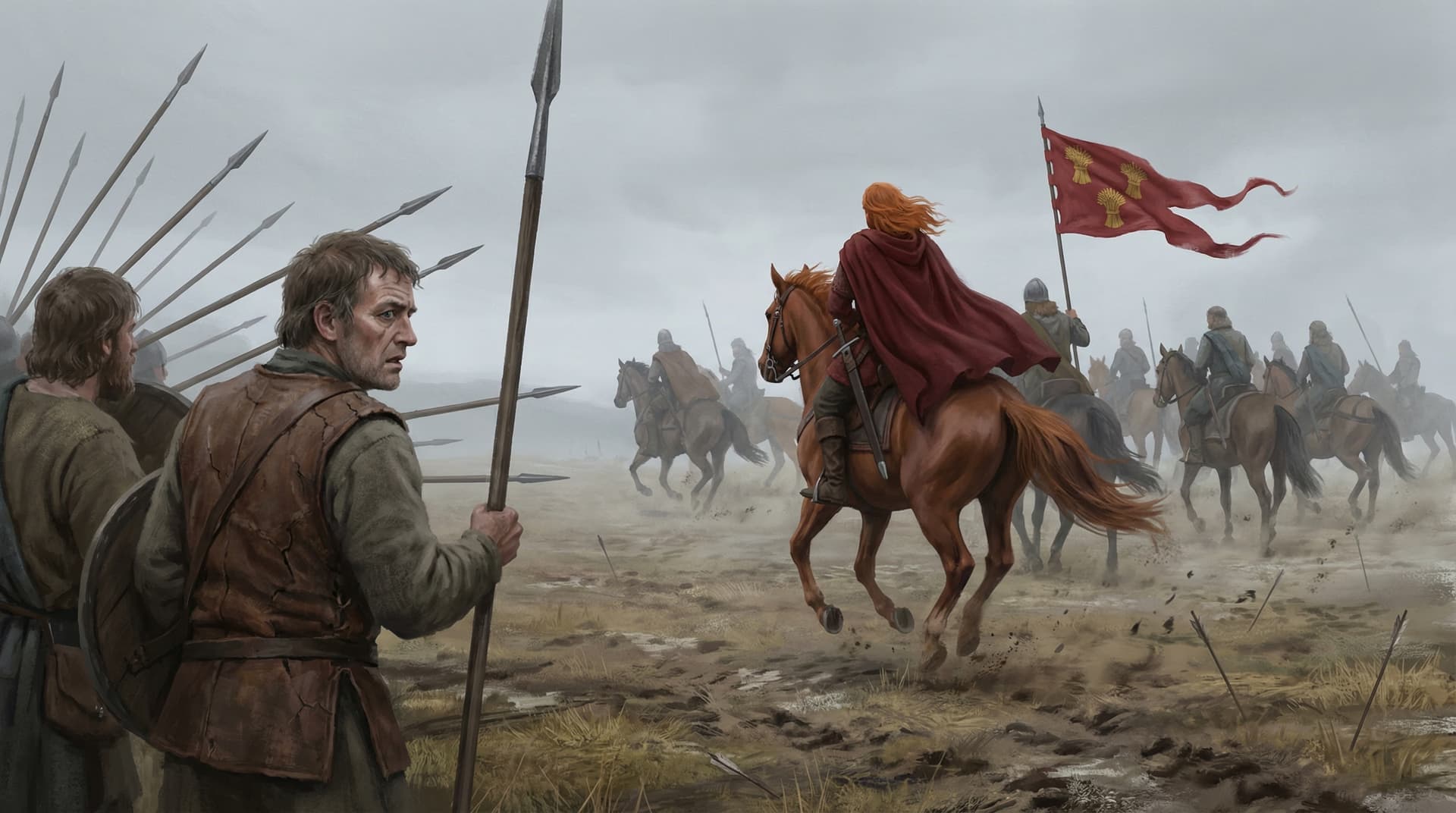
At that moment--when Wallace's men should have counterattacked, when they should have swept forward and broken the English army--the Scottish cavalry fled.
John Comyn, called the Red, led his mounted knights off the field without striking a single blow. The nobles who had never accepted Wallace abandoned him in the moment he needed them most.
Only a few stayed. Sir John de Graham, Wallace's closest friend. Sir John Stewart and his archers, who knew they were about to die. They held their positions, watching the cavalry disappear.
Edward saw the Scottish horse flee. He saw the schiltrons standing alone, with no one to protect their flanks. He smiled again.
"Archers forward."
The Death of the Schiltrons
The Welsh and English longbowmen formed ranks just beyond spear range--close enough to see faces, far enough that no spear could reach them. They nocked their arrows. Drew their bows. And loosed.
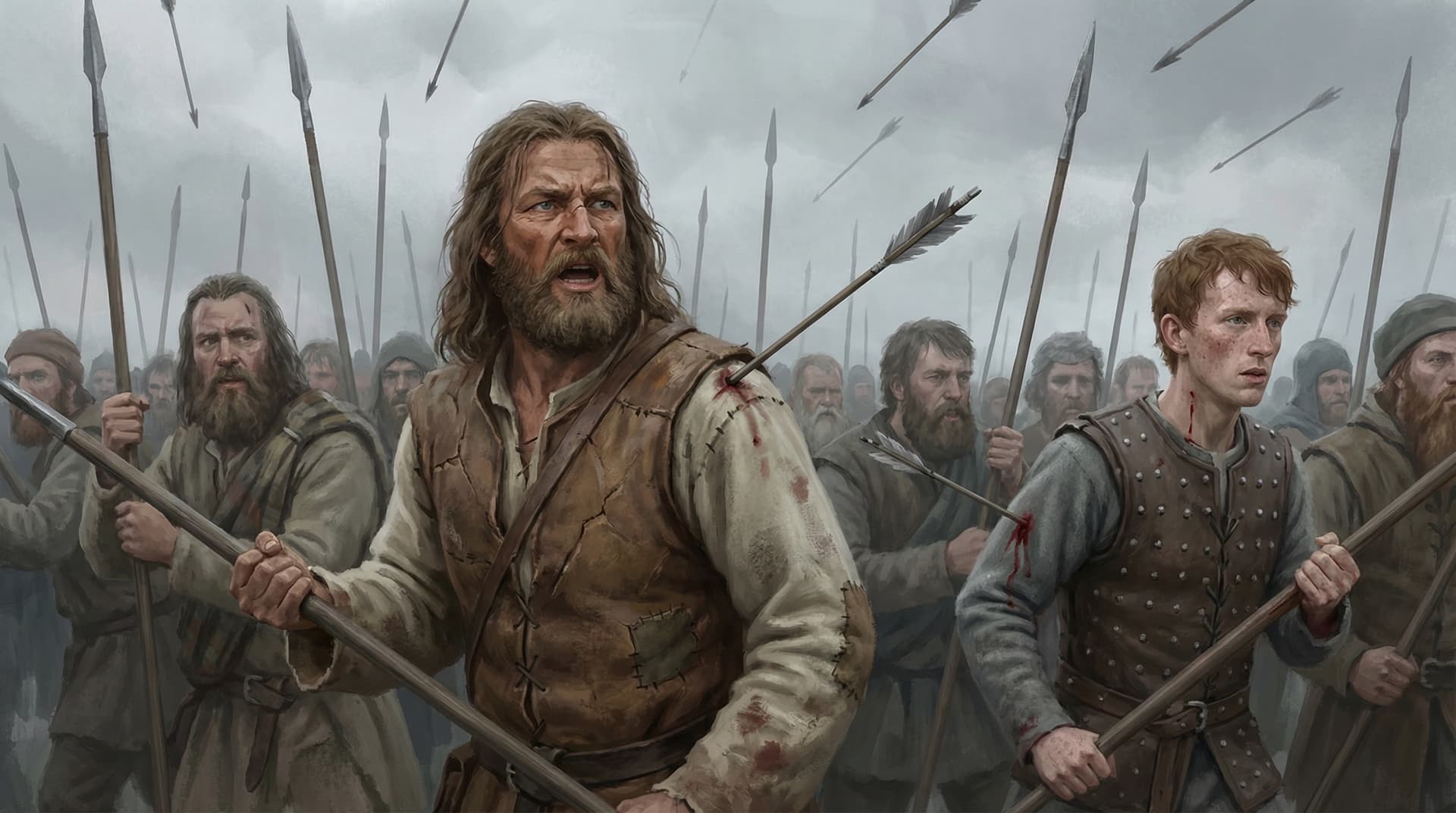
For the first time on a major battlefield in Britain, massed archery became the decisive weapon.
The Scots had almost no armor. The schiltrons were packed so tightly that every arrow found flesh. Men died standing because there was no room to fall. The soldier next to you caught an arrow in his throat and stayed upright, held in place by the press of bodies. Blood ran down the shafts of spears, making them slick, impossible to grip.
Wallace shouted for his men to hold. To keep formation. To trust the wall of points. But you cannot hold formation when the sky is raining iron.
Gaps opened in the spear walls. Men broke and ran, only to be cut down by cavalry waiting for exactly that moment. The formations that had held against armored knights began to fray, then crack, then shatter.
Edward sent his cavalry forward again. This time, they found holes. They smashed into the weakened schiltrons and broke them apart.
The slaughter that followed had no name. It was simply killing, methodical and total, until the screaming stopped.
The Survivor
Wallace escaped. The chronicles don't say how. Perhaps he fought his way out with the handful of men who stayed loyal. Perhaps he simply ran when the schiltrons broke, survival instinct overriding everything else.
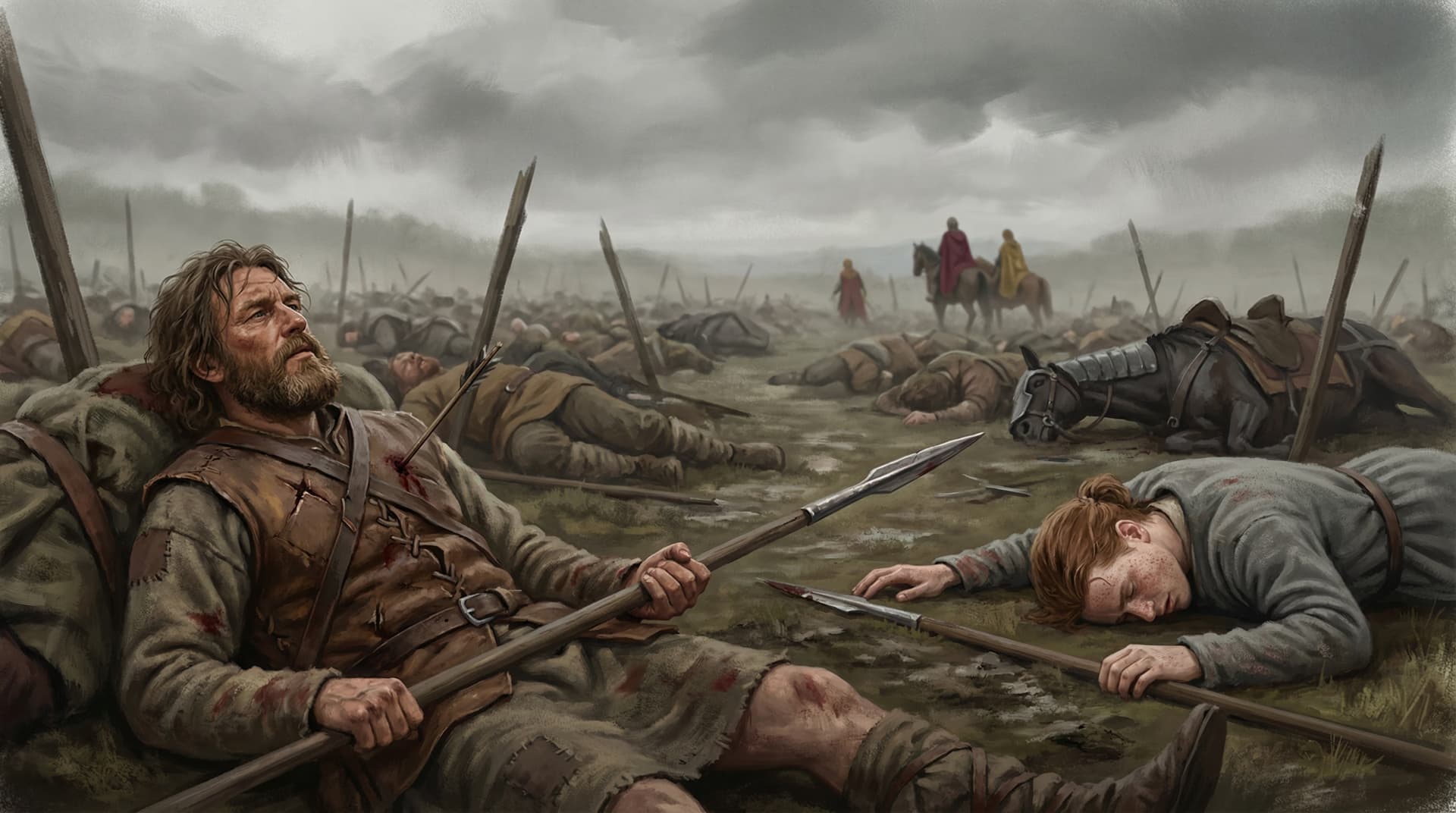
It didn't matter. He survived. Everything he had built did not.
Sir John de Graham died in the carnage--Wallace's friend, his most trusted commander, the man who had stood beside him since Lanark. They found his body later, surrounded by the Englishmen he had killed before the end. Wallace would never have another friend like him.
Sir John Stewart died with his archers, refusing to retreat even when the cavalry fled. Men who could have saved themselves chose to die rather than abandon the Guardian who the nobility had already abandoned.
The spearmen--the farmers and tradesmen who had proven at Stirling Bridge that common men could kill knights--died by the thousands. The chronicles count two to four thousand Scottish dead. The English lost perhaps two hundred.
Wallace had asked them to dance. The arrows had found them anyway.
The Price
In December 1298, William Wallace resigned as Guardian of Scotland.
He was replaced by Robert Bruce and John Comyn--the same Comyn whose cavalry had fled at Falkirk, the same Comyn whose cowardice had condemned thousands of Scots to die on English arrows.
The nobles had their excuse now. Wallace had won once and lost once. That was enough. Time to put a proper nobleman back in charge. Time to return to the natural order where earls gave orders and commoners obeyed.
Wallace could have fought for the position. He had followers who would have supported him. Men who remembered Stirling Bridge, who remembered that Wallace fought when the nobles knelt.
He didn't fight. He walked away.
Because Falkirk had taught him something worse than military defeat. It taught him that Scotland's nobles would rather lose to England than win under a commoner. The betrayal at Falkirk--Umfraville and Dunbar revealing his position, Comyn fleeing the field--wasn't cowardice.
It was policy.
They had let him win at Stirling Bridge because they needed him. They had let him lose at Falkirk because they didn't need him anymore. And if he stayed Guardian, if he kept fighting, they would arrange for him to lose again. And again. Until he was no longer useful, or no longer alive.
Wallace had made his mistake at Falkirk. But the mistake wasn't tactical.
He had tried to lead men who would never accept him as their equal. He had built an army of commoners and expected nobles to support it. He had won an impossible victory and thought that would be enough.
It wasn't. It would never be enough.
So he resigned. He gave up the position he had earned in blood, handed it to men who had fled the field while he fought. He became what he had been before Stirling Bridge: a man with no title, no army, no political power.
Just a sword. And enemies who would never stop hunting him.
The Fugitive
Wallace didn't disappear immediately. For a few months, he tried to find another way to fight.
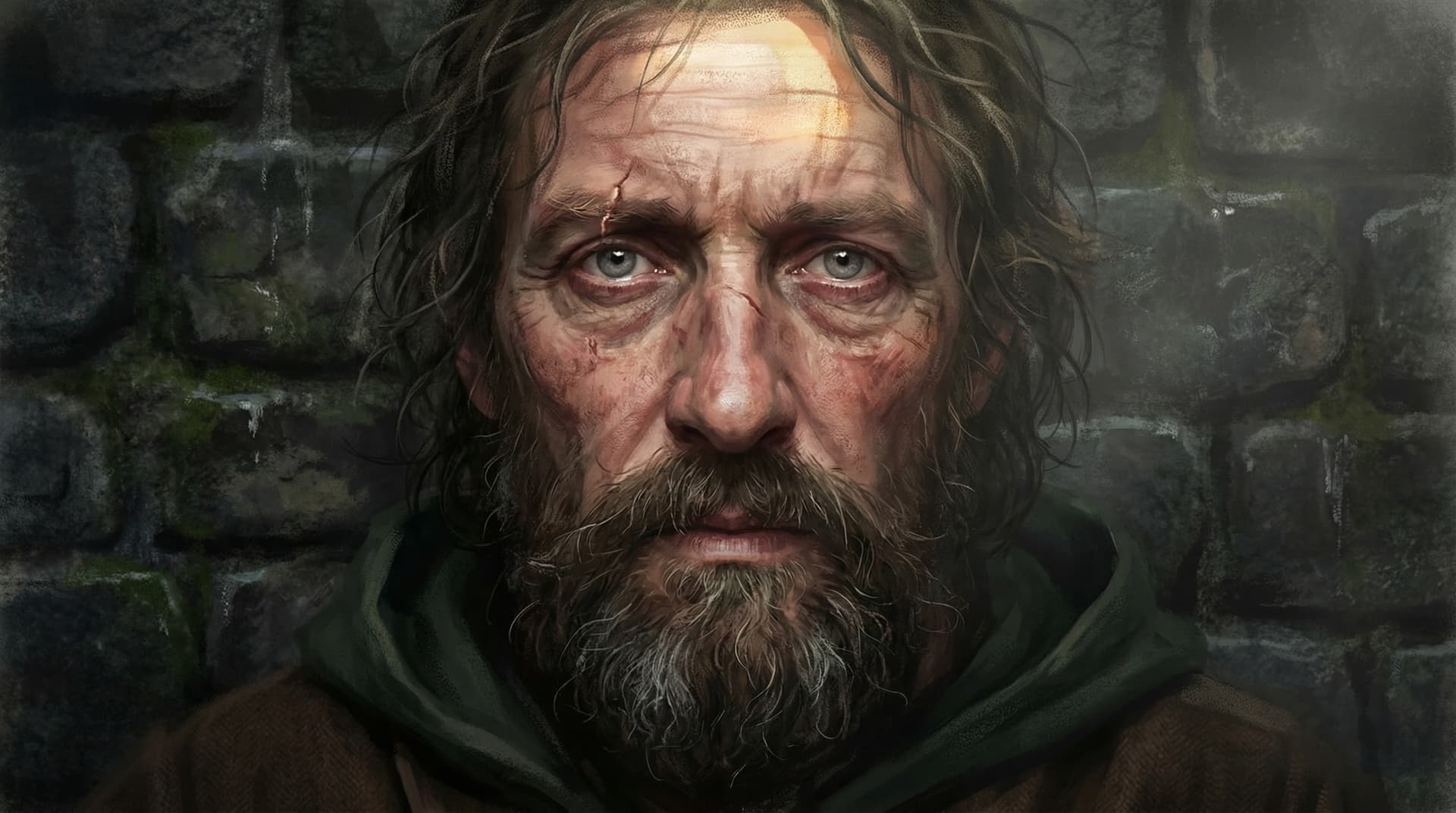
He sailed for France in 1299 with letters from the Scottish government, begging King Philip IV for help. He went to Rome seeking the Pope's intervention. He spent years traveling Europe, pleading Scotland's case to anyone who would listen.
No help came. The deposed King John Balliol was released into French custody and never returned to Scotland. The message was clear: the great powers of Europe didn't care about a failed rebellion in the North.
By 1303, Wallace was back in Scotland. Not as Guardian. Not as a commander. As an outlaw, a bandit, a man with nothing left to lose.
He went back to what he knew: small raids, ambushes, the harrying tactics of the powerless. The war was officially over. The nobles had submitted. The castles flew English banners.
Wallace refused to accept it.
Edward I became obsessed with catching him. As long as Wallace remained free, the conquest felt incomplete. Year after year, Edward sent hunters. Year after year, Wallace slipped away.
Until he didn't.
The man who had won Stirling Bridge and lost Falkirk would spend his final years running from a king who would never forgive and nobles who had never accepted him. He would die betrayed by a servant, butchered in a London street, his body quartered and displayed as a warning.
But before the betrayal, before the execution, before the end--there were seven years of running. Seven years as a fugitive. Seven years of learning that the mistake at Falkirk wasn't the open field or the lack of archers or even the cowardice of the cavalry.
The mistake was believing that winning battles would be enough.
Scotland's freedom wouldn't be won by a commoner, no matter how many battles he won. The nobles had made that clear.
It would take a king. And that king would need to learn the lessons Wallace paid for at Falkirk.
But first, Wallace would have to die.