The King Who Stayed
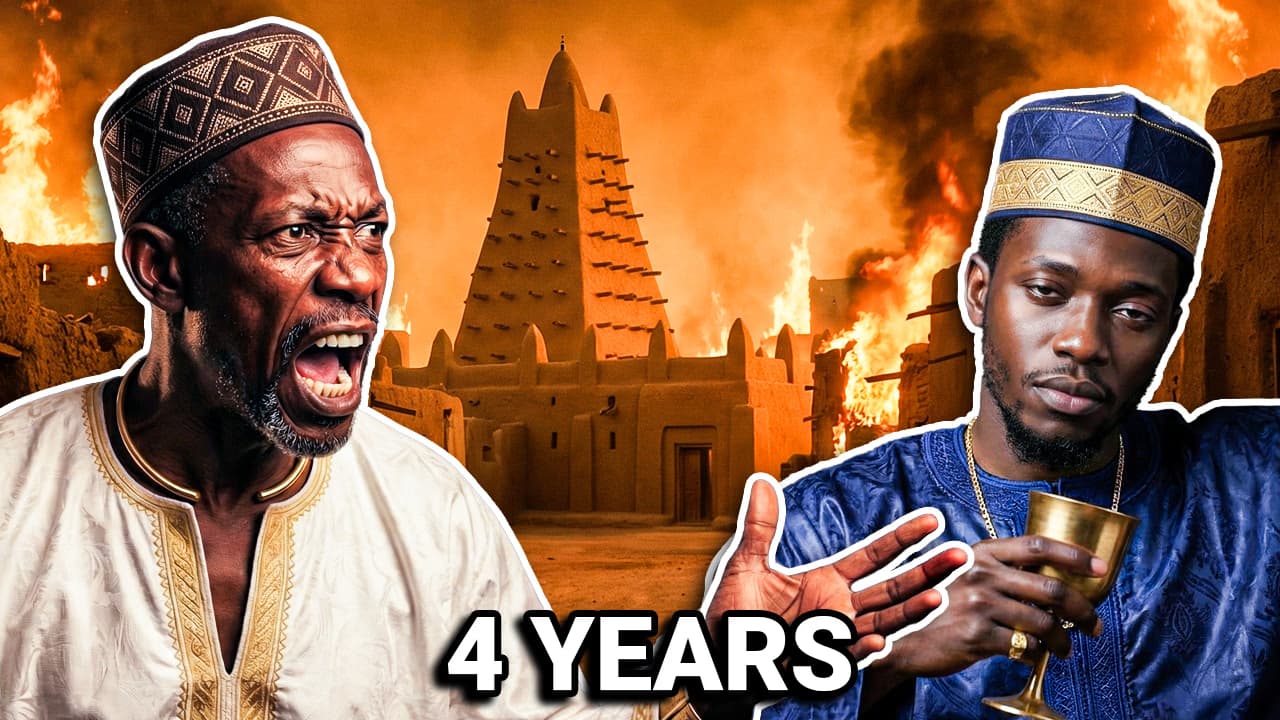
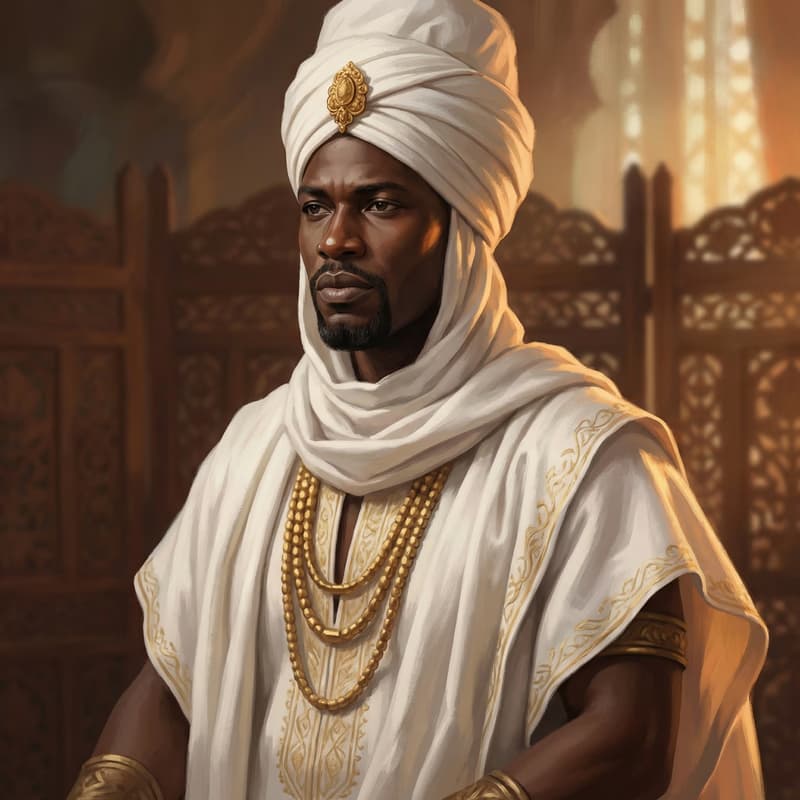
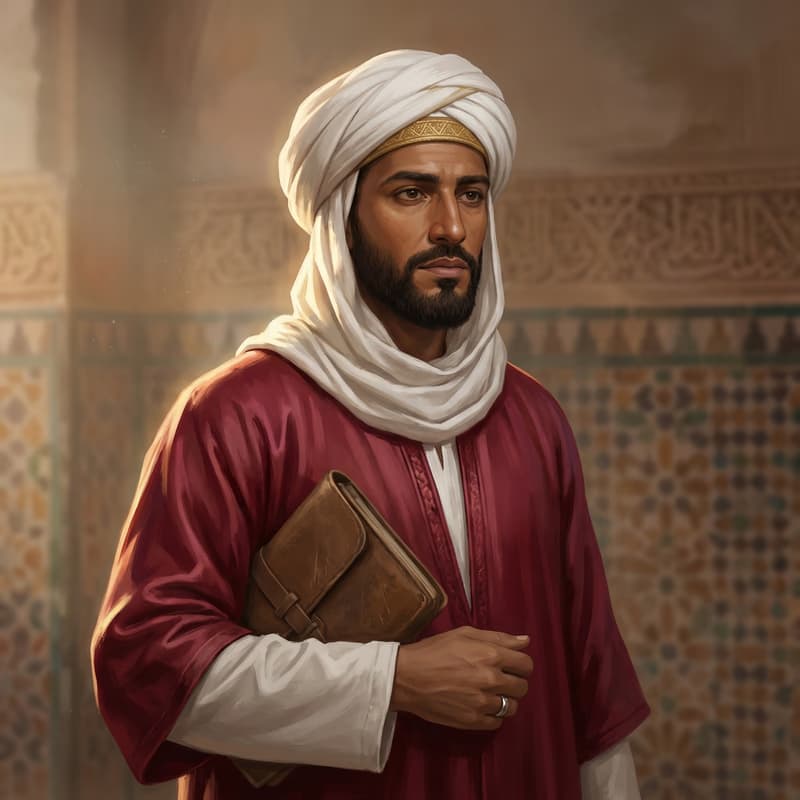
Five hundred gold staffs catch the morning sun outside Cairo's walls. Each one weighs six pounds. Each one is carried by a man in Persian silk who owns nothing -- not even himself. Behind them stretches a column of sixty thousand people, eighty camels sagging under eighteen tons of gold dust, and a king who believes he is about to honor God.
He has no idea he is about to cripple a nation.
Mansa Musa did not ask for the throne of Mali. His predecessor -- a king obsessed with the Atlantic Ocean -- had ordered two hundred ships to sail west and find the ocean's edge. He stayed behind and waited. A single ship returned, its captain hollow-eyed and shaking, bearing news of a current in the open water that had swallowed the fleet. The king refused to accept it. He built two thousand more ships, climbed aboard the largest one, and sailed into the same ocean himself. He never came back.
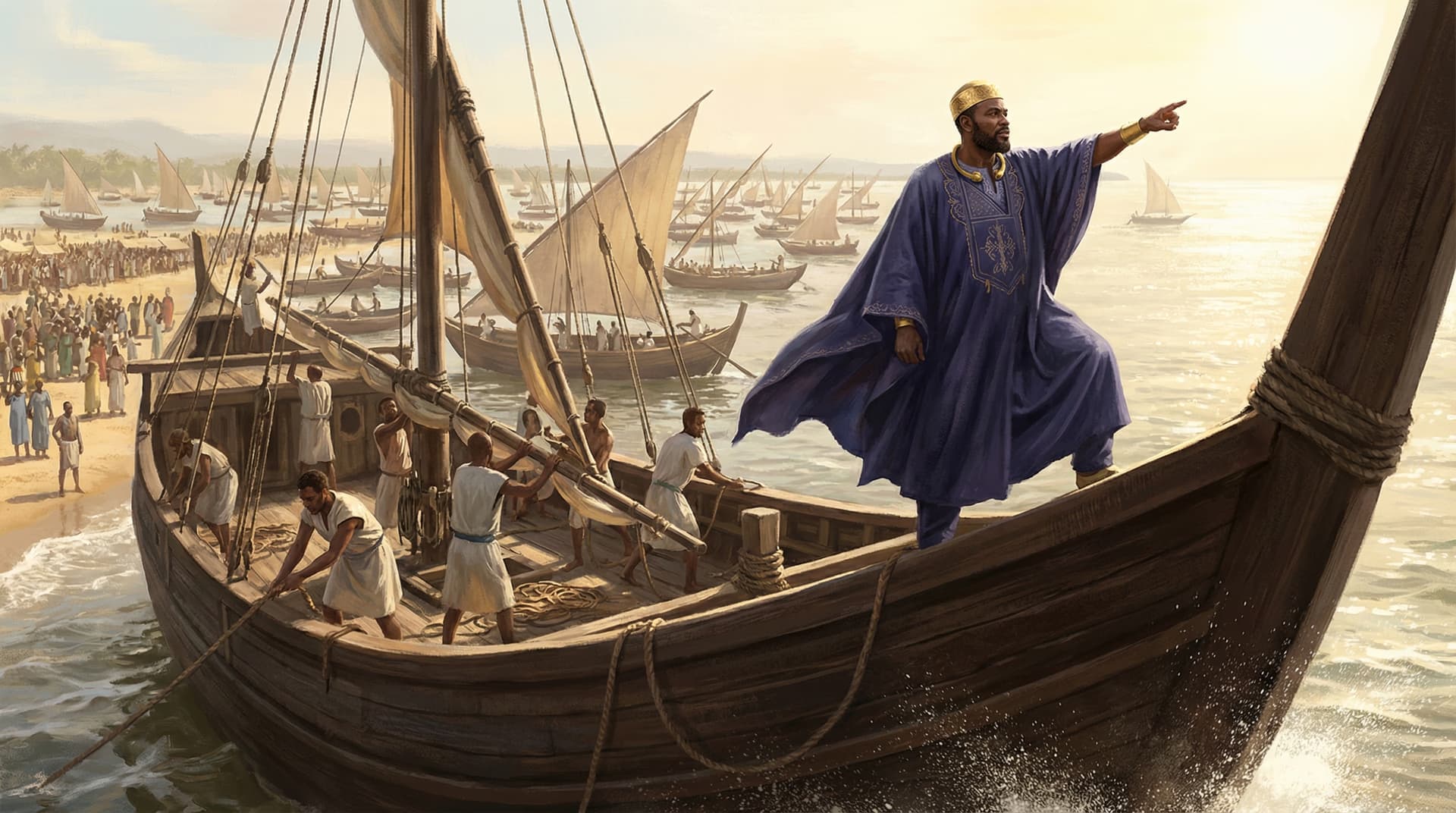
Musa was the deputy, the man left behind to keep the empire running while the real king chased the horizon. When the ships didn't return, the deputy became the king.
And the king became a conqueror.
In the twelve years between inheriting the throne and departing on this pilgrimage, Musa had taken twenty-four cities. He annexed Timbuktu without a fight. He swallowed the Songhai kingdom whole. He doubled Mali's territory until it stretched from the Atlantic coast to the bend of the Niger, an empire second in size only to the Mongols'. He controlled the gold mines of Bambuk and Bure, the salt trade from the north, and the trade routes that connected them. By some estimates, half the gold circulating in the known world flowed through his hands.
Musa conquered twenty-four cities before this journey. He knew how to take things from people. He had never once considered what might happen when you give too much.
The hajj -- the pilgrimage to Mecca that every Muslim is called to make -- was not something Musa could do quietly. He was incapable of it. He assembled sixty thousand people: soldiers, officials, attendants, servants. His wife, Inari Kunate, brought five hundred female attendants of her own. Eighty camels carried three hundred pounds of gold dust each. Five hundred men walked ahead of the king, each gripping a staff of pure gold that weighed six pounds and caught the light with every step.
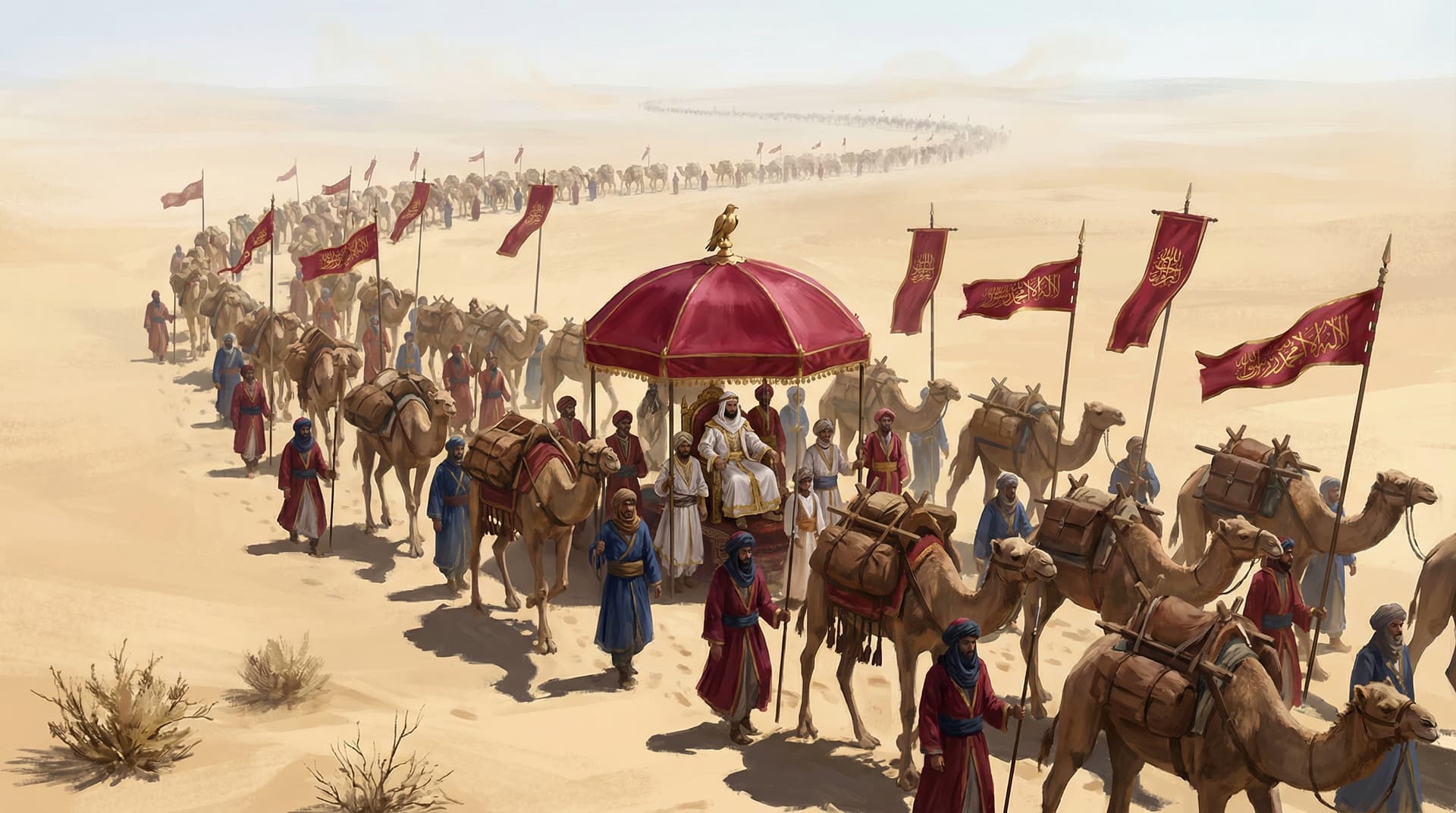
The caravan entered the Sahara and moved east through scorching heat and walls of sand that rose without warning. At every oasis, Musa stopped. At every oasis, he left gold behind -- payment for water, for food, for the privilege of being Mansa Musa passing through. The merchants at those oasis towns had never seen anything like it. They never would again.
The column snaked across the desert under red flags stitched with golden thread, a river of silk and metal pouring toward Egypt. Cairo had no idea what was coming.
Subscribe to Nightfall History on YouTube
Join our community on YouTube for more historical deep dives and visual storytelling
The Generosity That Broke a Nation
They camped for three days beside the Pyramids. Sixty thousand people spread across the sand in the shadow of monuments built by kings who understood what it meant to move the wealth of nations. Then Musa crossed the Nile and entered Cairo.
The Mamluk sultan, al-Nasir Muhammad, expected a visiting king to follow protocol. The protocol was simple: prostrate yourself before the sultan, kiss the ground. Every foreign dignitary did it. Musa refused. He stood in al-Nasir's throne room and said he would bow, but only before God. The court held its breath. Then al-Nasir -- pragmatic, perhaps impressed -- accepted the compromise and invited Musa to stay at the palace.
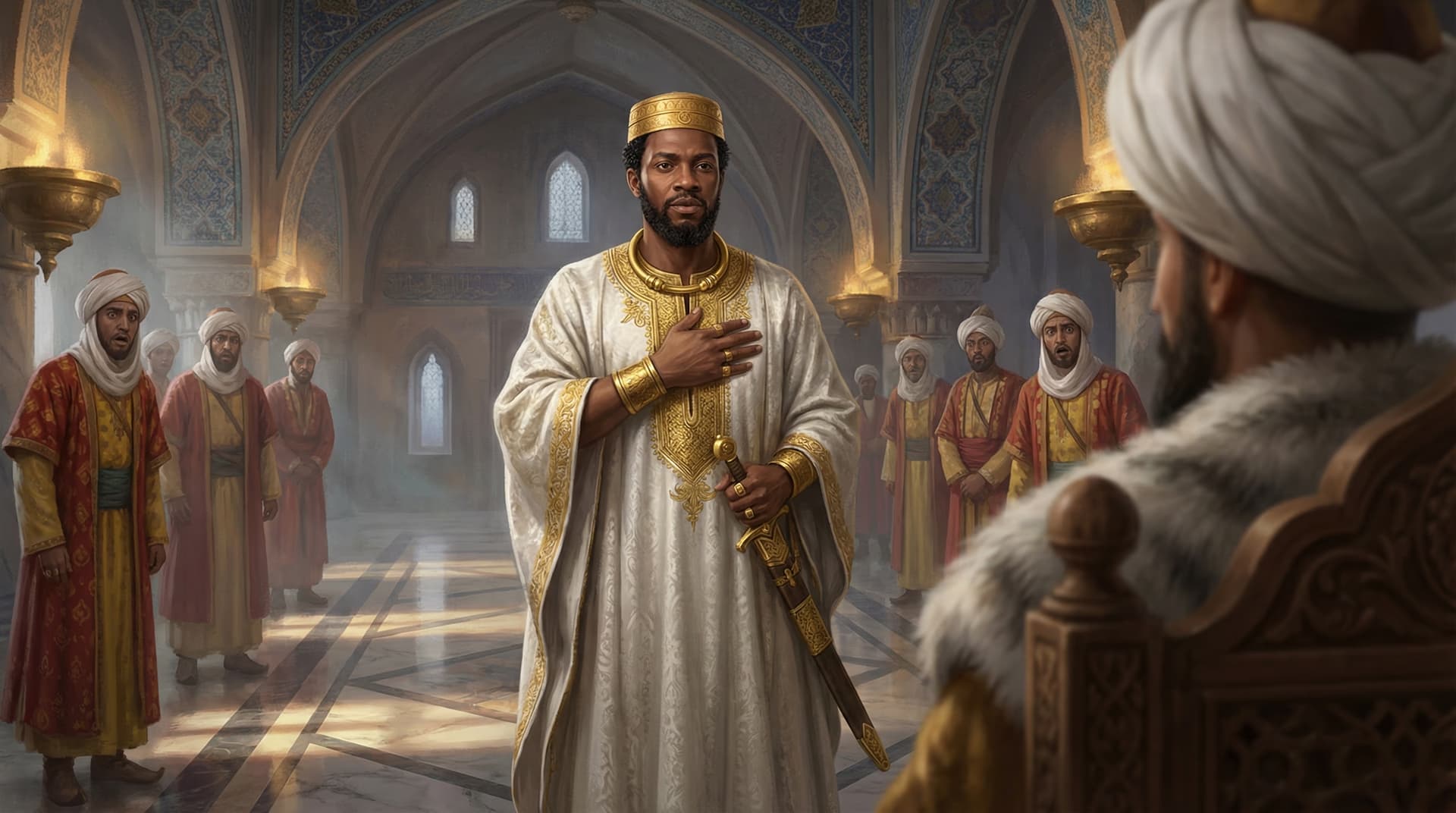
What followed was an act of generosity so total it became a catastrophe.
Musa gave gold to every emir in Cairo. Every holder of royal office. Every merchant who crossed his path. He gave without counting, without calculating, without pausing to ask what this much gold entering a single market at a single moment might do to the value of the metal itself. The Arab historian al-Umari, writing years later from the testimony of stunned Cairenes, recorded what happened: "He flooded Cairo with his benefactions. He left no court emir nor holder of a royal office without the gift of a load of gold."
The price of gold began to fall. Before Musa arrived, a single mithqal of gold was worth twenty-five dirhams -- sometimes more. Within weeks, it dropped below twenty-two. The conqueror of twenty-four cities had finally met an enemy he couldn't fight: the mathematics of a flooded market.
The Borrower King
The richest man in the world had run out of money.
It sounds impossible. A king who carried eighteen tons of gold across the Sahara, who left fortunes at every oasis between Niani and Cairo, who gave so freely that entire markets buckled under the weight of his gifts -- this man now stood in the offices of Cairo's moneylenders, asking to borrow.
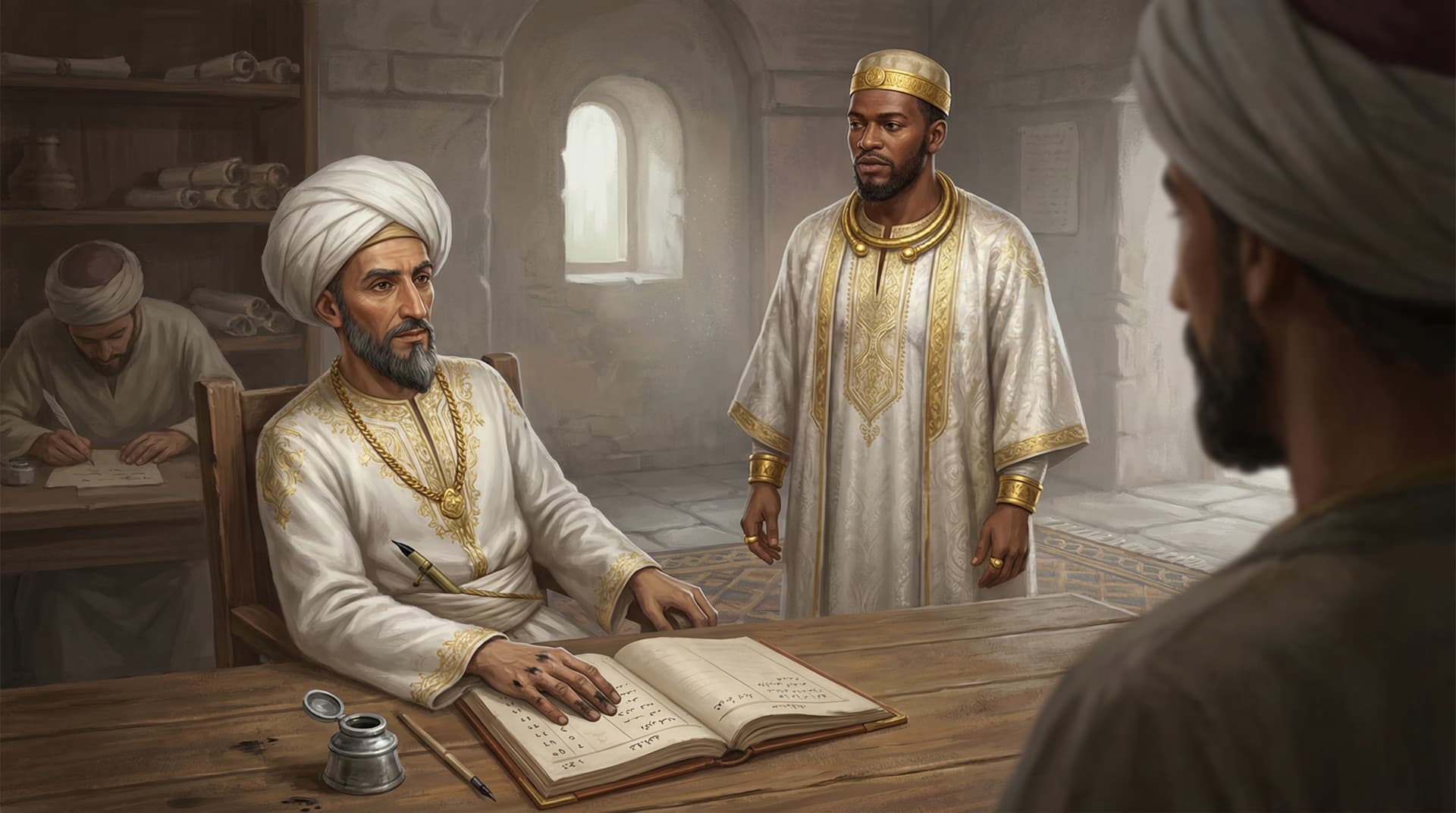
The moneylenders were delighted. They charged enormous interest. A king in debt is still a king, and a king who needs you is the best customer alive. They smiled, counted their terms, and handed over the gold.
But Musa was not simply desperate. He was calculating. The same strategic mind that had conquered twenty-four cities now turned to a different kind of problem. If too much gold flooding the market had crashed the price, then removing gold from the market should stabilize it. Borrowing gold pulled it out of circulation. It was military logic applied to economics -- control the resource, control the outcome.
For a moment, it seemed to work. The borrowing tightened the supply. The price began to steady. The moneylenders got their interest. Musa got his dignity back -- or something resembling it.
But he had not conquered this enemy. He had only delayed it. The gold he had scattered across Cairo's markets was still there, still circulating, still dragging the price down. And the interest he owed would come due, flooding even more gold into the same exhausted economy.
The richest man alive had tried to fix an economy with the same tool he'd broken it with. He would learn, in the months that followed, that gold solves fewer problems than a king might think.
Stay in the Loop
Get notified when new articles and videos drop. Unsubscribe anytime.
The Price of Everything
Musa continued east to Mecca and Medina. He gave away twenty thousand more ounces of gold along the way -- to beggars, to holy men, to anyone who crossed his path with an outstretched hand. He could not help himself. The hajj demanded generosity, and generosity was the only language Musa spoke fluently. He prayed at the Kaaba, pressing his forehead to stone worn smooth by a million pilgrims before him. He walked the sacred ground. He fulfilled the obligation that had driven him four thousand miles across sand and rock and burning sun.
Behind him, Cairo's economy was settling into a depression that would last twelve years. Musa's gold would still be warping the markets when children born that summer were old enough to have children of their own. Al-Umari recorded the damage with the precision of an accountant surveying rubble: "Gold was at a high price in Egypt until they came in that year. The mithqal did not go below twenty-five dirhams and was generally above, but from that time its value fell and it cheapened in price and has remained cheap till now." He wrote those words more than a decade later. The markets had not recovered. The gold was still cheap.
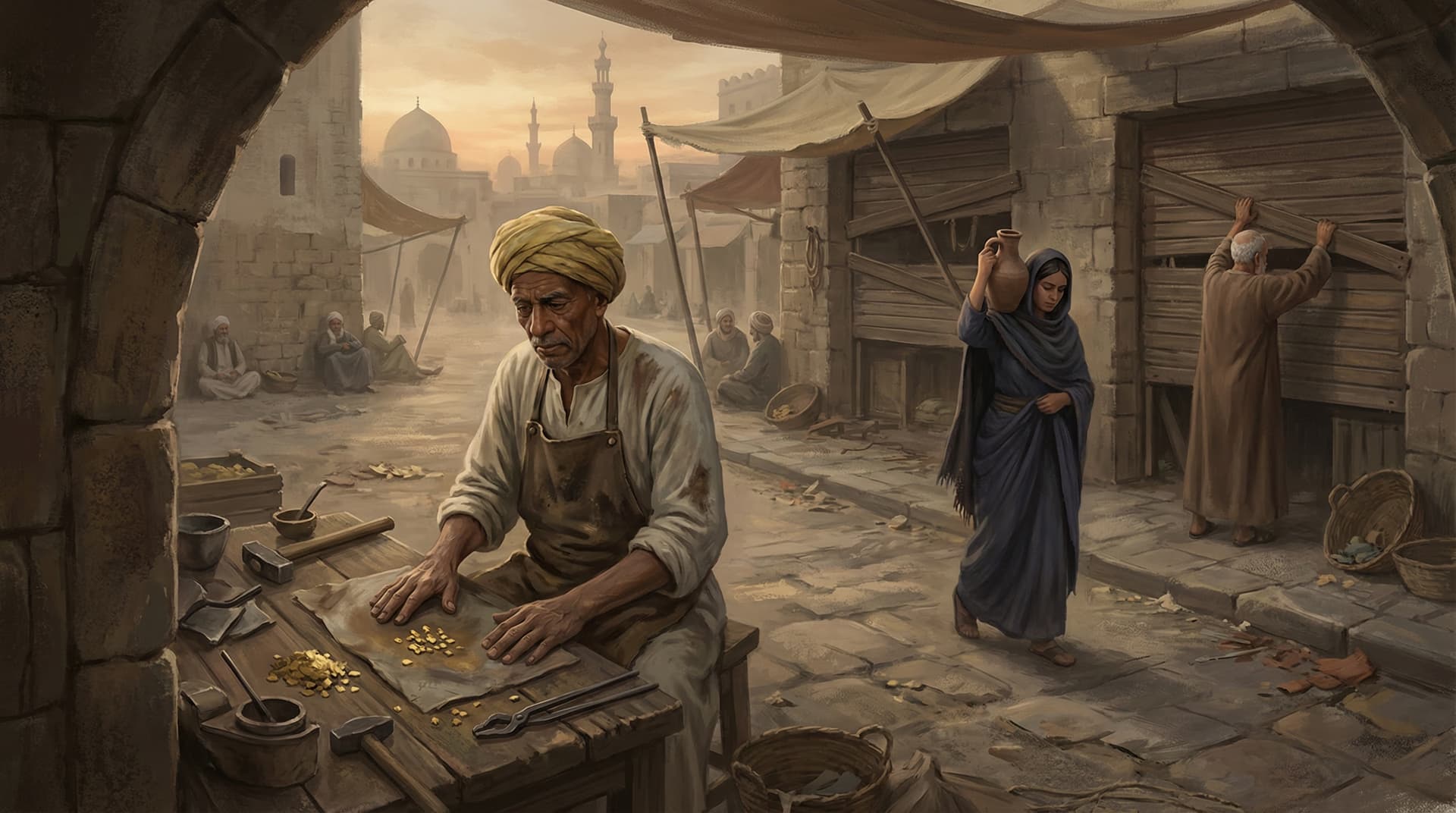
When Musa repaid the loans -- principal plus the towering interest -- he pushed even more gold back into the Egyptian market. He had ruined the economy, tried to repair it, and ruined it again, all with the same currency. Every touch made it worse. Every act of repayment compounded the original disaster. The moneylenders got rich. Everyone else got poorer. And Musa, the man who had meant to honor God, left behind a trail of financial wreckage stretching from Cairo to Medina.
But something happened on the return journey that the merchants of Cairo never noticed.
In the courts and mosques of the Islamic world, Musa met a man named Abu Ishaq al-Sahili -- an Andalusian poet and scholar whose stories and verses so captivated the emperor that Musa invited him to return to Mali. Al-Sahili had never seen the Niger. He had never set foot south of the Sahara. But Musa offered him patronage and twelve thousand mithqals of gold to build an audience chamber, and al-Sahili agreed. So did dozens of other scholars, jurists, and architects whom Musa encountered along the way. He recruited them with the same overwhelming generosity that had broken Cairo, offering positions, purpose, and the kind of gold that makes a man cross a desert.
The return caravan was lighter than the one that had left Mali. The camels carried less gold. But there were new faces among the travelers -- men who carried no gold at all, only knowledge. And knowledge, unlike gold, does not lose its value when you give it away.
The Weight of Gold
Musa crossed back into Mali around 1325, his caravan moving west through the same Sahara heat that had scorched them on the way out. He had been gone for more than a year. He returned to an empire that still stretched from the Atlantic to the Niger, still controlled the gold mines, still commanded the trade routes. Nothing had changed at home. Everything had changed in him.
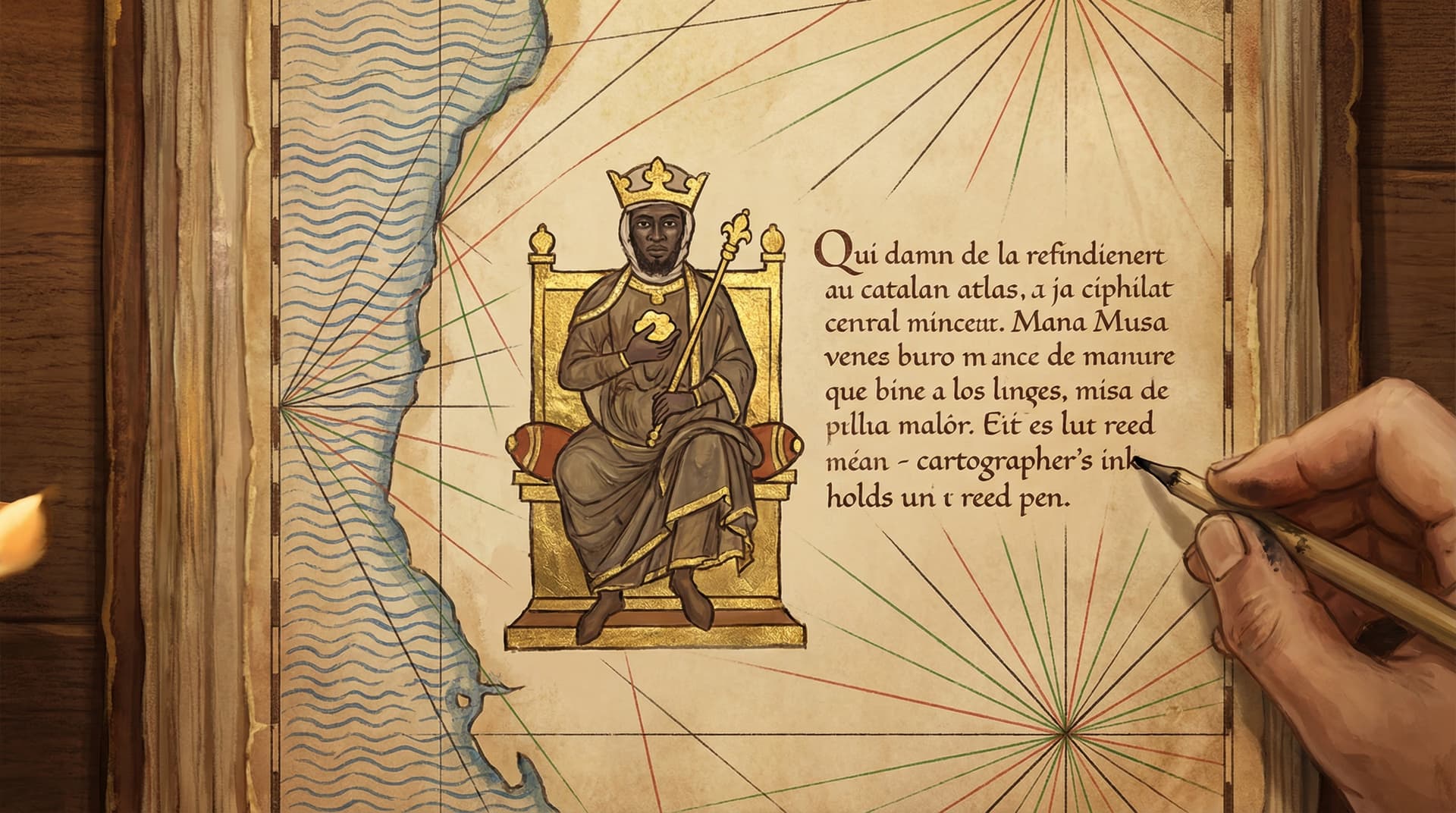
Fifty years later, a Majorcan cartographer named Abraham Cresques sat down to draw a map of the known world. When he reached West Africa, he painted a figure on a golden throne, holding a nugget of gold in one hand and a scepter in the other. Beneath the image he wrote: "This Black lord is called Musa Mali, Lord of the Black people of Mali. So abundant is the gold which is found in his country that he is the richest and most noble king in all the land."
That image -- a king sitting on gold, surrounded by gold, defined by gold -- traveled across Europe. It was what the world remembered. The wealth. The spectacle. The sheer impossible volume of it.
But the gold was only part of the story.
Those five hundred staffs that caught the morning sun outside Cairo's walls -- they left a shadow that lasted twelve years. An entire generation of Egyptian merchants, craftsmen, and traders lived in the economic wreckage of one man's pilgrimage. The richest man in history had tried to honor God with his wealth. He honored God. He just never understood what the gold would cost everyone else.
Generosity without understanding is just destruction dressed in silk. The size of the gift is never the same as its wisdom. Musa learned this -- not from a battlefield, not from a rival king, but from the slow, grinding mathematics of a market he never thought to study.
He came home carrying something heavier than gold. Architects. Scholars. A poet who could spin the world into verse. A vision for what Timbuktu could become -- for mosques and universities and manuscripts that might outlast the mines themselves. He had twelve years to turn that vision into stone and parchment and prayer. He spent every one of those years building.
It still wasn't enough.