- Known for
- Stabilizing the Mali Empire after Maghan I's failures and hosting Ibn Battuta's famous visit in 1352
- Fatal flaw
- A frugality that preserved the empire's finances but eroded the lavish patronage networks that held its loyalty together
The Story
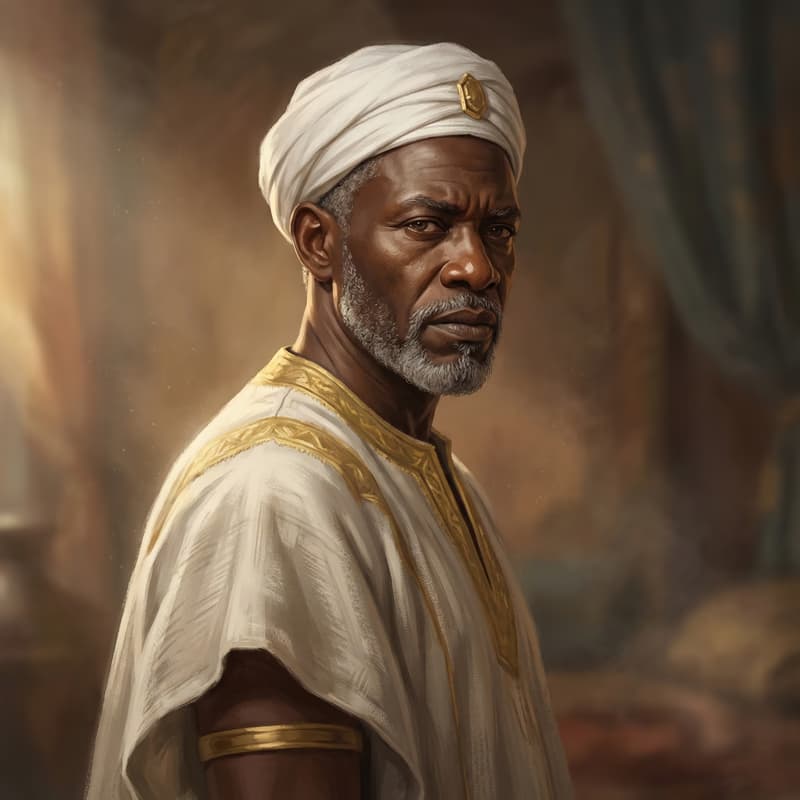
In 1341, Sulayman deposed his nephew Maghan I and took the throne of the Mali Empire. It was not a moment of triumph. It was an act of triage. In the four years since Mansa Musa's death, the empire had begun to unravel. Timbuktu had been raided and burned. The treasury was depleted by Maghan's reckless spending. Provincial governors were testing their independence. Sulayman, Musa's brother, had watched the decline and concluded that the alternative to a coup was the empire's collapse.
He ruled for approximately nineteen years, from 1341 to 1360. His reign is the second-best documented in Malian history, after Musa's, because of a single visitor: Ibn Battuta, the Moroccan traveler who arrived in Mali in 1352 and spent seven months at Sulayman's court. Ibn Battuta's account in his Rihla provides the most detailed firsthand description of the Mali Empire at its height, and it is not entirely flattering.
Sulayman was a very different ruler from his famous brother. Where Musa had been spectacularly generous, distributing gold with an abandon that crashed Egypt's economy, Sulayman was careful. Where Musa had spent lavishly to build Timbuktu into a world-class center of learning, Sulayman focused on maintaining what already existed. He completed a successful hajj of his own, maintained diplomatic correspondence with Morocco and Egypt, and held the empire together through competent administration rather than dazzling displays of wealth.
It was enough. Under Sulayman, Mali's golden age continued, the borders held, the trade routes functioned, and the empire remained the dominant power in West Africa. He was not his brother. He did not need to be. He needed to be good enough, and he was.
Personality & Motivations
Ibn Battuta, the only observer to leave a detailed firsthand account of Sulayman, compared him unfavorably to Musa and called him a miser. This tells us at least as much about Ibn Battuta as it does about Sulayman. The Moroccan traveler was accustomed to lavish hospitality from the rulers he visited, and he arrived in Mali expecting the legendary generosity of Musa's court. Instead, his initial reception gift consisted of three cakes of bread, a piece of beef fried in native oil, and a calabash of sour curds. Ibn Battuta was outraged.
But Sulayman had inherited a depleted treasury and an empire that had been weakened by his nephew's mismanagement. Restoring fiscal discipline was not miserliness. It was survival. When Ibn Battuta complained directly to the mansa about his reception, Sulayman arranged proper lodging and a gift of gold. He was not incapable of generosity. He simply rationed it in a way his brother never had.
Beyond the question of money, Ibn Battuta's account reveals a ruler who maintained elaborate court ceremonies, commanded genuine respect from his officials, and governed with an attention to justice that the traveler himself acknowledged. Ibn Battuta noted that the people of Mali "seldom unjust" and had "a greater abhorrence of injustice than any other people," with "complete security in their country."
What Most People Get Wrong
Ibn Battuta's complaint that Sulayman was a miser has colored his reputation for seven centuries. But a close reading of the Rihla reveals that what Ibn Battuta actually documented was a functioning, stable, well-governed empire. The roads were safe. Justice was administered fairly. Court ceremonies were conducted with elaborate dignity. Trade flowed. The mosques Musa had built were maintained and active.
Sulayman's "miserliness" was, in practice, fiscal responsibility. Musa had given away so much gold during his hajj that he had to borrow from Cairo's money-lenders to get home. The treasury he left his successors was diminished. Sulayman rebuilt it through careful management, not through the kind of showmanship that makes good history but bad policy. Ibn Battuta wanted gifts. The empire needed a balanced budget.
Key Moments
Mali, 1341. Sulayman deposes his nephew Maghan I and takes the throne. The coup is presented in the sources as a response to Maghan's incompetence and wasteful spending. Sulayman, as Musa's brother, has both the bloodline legitimacy and the political networks to make the transition stick. He immediately begins stabilizing the empire's finances and reasserting central authority over the provinces.
The Hajj. Sulayman completes his own pilgrimage to Mecca, following in his brother's footsteps. The timing is not precisely recorded, but the hajj serves the same diplomatic function for Sulayman as it did for Musa: it reinforces Mali's place in the Islamic world and the mansa's credentials as a legitimate Muslim ruler. Unlike Musa's hajj, Sulayman's does not crash any economies.
Mali, July 1352. Ibn Battuta arrives at Sulayman's court after crossing the Sahara. The Moroccan traveler spends seven months observing Malian court life, ceremonies, and customs. He is simultaneously impressed by the empire's stability and justice and appalled by its ruler's stinginess and certain local customs he considers un-Islamic, including women appearing in public without full covering.
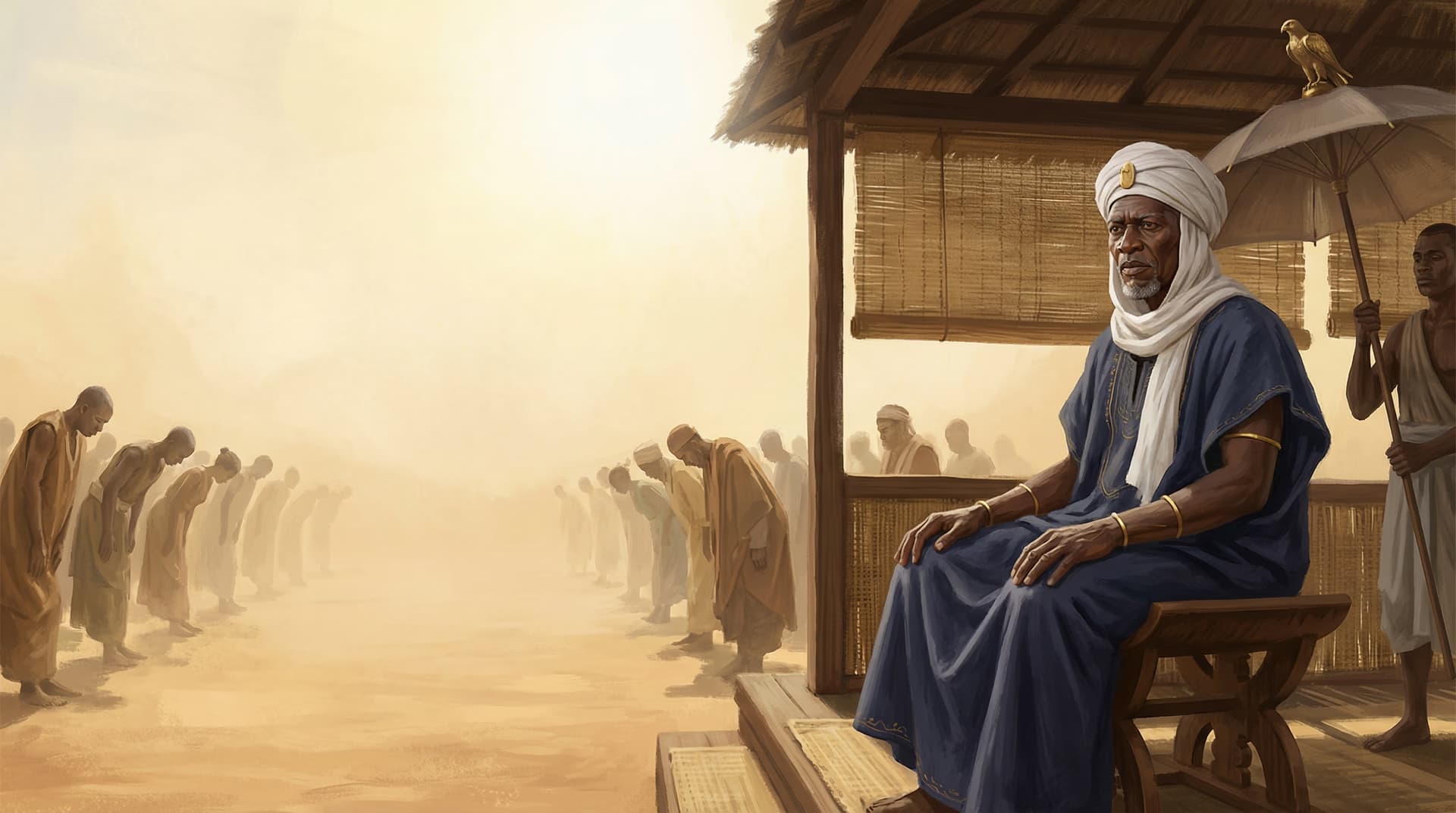
The Court Ceremonies. Ibn Battuta describes elaborate rituals: the sultan seated in a lofty pavilion, attended by 300 armed slaves, an interpreter in fine silk at the gate. Petitioners approach in worn garments, remove their shoes, raise their trousers to the knee, and throw dust over their own heads and backs when receiving the mansa's words. Poets and musicians perform. The ceremony demonstrates that Sulayman maintained the dignity and authority of the Malian court even without his brother's extravagant spending.
Mali, c. 1360. Sulayman dies after approximately nineteen years on the throne. His death triggers a succession crisis that marks the definitive end of Mali's golden age. The empire that had survived the transition from Musa to Maghan to Sulayman could not survive another contested succession.
The Detail History Forgot
Ibn Battuta recorded a detail about Sulayman's court that reveals the limits of the mansa's power in ways no military history could. During his visit, a succession dispute erupted within the royal household. Sulayman's senior wife, Qasa, attempted to overthrow her husband in a palace coup, reportedly in league with the mansa's cousin. The plot failed, but the fact that it was attempted, and that Ibn Battuta witnessed it firsthand, suggests that Sulayman's grip on power was not as secure as his court ceremonies implied. The elaborate rituals of submission, the dust thrown on bowed heads, masked a political reality in which even the mansa's own household was a source of danger.
The Downfall
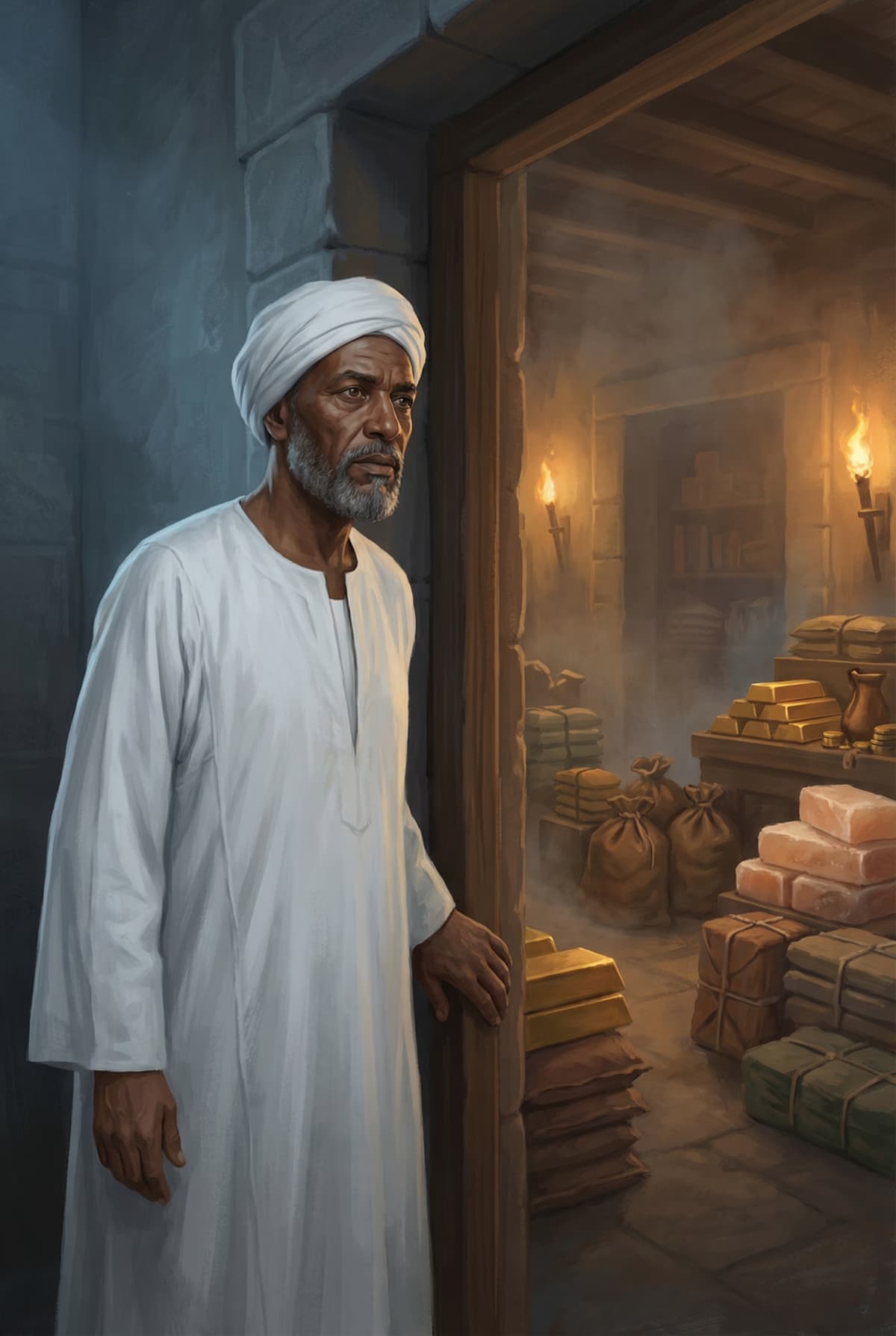
Sulayman's death around 1360 ended the last period of stability the Mali Empire would know. He had held the empire together for nearly two decades, not through brilliance but through competence. He had maintained the trade routes, kept the borders secure, preserved Musa's building projects, and restored a measure of fiscal health to the treasury. It was a solid, unglamorous achievement.
But he had not solved the succession problem, because the succession problem could not be solved within the Malian political system. There was no constitutional mechanism for orderly transfer of power. There was no standing bureaucracy that could function independently of the mansa. There were only powerful men with ambitions, and the question of which one would prevail.
After Sulayman's death, the empire was ruled by a string of short-lived, cruel, or incompetent mansae. Civil wars became routine. The provinces began breaking away. The Songhai Kingdom to the east, once a vassal, grew powerful enough to challenge and eventually absorb what remained of Mali. Sulayman had been the last man capable of holding it all together. When he died, the center could not hold. Mali did not fall in a single dramatic collapse. It eroded, decade by decade, until the empire that had once appeared on European maps as the seat of the richest king in the world was reduced to a collection of squabbling chieftaincies. Sulayman's legacy was not glory. It was time, nineteen borrowed years before the inevitable decline.