- Known for
- Rescuing 350,000 Timbuktu manuscripts from jihadist destruction in 2012
- Fatal flaw
- A devotion to preservation so total that it left him financially ruined and physically broken by the time the manuscripts were safe
The Story
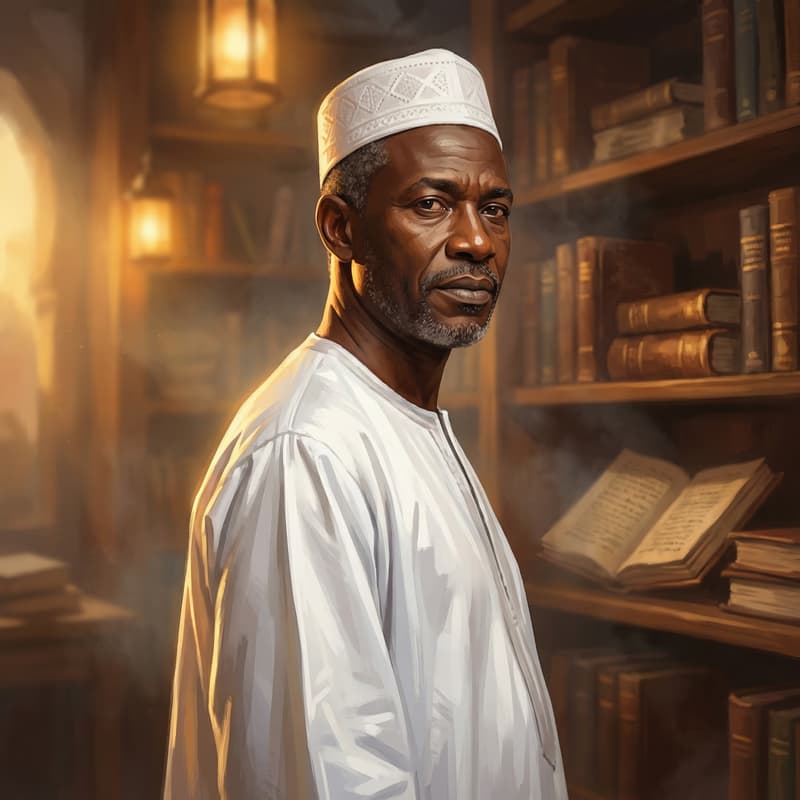
In April 2012, Abdel Kader Haidara returned from a business trip to find his city under occupation. A coalition of Tuareg separatists and jihadist fighters affiliated with al-Qaeda in the Islamic Maghreb had seized Timbuktu. They imposed strict Sharia law, destroyed Sufi shrines, and began targeting anything they deemed un-Islamic. Haidara, a librarian, looked at the 350,000 ancient manuscripts scattered across 45 private libraries in and around the city and understood what was coming.
Those manuscripts were the intellectual legacy of Mansa Musa's empire. When Musa returned from his 1324 hajj, he brought scholars, books, and the architect Abu Ishaq al-Sahili to Timbuktu. He built the Djinguereber Mosque, expanded the Sankore Madrasah, and transformed a trading post into one of the Islamic world's great centers of learning. Over the centuries that followed, scholars in Timbuktu produced and collected hundreds of thousands of manuscripts covering astronomy, poetry, law, medicine, philosophy, mathematics, and theology. These documents survived the fall of the Mali Empire, the rise and collapse of the Songhai Empire, French colonialism, and decades of Malian independence. They had endured for seven hundred years.
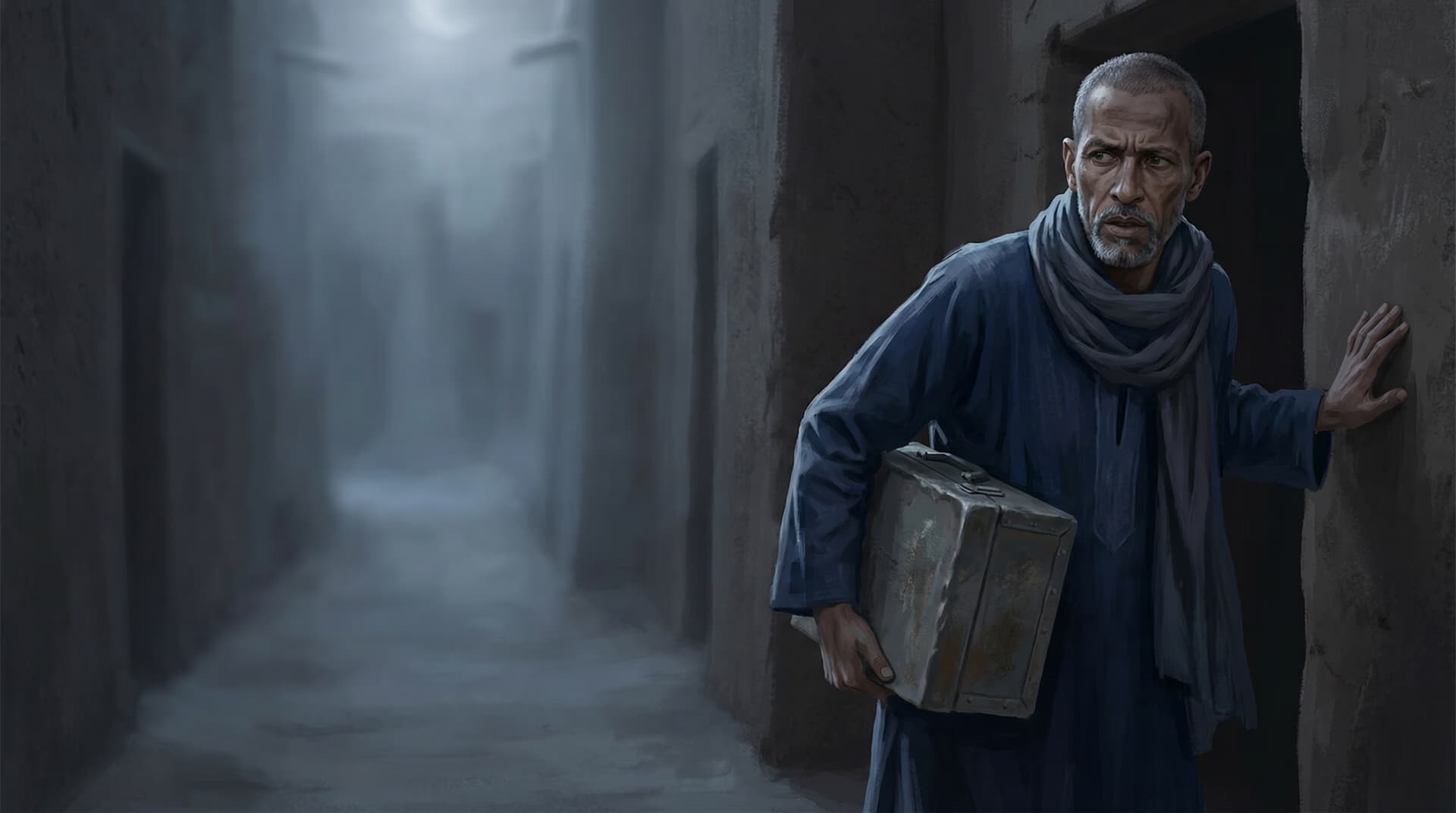
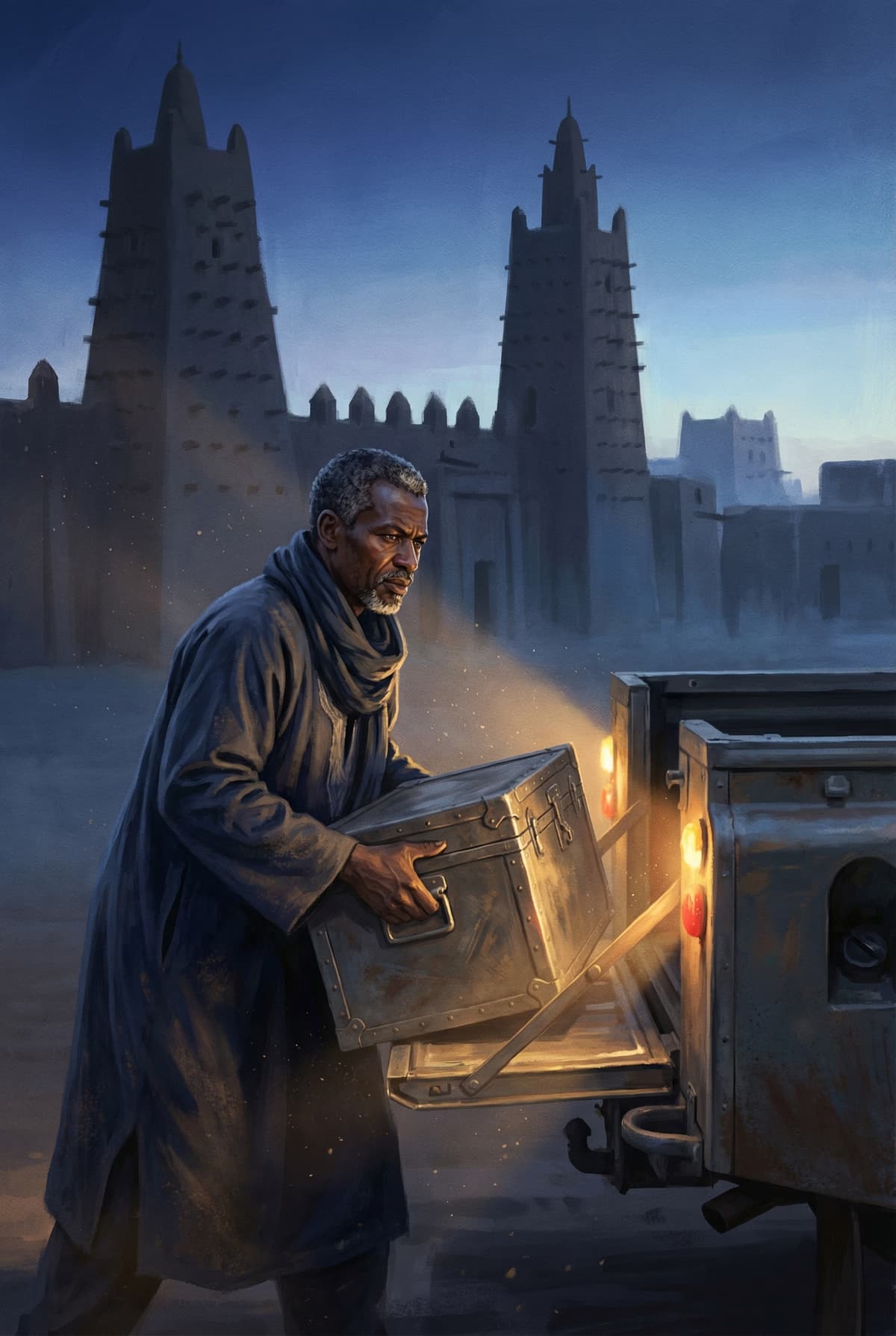
Haidara decided they would not be destroyed on his watch. Over nine months, he and a network of couriers packed manuscripts into metal footlockers, hid them in mule carts and the backs of 4x4 vehicles, and smuggled them out of Timbuktu past jihadist checkpoints. They moved them by road and by river, more than 600 miles south to Bamako. They worked at night. They bribed drivers. They risked execution. By the time French forces recaptured Timbuktu in January 2013, nearly all 350,000 manuscripts were safe.
The jihadists burned what they found in the Ahmed Baba Institute, the government-run library. But the private collections, the ones Haidara had spent his life gathering, were gone. He had moved them before anyone thought to look.
Personality & Motivations
Haidara was born into preservation. His father, Mamma Haidara, was a qadi and scholar who taught classical Islamic sciences in Timbuktu. When Mamma died in 1981, he left his personal manuscript collection to his seventeen-year-old son. Not to the eldest. To Abdel Kader, the one he trusted to understand what the papers meant.
That trust defined the rest of Haidara's life. He spent decades traveling across Mali, visiting remote villages and private homes, persuading families to let him catalog and preserve manuscripts they had kept hidden for generations. Many families stored their manuscripts in trunks, wrapped in cloth, passed down like heirlooms. They were deteriorating. Haidara convinced them to deposit the texts in proper libraries with climate control and archival care. By 2000, he had founded the Mamma Haidara Memorial Library in his father's honor. By 2012, his network encompassed 45 private collections.
He was not a soldier or an activist. He described his profession as "prospector of manuscripts." But when the crisis came, the prospector became a smuggler. The quiet discipline that had allowed him to spend years earning the trust of manuscript-owning families turned out to be exactly the temperament needed to run a covert operation under occupation.
What Most People Get Wrong
The popular version of the story, immortalized in Joshua Hammer's book "The Bad-Ass Librarians of Timbuktu," centers on the dramatic 2012 rescue. But Haidara's real achievement happened in the two decades before the crisis. Without his years of patient work persuading families to catalog and consolidate their collections, the 2012 rescue would have been impossible. You cannot smuggle 350,000 manuscripts out of a city if you do not know where they are.
The jihadists burned roughly 4,000 manuscripts at the Ahmed Baba Institute, the government library. This was devastating. But the private collections, which Haidara had spent his career organizing, dwarfed the government holdings. The rescue succeeded because Haidara had already built the infrastructure, the relationships, the knowledge of where every collection was stored, long before anyone imagined Timbuktu would fall to extremists.
Key Moments
Timbuktu, 1981. Seventeen-year-old Abdel Kader inherits his father Mamma Haidara's personal manuscript collection. The inheritance is not wealth. It is responsibility. The manuscripts are fragile, some dating to the 14th century, and they require care, expertise, and resources the young man does not yet have. But the choice his father made, selecting him over older siblings, plants the seed of a lifelong mission.
The Prospecting Years, 1984-2000. Haidara travels across Mali, from Timbuktu to remote villages along the Niger River, knocking on doors and asking families about their manuscripts. Many families are suspicious. They have kept their texts hidden for generations, wary of colonial authorities and government officials. Haidara earns their trust slowly, family by family, explaining the value of preservation without asking anyone to give up ownership.
Founding of the Library, 2000. Haidara opens the Mamma Haidara Memorial Library in Timbuktu, named for his father. It houses roughly 22,000 manuscripts. He also establishes SAVAMA-DCI, an NGO that helps other private collection holders set up their own libraries. The network grows to encompass 45 libraries across the region.
The Occupation, April 2012. Jihadist fighters seize Timbuktu. Haidara realizes the manuscripts are in danger and begins organizing a covert evacuation. Teams work at night, packing texts into metal footlockers and loading them onto mule carts. His nephew Mohammed Toure is stopped one night by Oumar Ould Hamaha, one of al-Qaeda's most dangerous local commanders, who demands to see the contents of a trunk. Toure talks his way out. The operation continues.
Bamako, January 2013. By the time French forces liberate Timbuktu, nearly all 350,000 manuscripts from the private collections are safe in Bamako, more than 600 miles to the south. The jihadists burn roughly 4,000 manuscripts at the government-run Ahmed Baba Institute, but the vast majority of Timbuktu's intellectual heritage survives because one librarian refused to leave it behind.
The Detail History Forgot
The manuscripts Haidara saved are not just Islamic texts. Among the 350,000 documents are works of astronomy that map star movements over West Africa, medical treatises describing surgical techniques, mathematical texts, love poetry, legal opinions on women's property rights, diplomatic correspondence between African and European rulers, and commercial records that reveal the scale of trans-Saharan trade. One manuscript contains a 13th-century legal argument that a woman's consent is required for a valid marriage. Another includes astronomical observations that predate Copernicus.
These documents demolish the colonial-era myth that sub-Saharan Africa had no written intellectual tradition. The manuscripts prove that Timbuktu was, for centuries, exactly what Mansa Musa intended it to be: a world-class center of learning that rivaled any in the Islamic world. What Haidara saved was not just paper. It was the evidence.
The Downfall
Haidara's story does not end with a downfall in the traditional sense. He survived. The manuscripts survived. But the cost was enormous.
The rescue operation drained his finances. He funded much of the early evacuation out of his own pocket and through hastily arranged donations. The logistics of storing 350,000 manuscripts in a city not equipped to house them created ongoing preservation challenges. Humidity, insects, and inadequate climate control in Bamako threatened to damage the texts that had survived the journey. Haidara spent years after the rescue fighting for resources to properly conserve what he had saved.
The broader problem is that Timbuktu has not fully recovered. The manuscripts remain in Bamako. The libraries in Timbuktu sit empty or diminished. The scholarly ecosystem that produced and sustained these texts for seven centuries, the families, the teachers, the students, the copyists, was disrupted by the occupation and has not been rebuilt. Haidara saved the documents but could not save the culture that created them. The manuscripts are evidence of a civilization that Mansa Musa set in motion seven hundred years ago. Whether that civilization can be restored, or whether the manuscripts will become artifacts of a tradition that no longer lives, is a question Haidara cannot answer alone.