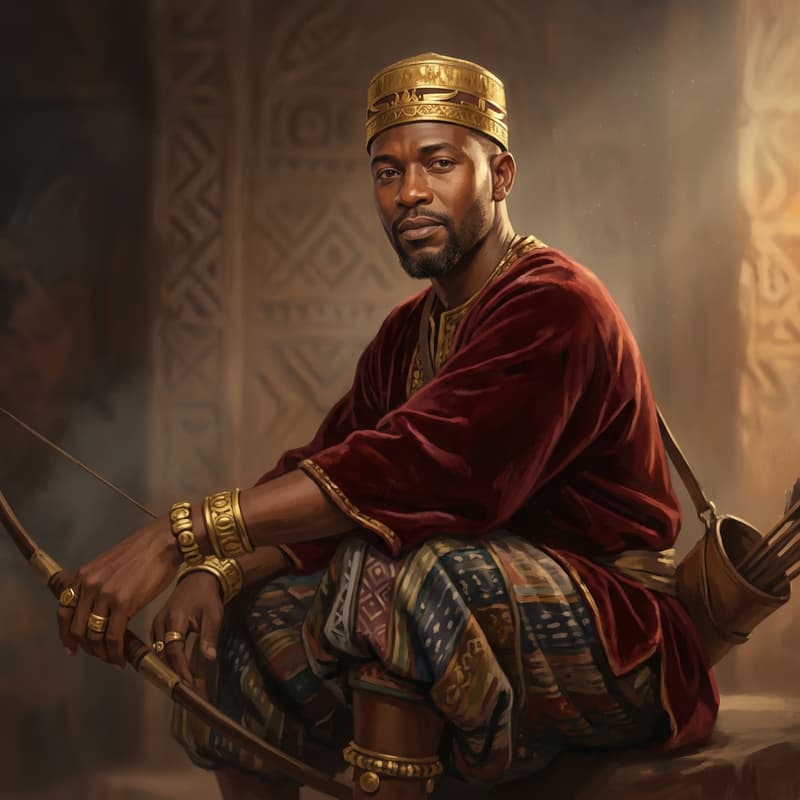
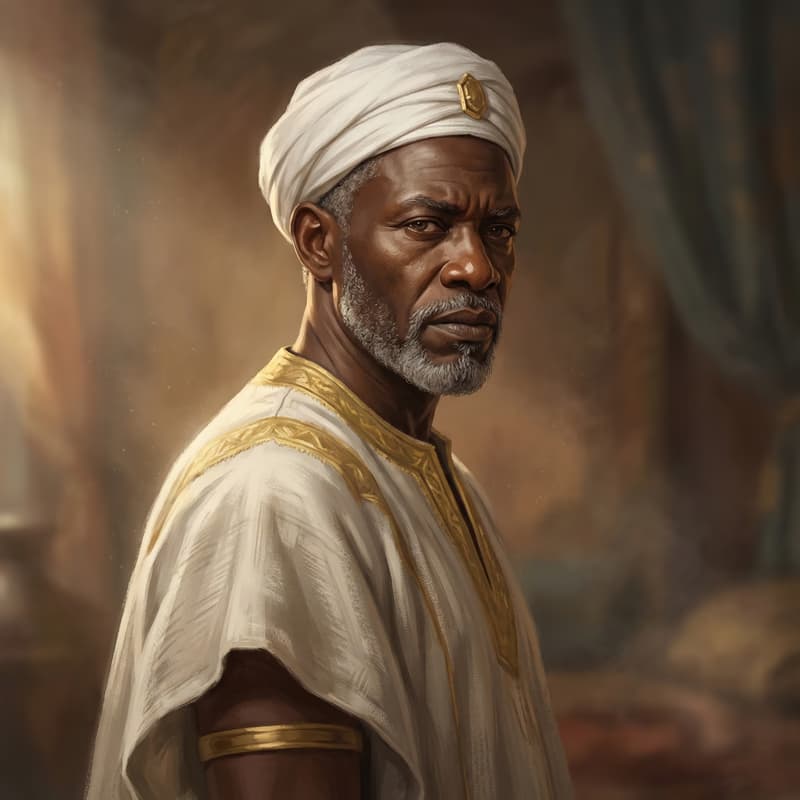
A City Built on Gold
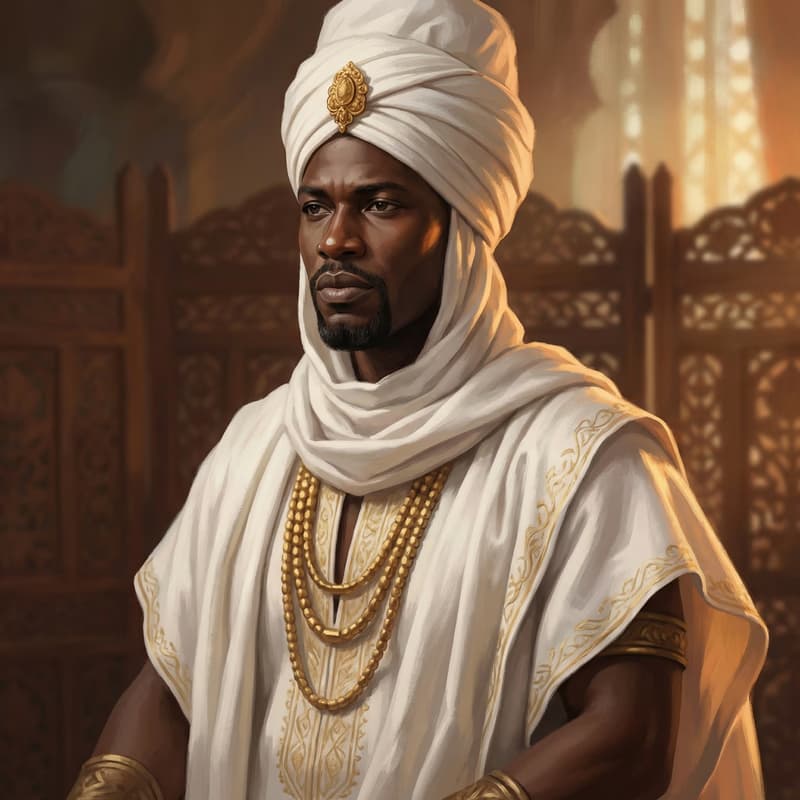
Fifty-one kilograms of gold. That is what Mansa Musa pays a single architect to build him something that will last forever. The mosque will stand for seven hundred years. The empire behind it will not survive a generation.
The architect's name is Abu Ishaq al-Sahili, a poet and scholar from Granada whom Musa met during the hajj. He is one of dozens Musa brings home with him in 1325 -- astronomers, jurists, mathematicians, theologians -- carried across the Sahara on the promise that what awaits them in Mali will be worth the journey. Musa has seen the mosques of Cairo and Mecca. He has walked through libraries that hold the collected knowledge of the Islamic world. And he has returned to Timbuktu with an idea that will consume the rest of his life: he will build a city that rivals them all.
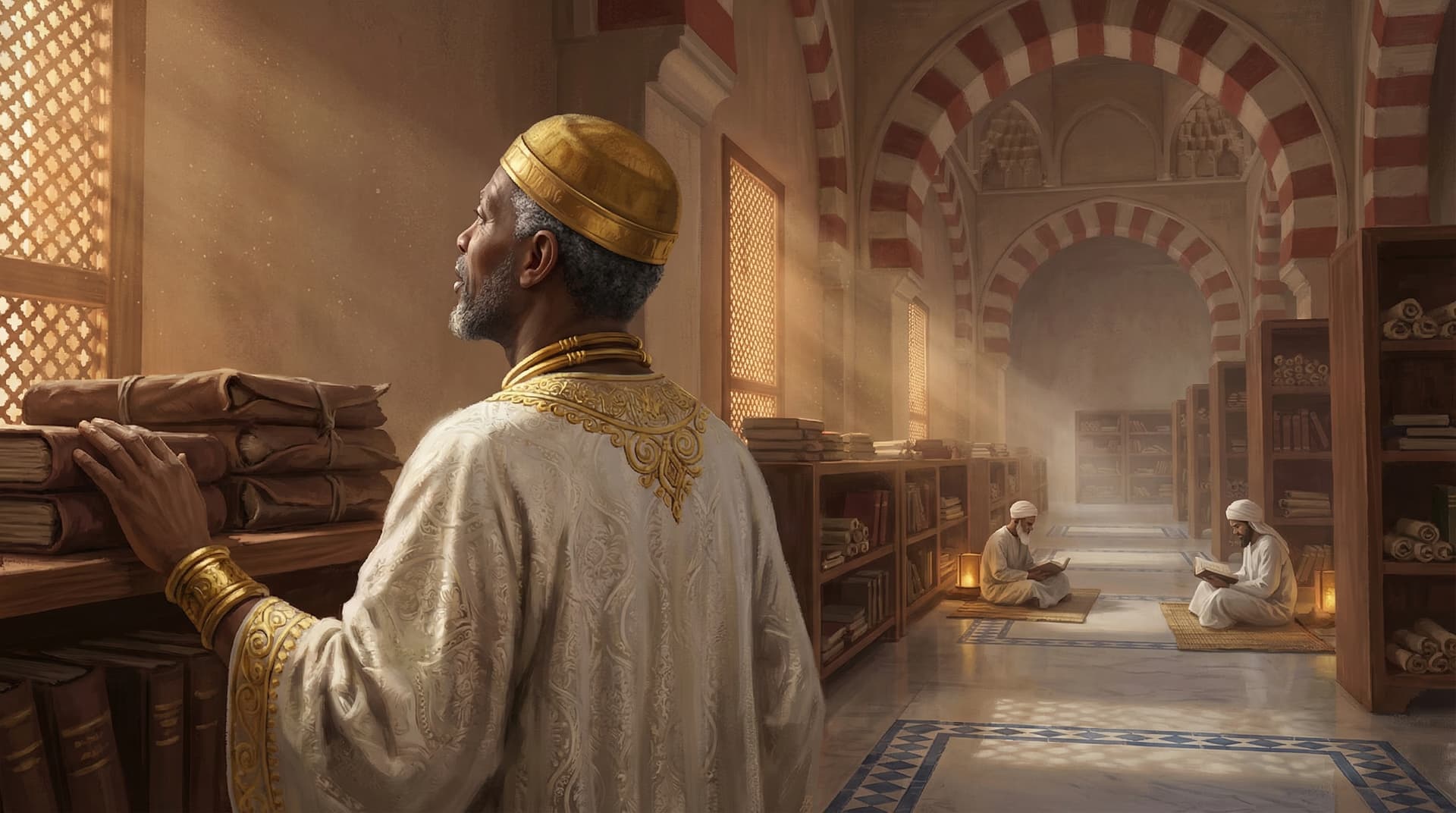
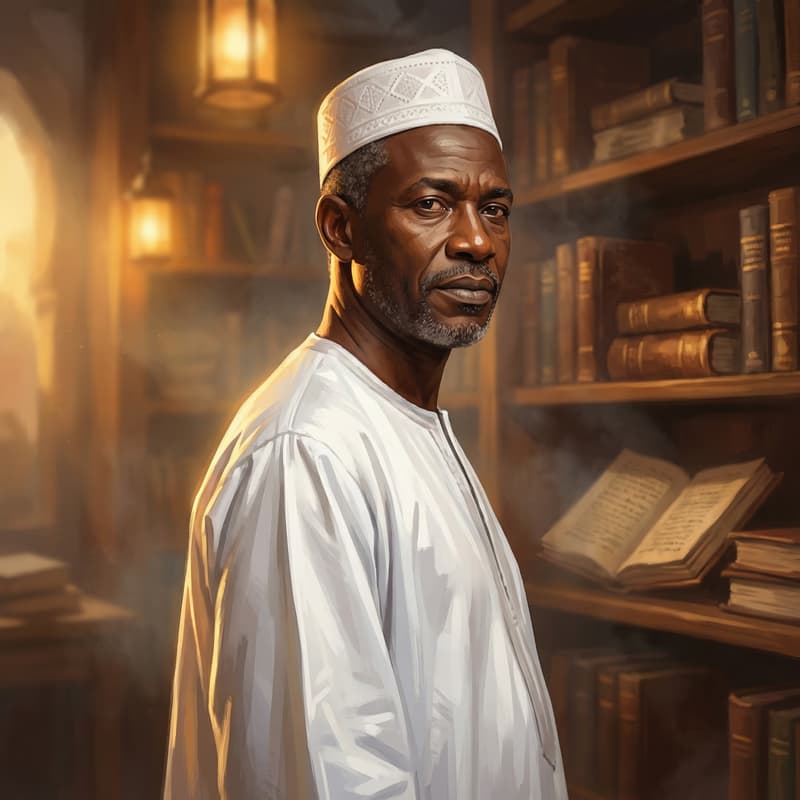
Al-Sahili works in mud. Not marble, not limestone -- earth, fiber, straw, and wood. From these materials he raises the Djinguereber Mosque: twenty-five rows of pillars aligned east to west, space for two thousand worshippers, a structure so elegant in its simplicity that it will still be standing in the twenty-first century. Across the city, the Sankore Madrasah expands under Musa's patronage. Its courtyard is built to the same dimensions as the Kaaba. Within years, twenty-five thousand students fill its halls -- one quarter of Timbuktu's entire population -- studying astronomy alongside Ptolemy, medicine alongside Avicenna, law and theology and mathematics that draw scholars from as far away as Fez and Cordoba.
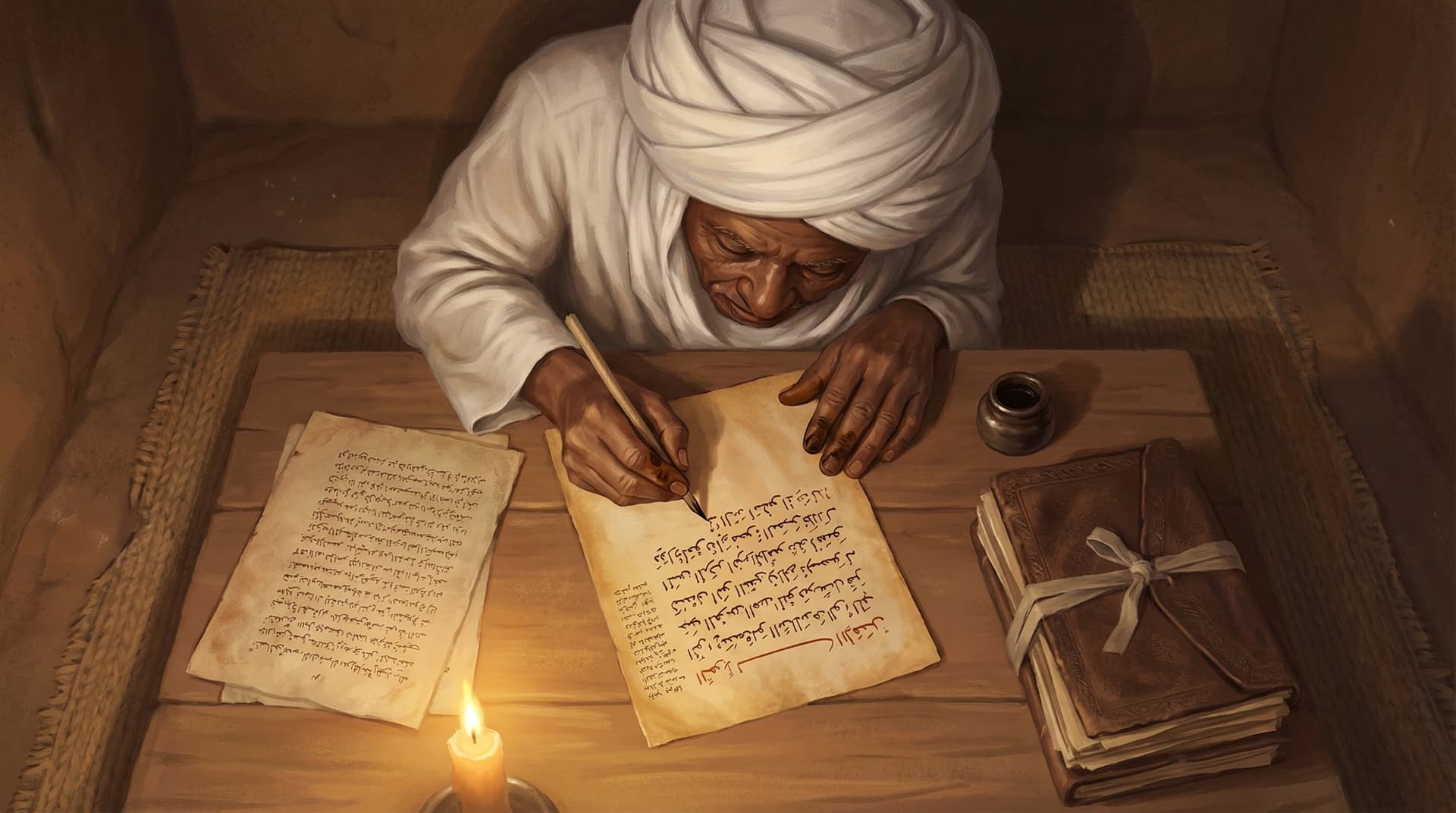
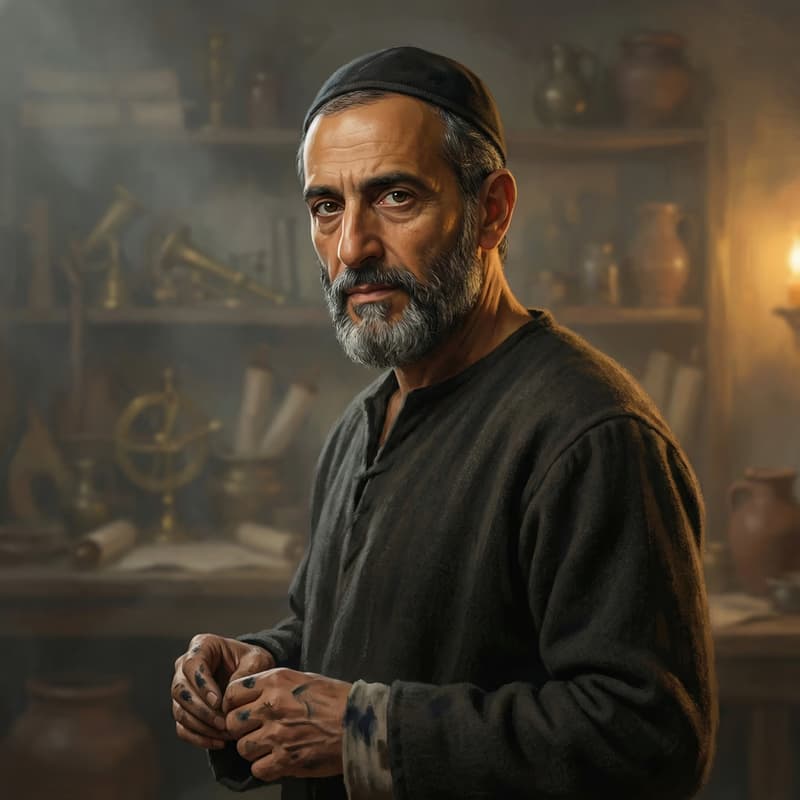
Something shifts in Timbuktu under Musa's reign. The most profitable trade item in the city is no longer gold or salt. It is books. Wealthy families measure their importance not by the weight of their gold but by the size of their libraries. Scribes copy manuscripts by candlelight -- works on astronomy, philosophy, medicine, geometry -- until between four hundred thousand and seven hundred thousand manuscripts accumulate in the city's private collections. Timbuktu becomes, for a brief and extraordinary moment, the intellectual center of an entire continent.
But Musa builds everything except the one thing that would save his empire. We will come back to what that was.
And there is something else worth knowing: within four years of Musa's death, the city he pours his fortune into will burn.
Subscribe to Nightfall History on YouTube
Join our community on YouTube for more historical deep dives and visual storytelling
The Ashes of Timbuktu
Mansa Musa dies around 1337. The throne passes to his son, Maghan I.
Maghan is not his father. Where Musa spent gold to build, Maghan spends it to consume. He is described as the first lackluster emperor since Khalifa -- a man who inherited the richest empire on Earth and treated it like a personal treasury. He has none of his father's vision, none of his discipline, and none of his instinct for power. The provinces that Musa held together through patronage and force of will begin to pull at their seams.
And then the Mossi come.
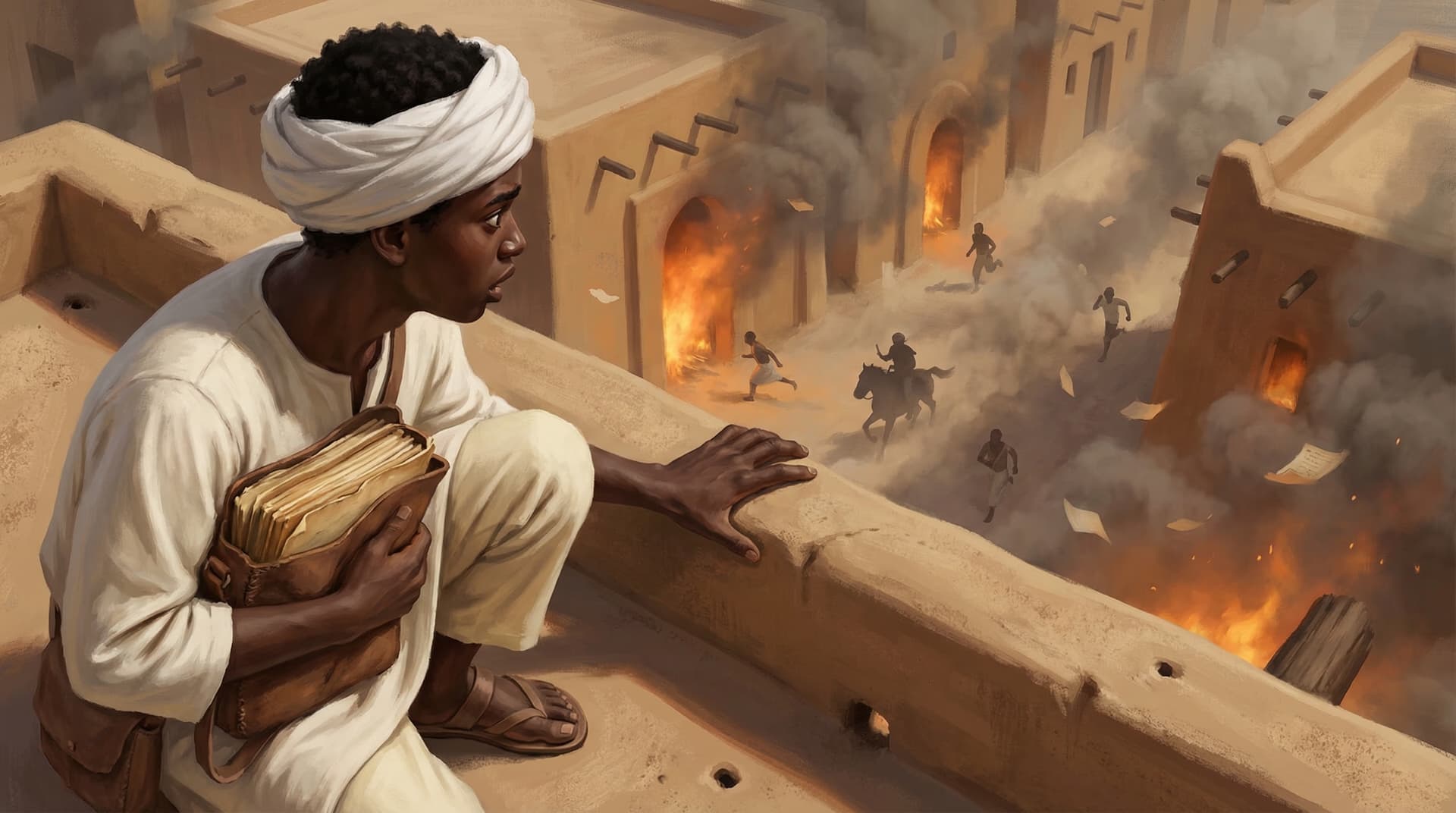
They ride in from the south of the Niger bend -- raiders who have watched Mali's borders with patient attention. Under Musa, they would not have dared. Under Maghan, there is no one to stop them. They strike Timbuktu itself. The city Musa paid fifty-one kilograms of gold to build. The city of twenty-five thousand students and seven hundred thousand manuscripts. Smoke rises over the mud-brick walls. Parts of the city burn.
Four years. That is all it takes. The greatest builder in West African history dies, and within four years his own son lets his masterwork catch fire. Musa could buy scholars, architects, and books from across the known world. He could not buy a worthy heir.
Maghan I is deposed in 1341 by his uncle Sulayman, who has watched the empire bleed for four years and decided that enough is enough. But the damage is done. The first crack has appeared in the foundation Musa laid -- and it will never fully close.
The Brother Who Stayed
The empire is bleeding. Timbuktu is scarred. The scholars are shaken. And it is Musa's own brother who steps into the wreckage.
Mansa Sulayman takes the throne in 1341, and what he brings is the opposite of everything Musa was famous for. Where Musa was generous to the point of catastrophe -- the man who crashed Egypt's gold market with his bare hands -- Sulayman is careful. Calculating. Tight-fisted. He understands that an empire running on spectacle needs something quieter to survive: competence.
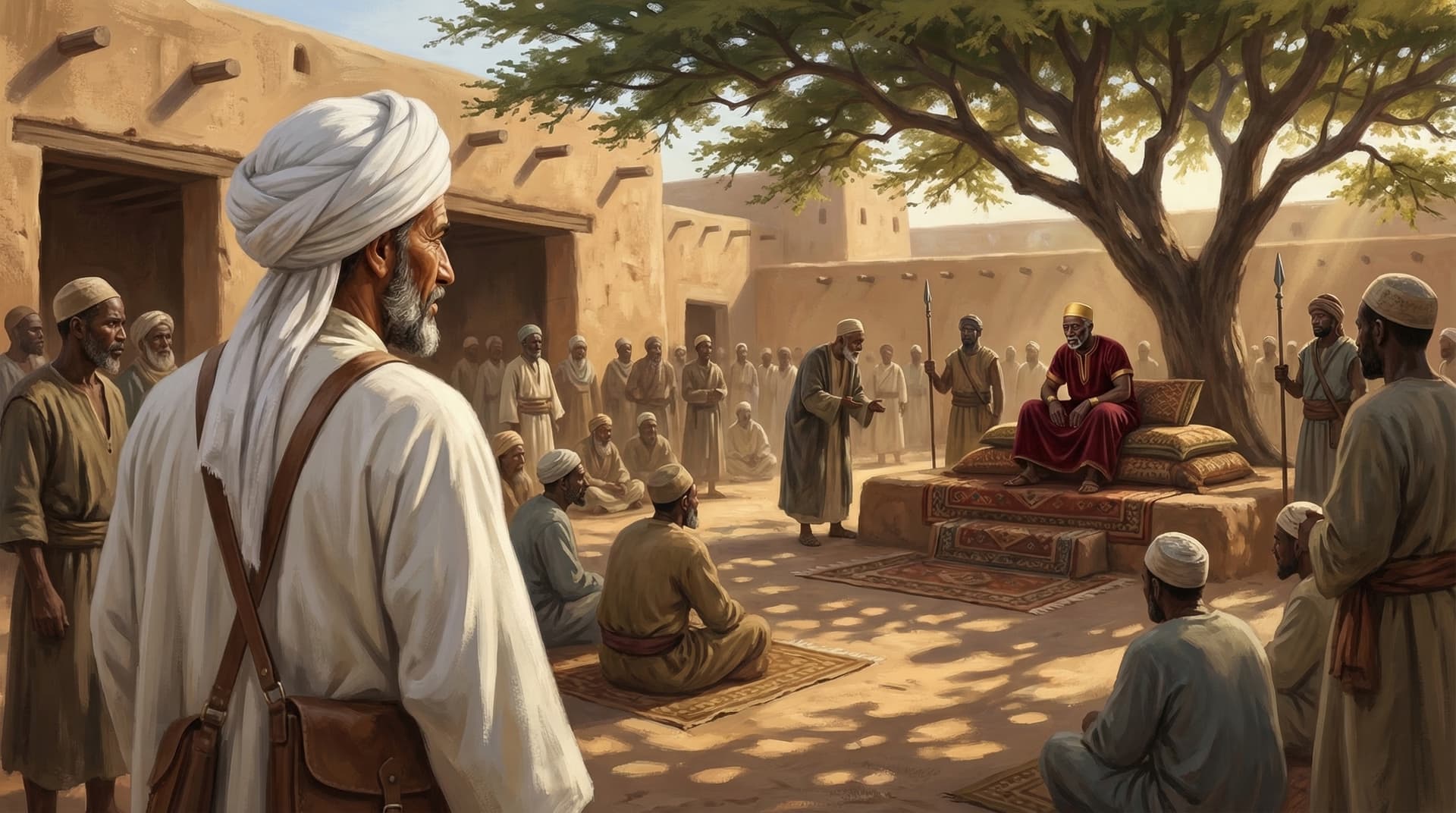
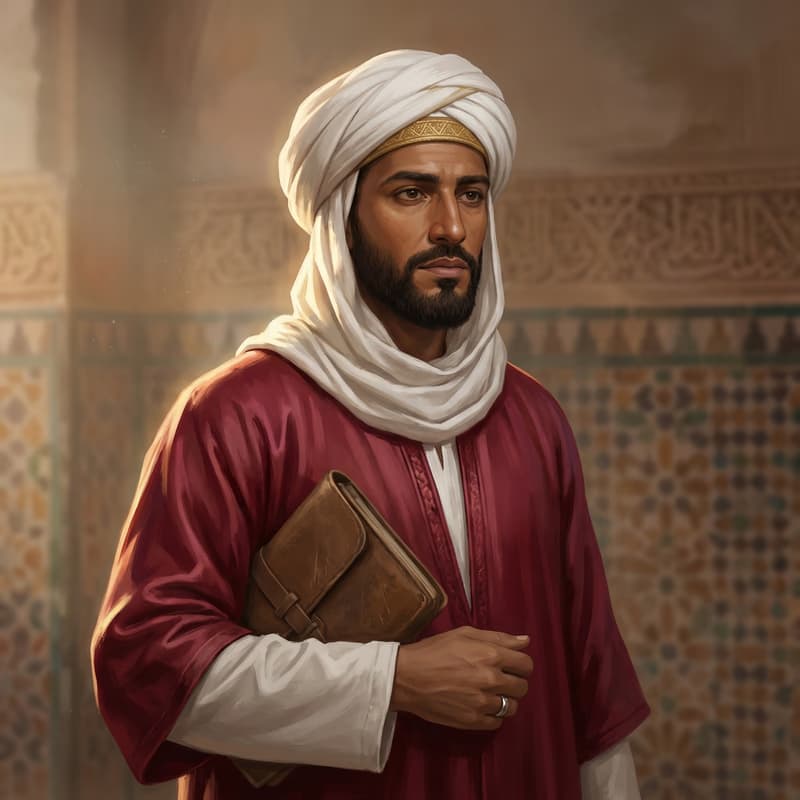
For nineteen years, it works. Sulayman holds the borders. He maintains the trade routes. He keeps the provinces together through administration rather than extravagance. When the Moroccan traveler Ibn Battuta arrives at the Mali court in 1352, he finds something remarkable. "The people are seldom unjust," Ibn Battuta writes, "and have a greater abhorrence of injustice than any other people. There is complete security in their country. Neither traveler nor inhabitant in it has anything to fear from robbers or men of violence."
Stay in the Loop
Get notified when new articles and videos drop. Unsubscribe anytime.
But Ibn Battuta also notices something else. He watches the court rituals -- visitors stripping off their fine clothes, donning worn garments and dirty skullcaps, raising their trousers to their knees and bowing before a platform under a tree draped in silk. The pempi. Three steps up. And sitting atop it, a king who will not part with his gold. Ibn Battuta's verdict is blunt: "A miserly king from whom no great donation is to be expected."
The irony is sharp enough to cut. What saves the empire in the short term -- frugality, discipline, restraint -- is the exact opposite of the generosity that built it. Sulayman can keep the machine running. But he cannot fuel the vision that made it matter.
The Fracture
Sulayman dies in 1360, and the one thing Musa never built finally destroys his empire.
Remember that one thing Musa constructed everything except? Succession. The Mali Empire has no firm rules for who follows whom on the throne. No law of primogeniture. No clear line. Just brothers and uncles and nephews and cousins, all watching each other with the same question: why not me?
Sulayman's son Qasa takes the throne. He lasts nine months. He is overthrown by a great-nephew. And then the cycle begins in earnest.
What follows is not a single collapse but a slow, grinding disintegration. The empire is ruled by a string of short-lived, cruel, or incompetent rulers -- each one weaker than the last, each one chipping away at what remains. Mari Djata II drives the empire into financial ruin, spending what Sulayman saved. His successor, Musa II, is emperor in name only -- controlled entirely by his vizier, a puppet king on a puppet throne. The real power has already fractured and scattered.
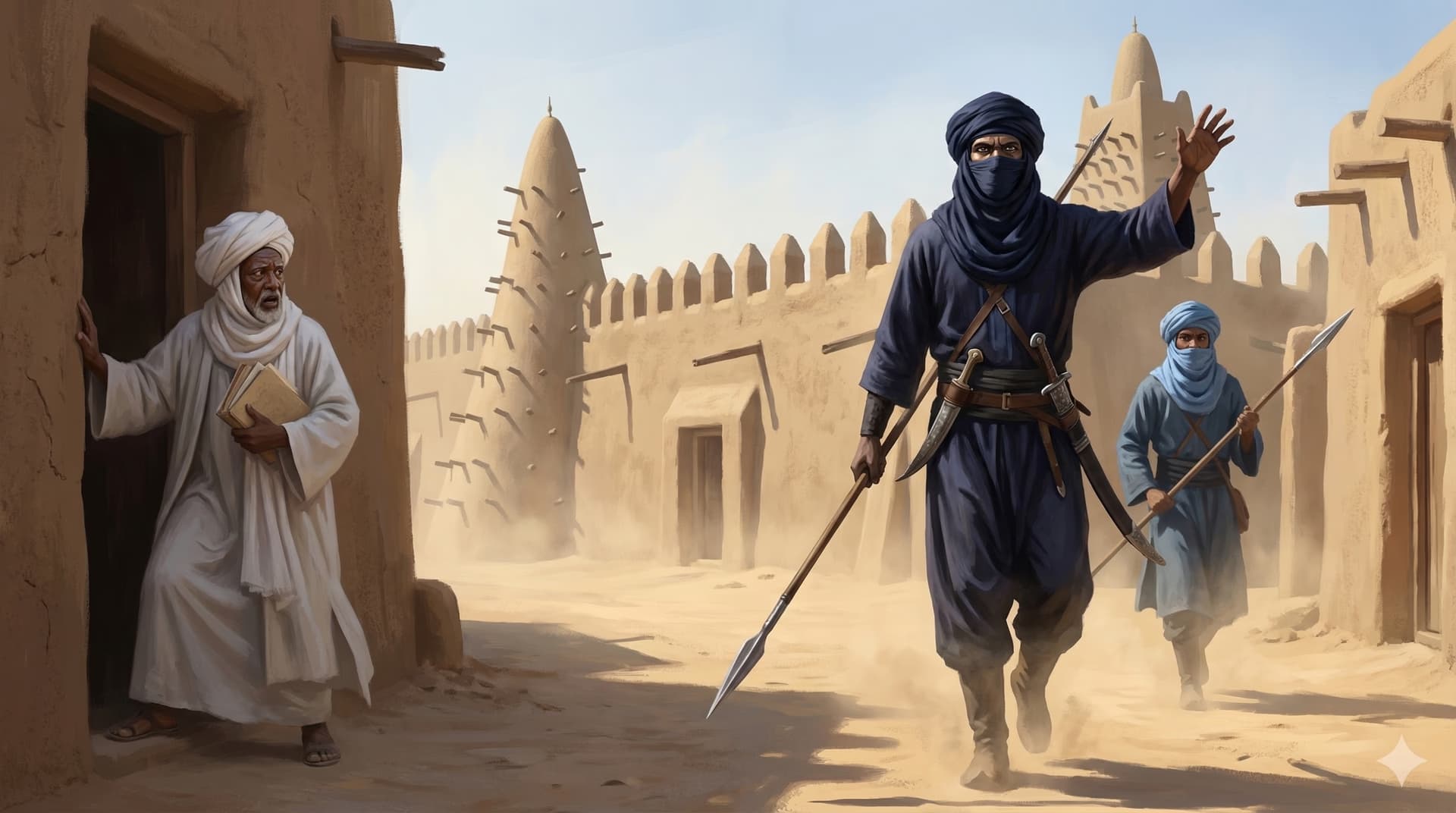
The provinces begin to peel away. The Wolof break free around 1360, forming their own empire. The Mossi press in from the south. The Tuareg watch from the desert, circling. The trade routes that fed Mali's wealth -- the gold, the salt, the books -- begin to slip from Malian hands as each successor fights the next for a throne that governs less territory with every passing year.
And then, in 1433, the final indignity. The Tuareg, led by Akil Ag-Amalwal, ride into Timbuktu and seize it. Not raid it, not burn it -- take it. The crown jewel of Musa's empire, the city he filled with scholars and stacked with manuscripts, the intellectual capital he built from mud and gold and vision, falls permanently from Mali's grasp. The Tuareg rule from the desert, extracting tribute, and the scholars remain -- because knowledge does not need a flag -- but the city no longer belongs to Mali. It never will again.
Musa built mosques that would stand for centuries. He built libraries that would hold hundreds of thousands of manuscripts. He built a university that housed twenty-five thousand students. But he never built the one thing that could have held it all together: a system for choosing who would come after him. He left the throne sitting on sand, and when the wind came, it buried everything.
The provinces continue to fall. The trade routes shift. European ships begin nosing along the Atlantic coast, finding goods that once had to pass through Mali. By the 1460s, the empire that once stretched from the Atlantic to the borders of modern Nigeria is reduced to its core Manding heartland. A rump state. A memory of gold.
What Gold Cannot Build
Fifty-one kilograms of gold. That is what it cost to build something that would stand for seven hundred years.
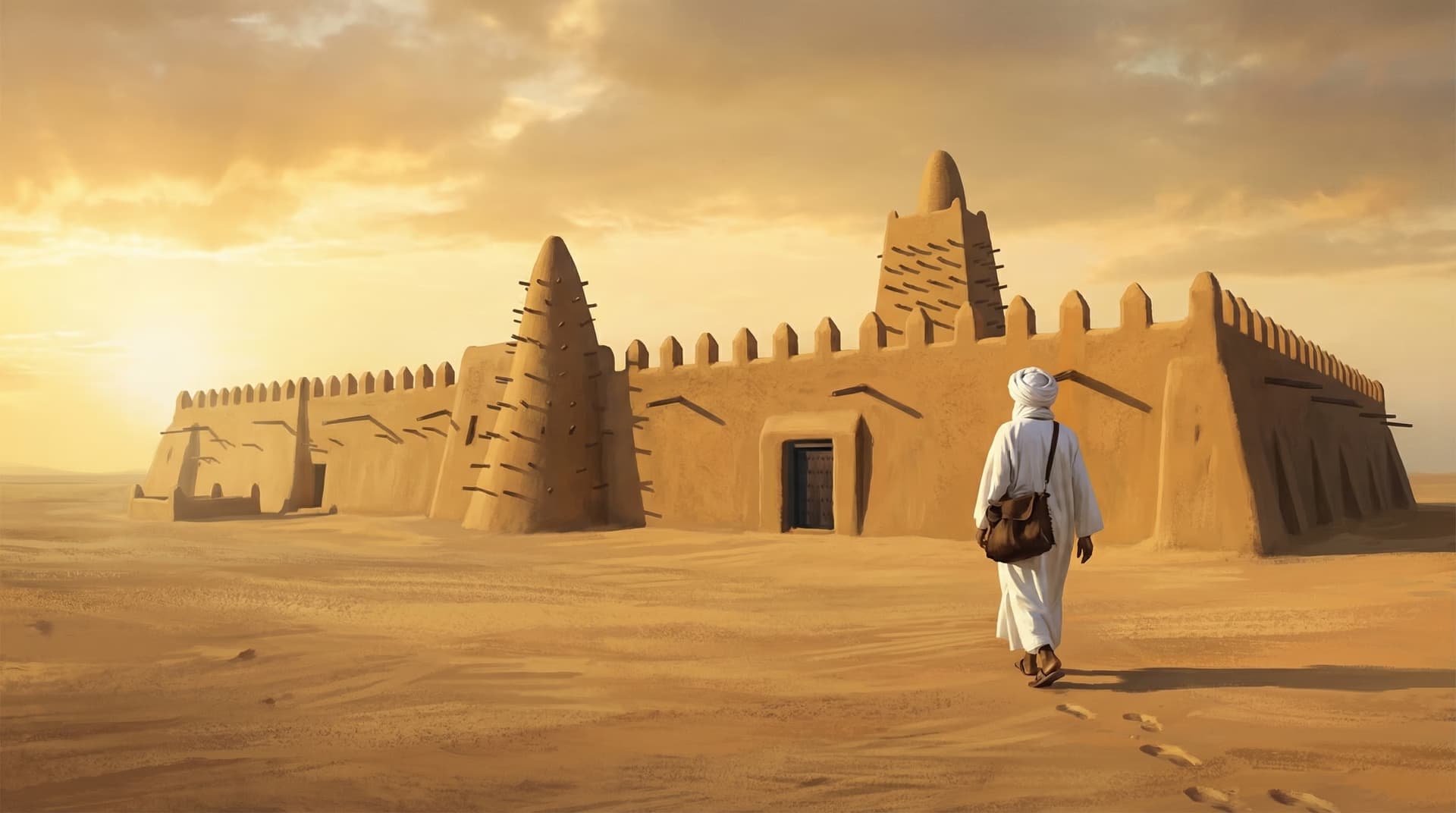
The Djinguereber Mosque still rises above Timbuktu -- mud walls, earth and straw, twenty-five rows of pillars -- exactly where al-Sahili raised it in 1327. Pilgrims still pray inside it. The afternoon light still falls through its windows the same way it did when Musa walked through its doors for the first time. He wanted to build something permanent, and he did. The mosque outlasted his sons, his dynasty, and his empire. It outlasted the Tuareg and the Songhai and the Moroccan invaders who came after them. It is still standing.
But the empire is not.
By the 1460s, the Mali Empire -- the one Musa expanded until it rivaled anything on Earth -- is gone. Not conquered in a single battle, not toppled by a single enemy, but bled out over a century of succession crises and civil wars and rulers who spent what they did not earn and fought over what they could not hold. The richest man in history built an empire, and it died with him. Not because his enemies were strong, but because his heirs were weak. Not because the gold ran out, but because he never built the system to decide who would spend it.
He could buy anything. Architects from Andalusia. Scholars from Cairo. Manuscripts from across the known world. Twenty-five thousand students filling a university that rivaled any on Earth. A mosque that would outlast empires. But he could not buy the thing that would have mattered most: a dynasty that deserved what he built.
The manuscripts survived. Hundreds of thousands of them, sealed away in the dark, waiting. The mud walls held. The knowledge endured -- not because an empire protected it, but because families did, one chest at a time, one cellar at a time, generation after generation. Musa's gold built the city. But it was the people he brought there, and the tradition of learning he planted, that kept the knowledge alive long after the last Mansa lost the last province.
The empire fell. The manuscripts were tucked into chests, buried in cellars, hidden in the walls of mud-brick homes. The name that once echoed from Cairo to Timbuktu went quiet. Five hundred years of silence. And then someone found a map -- and a name written in gold ink that no one in Europe could explain.