
Intro
Right now, the most important shipping lane on Earth is barely moving.
The Strait of Hormuz. Twenty-one miles wide at its narrowest point. About a fifth of the world's oil passes through it on a normal day. As of the recording of this video, traffic is running at maybe five percent of normal.
Ships are stranded. Crews are stranded. Insurance companies have walked away. Brent crude blew past a hundred and twenty dollars a barrel at the peak.
Earlier this year, the United States and Israel launched a coordinated air war against Iran. Operation Epic Fury. They killed the Iranian Supreme Leader, a man who had run the country for nearly forty years. Iran responded by closing the strait and firing missiles at American bases across the Gulf.
There is a ceasefire as of this recording. It is holding. Sort of.
Whatever happens next, whether the talks land a deal or the bombs come back, the question every Western viewer is trying to answer is the same.
How did we get here? Why does this country, of all countries, refuse to back down? And why is this particular waterway, of all waterways, the place where every empire in the last five hundred years has eventually met its match?
Here is the answer. Or rather, here are nine answers, because the road that leads to a closed strait in 2026 is a long one, and it does not start where most people think.
Quick thing before we get into it. If this is your kind of thing, subscribe. I make videos like this regularly, and the algorithm needs the help.
Nine chapters. The earliest is from 330 BC. The latest is from 1988. By the end of this video, you will understand the chain of cause and effect that put American warships and Iranian drones in the same body of water, again.
We start in 1953.
Chapter 1: The 1953 CIA Coup
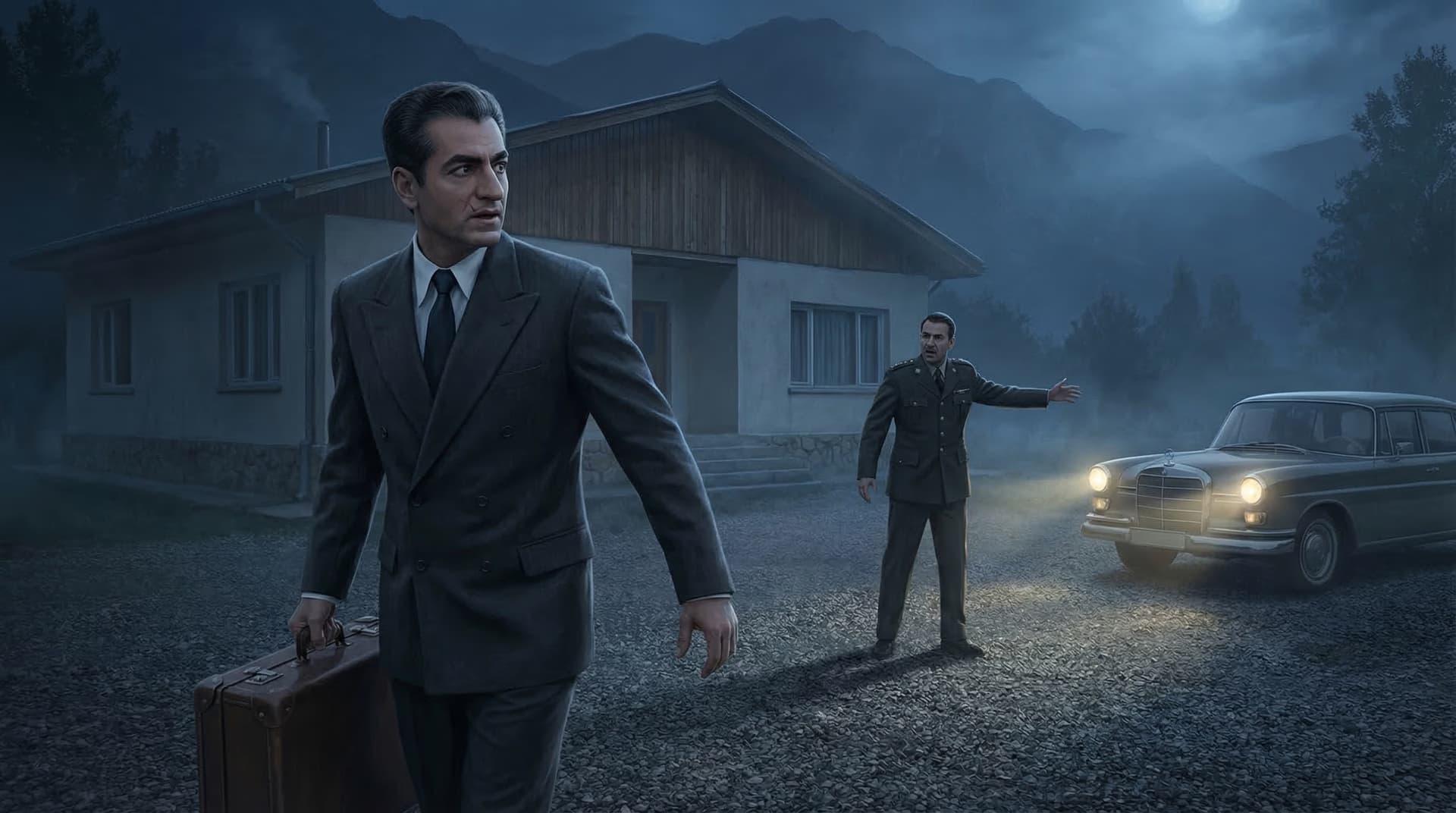
If you ask an Iranian official, on any given day, why his government refuses to trust the United States, the conversation eventually lands here. Not the strikes. Not the sanctions. Not the nuclear talks. This.
In 1951, a man named Mohammad Mossadegh was elected Prime Minister of Iran. He won on a wave of national anger over British oil exploitation. For decades, a company called the Anglo-Iranian Oil Company, the predecessor to BP, had been pumping Iran's oil out of the ground and paying Iran almost nothing for it. Mossadegh's promise was simple. The oil belongs to Iran. We are taking it back.
He nationalized the industry. Britain retaliated with a global embargo. When that did not work, the British asked the CIA for help. The CIA said yes.
The man they sent was named Kermit Roosevelt Jr. Teddy Roosevelt's grandson. He arrived in Tehran with a duffel bag of cash and ran the operation out of a basement. He paid mobs to riot in the streets. He paid newspapers to print fake stories. He paid generals to switch sides.
The first attempt failed. Mossadegh survived it. The Shah, Iran's nominal monarch, fled to Rome.
Roosevelt regrouped. Three days later, his second attempt worked. Mossadegh was arrested. The Shah was flown back. Iran's elected government was over. Iran's oil was back in Western hands.
Mossadegh was tried for treason, served three years in prison, and spent the rest of his life under house arrest. He died in 1967.
That is why, when American negotiators sit down with Iranian negotiators today and say "trust us," the Iranian side hears something specific. They hear the year 1953. They hear a democratically elected prime minister being dragged out of his own house by a mob the CIA paid for. Every sanctions deal, every nuclear inspection, every diplomatic promise of the last seventy-three years sits on top of that memory.
But the coup is not where the relationship died. It is where it got infected. The death came twenty-six years later, on live television.
Chapter 2: The 1979 Revolution and Hostage Crisis
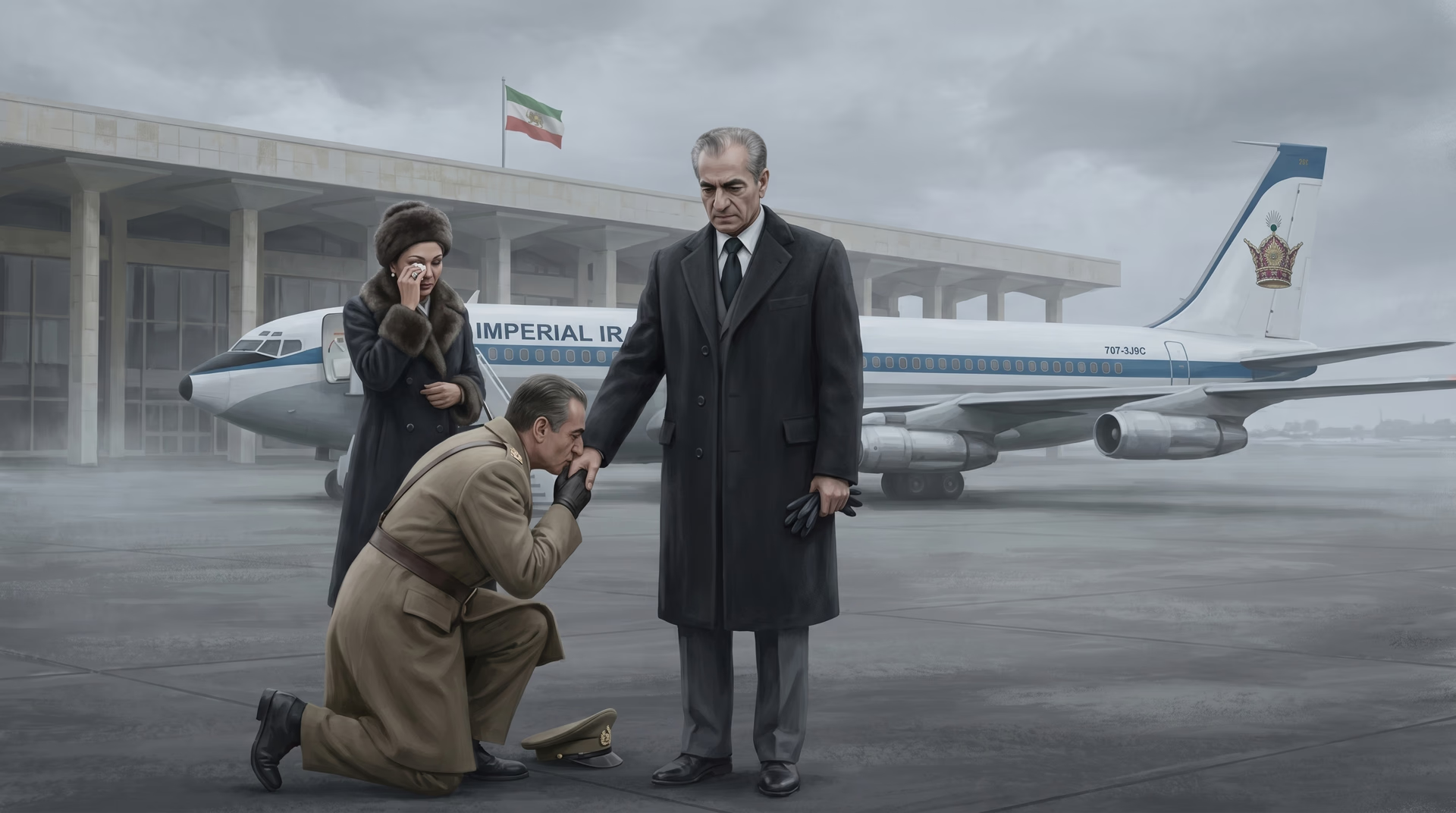
When most Americans hear the word "Iran," the first picture in their head is not Khamenei and it is not a closed strait. It is blindfolded American hostages being marched out of an embassy. That is 1979. And it is the bridge between what the CIA did in 1953, and everything that has happened since.
After the 1953 coup, the Shah ruled Iran for twenty-six years with American backing. He modernized the country. Roads, factories, women's universities. He also ran a secret police force called SAVAK, trained partly by the CIA, that tortured dissidents and disappeared opponents.
By the late 1970s, the country was boiling. Religious leaders, leftists, students, merchants, all of them wanted the Shah gone. The figurehead they rallied around was an exiled cleric named Ayatollah Ruhollah Khomeini, who had been broadcasting sermons against the Shah for fifteen years on smuggled cassette tapes.
In January 1979, the Shah fled the country, ending two and a half thousand years of Iranian monarchy. Two weeks later, Khomeini flew home to Tehran. Millions met him at the airport.
The new government was an Islamic republic, and it was furious. When the United States agreed to let the deposed Shah enter the country for cancer treatment, Iranian students read it as confirmation of the worst possible suspicion. The Americans were running 1953 again.
On November 4, 1979, students climbed the walls of the US embassy in Tehran and seized fifty-two American diplomats and staff. They held them for four hundred and forty-four days.
President Carter ordered a military rescue. Operation Eagle Claw. Eight helicopters launched from the USS Nimitz. Three failed in a sandstorm. The mission was aborted. On the way out, a helicopter collided with a transport plane on the ground in the Iranian desert. Eight American servicemen died. The wreckage burned for days. Iran put the bodies on display.
The hostages were finally released on January 20, 1981. The exact minute Ronald Reagan was sworn in as president. Khomeini's parting humiliation of Jimmy Carter.
The United States and Iran have not had formal diplomatic relations since 1980. Forty-six years. Every American conversation with Iran since then has run through a third party. Right now, that third party is Pakistan, mediating the talks between Washington and Tehran because the two governments cannot legally pick up the phone with each other. The Revolution did not just change Iran. It severed the line between Iran and the West. And the line has not been rebuilt since.
Subscribe to Nightfall History on YouTube
Join our community on YouTube for more historical deep dives and visual storytelling
Chapter 3: The Battle of Karbala, 680 AD
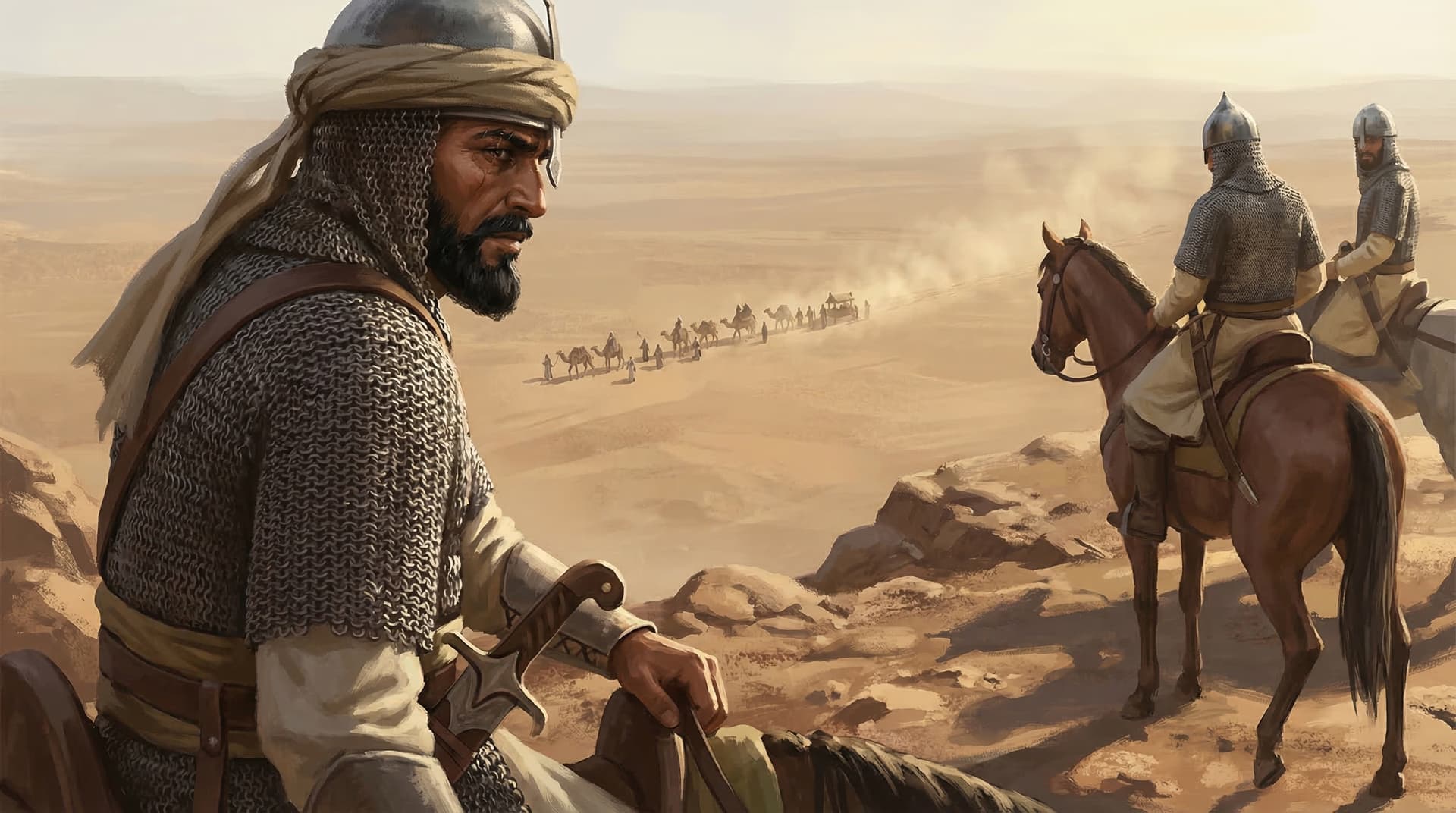
The Revolution gave Iran a new government. It did not give Iran a new psychology. The way that government fights, its willingness to die rather than yield, comes from somewhere much older. Almost thirteen hundred years older. When Iranian fighters tell American reporters they are prepared to die rather than surrender, they are not bluffing and they are not improvising. They are quoting.
The year is 680 AD. Just under fifty years after the death of the Prophet Muhammad. The Muslim world is in a succession crisis. A man named Yazid has just inherited the caliphate from his father. A lot of people consider him illegitimate. Among those people is a man named Hussein. Hussein is the Prophet's grandson.
Hussein refuses to pledge allegiance. He sets out from Medina with his family and seventy-two followers, heading for the city of Kufa, where supporters have promised to back him.
He never gets to Kufa.
Yazid's army intercepts him on a plain in modern-day Iraq. The plain is called Karbala. The army is several thousand strong. Hussein has seventy-two men, women, and children. The siege lasts ten days. They cut off the water supply. Hussein's children die of thirst.
Hussein knows there is no rescue. He tells anyone who wants to leave, to leave. Most stay.
On the tenth day, the seventy-two go out to fight. They die one by one. Hussein is the last to fall. His head is cut off and sent to the caliph in Damascus. His sister and the surviving women and children are paraded through the streets in chains.
That event becomes the founding wound of Shia Islam. Iran is the largest Shia country on Earth. Every year, millions of Iranians mourn Hussein's death during a ten-day ritual called Ashura. They weep. They beat their chests. They cut themselves. They relive the death.
Here is what that means today. When Iran's leaders calculate whether to keep fighting a war they are losing, they are not running the math an American war planner runs. The American math is, can we win, and at what cost. The Iranian math has another variable in it. How do we lose. Hussein's choice, at Karbala, was that there is a difference between dying defeated and dying defiant. Iran's military strategy is built on top of that distinction. It is why Tehran absorbed the assassination of its own supreme leader and kept fighting. It is why the strait stays closed. The country is not trying to win. It is trying to lose the way Hussein lost. Standing.
Chapter 4: The Tanker War, 1984-1988
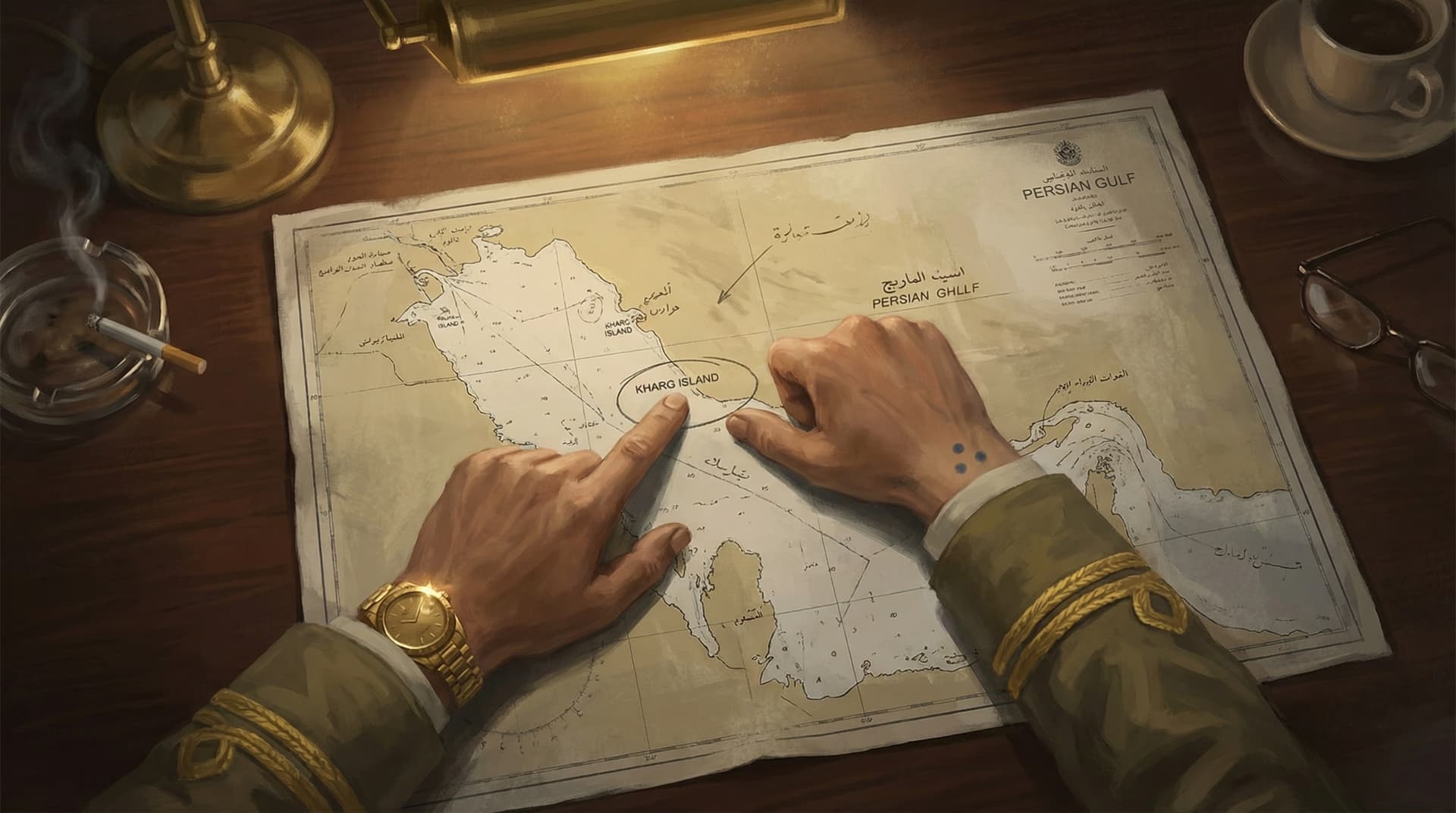
In the 1980s, this Karbala psychology met something new. Modern war. Cruise missiles. Aircraft carriers. The Persian Gulf turned into a battlefield, and the entire world economy got dragged into it. If you have been watching the Strait of Hormuz the past few months, with mines, drones, swarms of small Iranian boats, oil tankers stranded, insurance companies bailing, you have, almost beat for beat, watched a re-run of something that happened forty years ago.
In the early 1980s, Iran and Iraq were in the fourth year of a brutal land war. Neither side could break through. So Iraq decided to attack the Iranian economy directly. It started firing French-made Exocet missiles at Iranian oil tankers. Iran retaliated by attacking the tankers carrying Iraqi oil from Kuwait and Saudi Arabia. Iran also started laying naval mines near the Strait of Hormuz.
Insurance companies looked at the math and walked. Over four hundred merchant vessels were attacked. Hundreds of civilian sailors died. It was the worst attack on global shipping since World War Two.
Eventually Kuwait went to the Americans for help. The American answer, called Operation Earnest Will, was simple. We will put American flags on your tankers and we will escort them through with warships. American warships threading through Iranian minefields, with Iranian speedboats circling them like sharks. The sequence ran for a year.
Iran's strategy was identical to the one running right now. Make the strait too dangerous to use. Make insurers panic. Make the price of oil do the political work. Force everyone to negotiate.
The difference between then and now is not the strategy. It is the technology. In 1987, you could sweep mines. Mines were what they were. They sat there. Today, Iran has cheap drones. Drones move. Drones think. Drones do not sweep. The 2026 version of this playbook is the same playbook with the cost curve flipped. That is why the strait is not open yet, and why no one is confident it will open soon.
Chapter 5: Operation Praying Mantis, April 1988
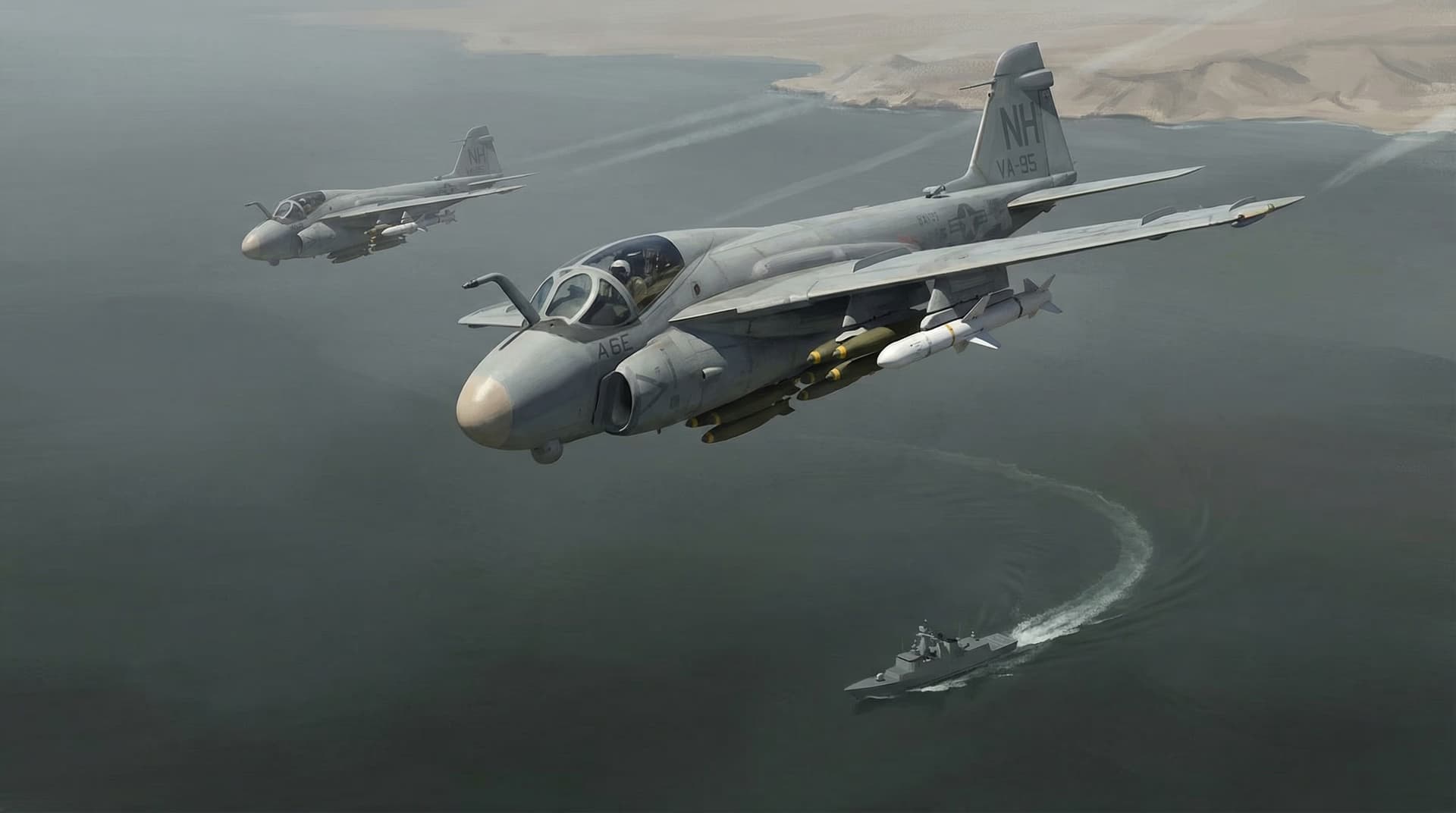
Most Americans, if you ask them whether the US Navy has ever fought Iran directly, ever, with ships, with missiles, with the gloves off, will say no. They are wrong. It already happened. Once. And it is the closest direct preview of what a real US-Iran naval engagement in the strait actually looks like.
April 14, 1988. The USS Samuel B. Roberts is on routine patrol in the Persian Gulf when its hull strikes something in the water. An Iranian mine. The explosion tears a fifteen-foot hole below the waterline, breaks the keel, wounds ten sailors. The ship nearly sinks. The crew saves it.
The Pentagon traces the mine to specific Iranian stocks. The serial numbers match. Four days later, the United States Navy launches Operation Praying Mantis.
The plan is to hit two Iranian oil platforms used as military staging posts. Surgical. Proportional.
Iran fights back. An Iranian frigate, the Sahand, sorties against the American fleet. It launches missiles at American aircraft. American aircraft launch a Harpoon back. The Sahand takes the missile, then takes laser-guided bombs, then burns. Then sinks.
A second Iranian frigate, the Sabalan, takes a bomb and is left adrift. Deliberately, not sunk. A message.
Iranian fast attack boats swarm. Multiple are destroyed.
By the end of the day, half of Iran's operational navy is gone. The largest American surface naval engagement since World War Two. And almost no one remembers it.
If the ceasefire breaks down and there is another direct exchange between the US Navy and Iran in the Gulf, this is the template. The American doctrine in this water is calibrated, public, brutal. Iran knows that. Iran has known it for thirty-eight years. The current war involves more weapon systems, more theaters, more diplomacy. But in the strait specifically, the script the Navy is reading from was written in April of 1988.
Operation Praying Mantis was technically a success. The Navy was quietly relieved. The Iranian threat had been put down, professionally. The Gulf was safe. Seventy-six days later, on a clear July morning, the same Navy made a mistake that would haunt the relationship between these two countries for the next four decades.
Stay in the Loop
Get notified when new articles and videos drop. Unsubscribe anytime.
Chapter 6: Iran Air Flight 655, July 1988
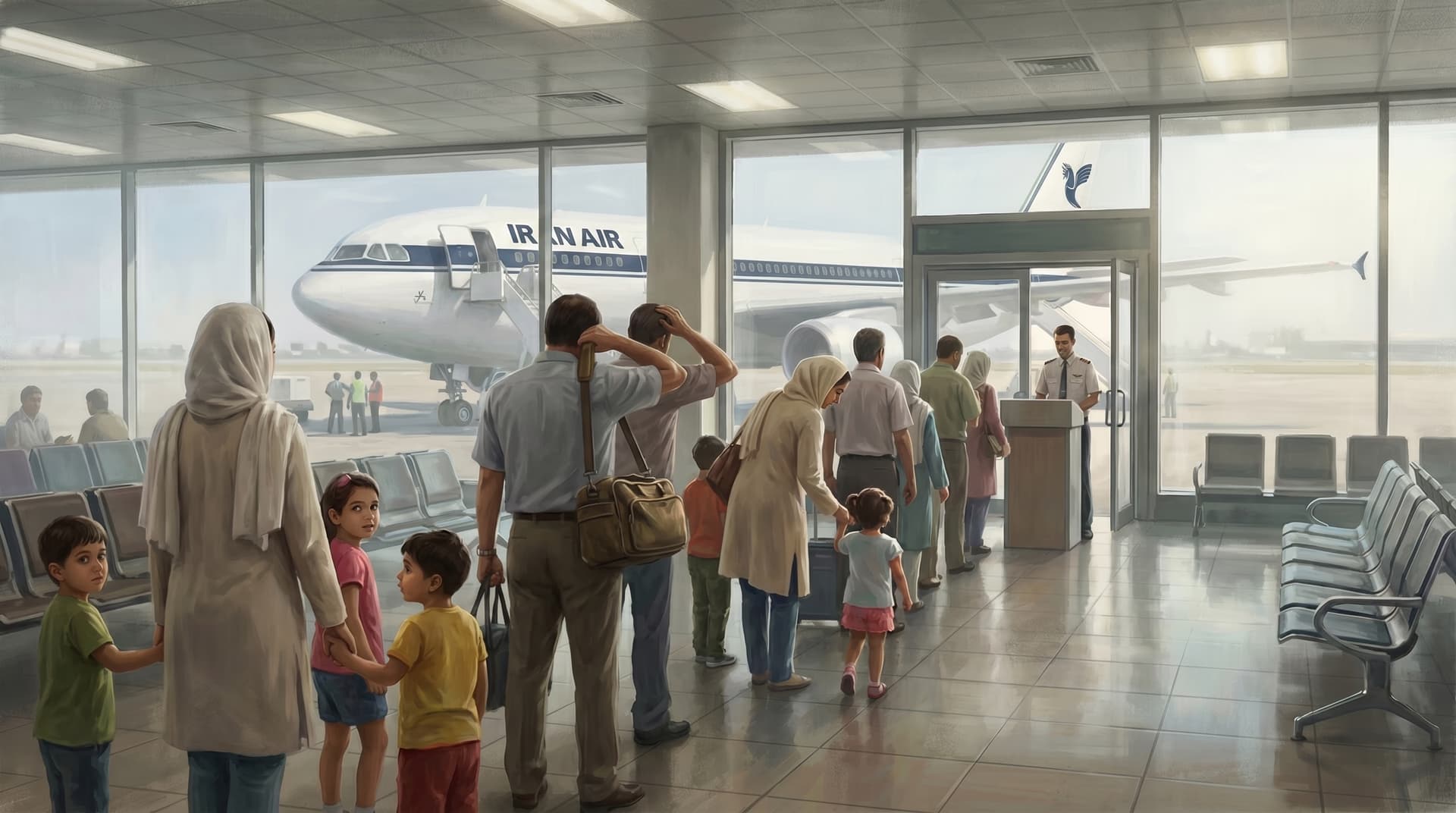
When Iranian state media accuses the United States of being a country that does not care whether civilians live or die, that does not apologize, that gives medals to its own people for killing innocents, the audience listening at home does not have to imagine what they mean. They have a specific event. A specific day. A specific photograph. Two hundred and ninety names.
July 3, 1988. The USS Vincennes is patrolling the same waters that Operation Praying Mantis cleared. Its captain is William Rogers. Inside the Navy, his nickname among other captains is "Robocruiser." It is not a compliment.
The Vincennes is engaged with Iranian speedboats when its radar picks up an aircraft taking off from Bandar Abbas airport. Bandar Abbas is a dual-use facility. It hosts Iranian F-14 fighters and civilian airliners.
The crew has seven minutes to figure out what they are looking at. They report the plane descending. It is actually ascending. They report it broadcasting military signals. It is broadcasting civilian. They report it as an F-14 on attack profile. It is not.
Captain Rogers gives the order. Two SM-2 missiles launch.
The aircraft is Iran Air Flight 655. A scheduled passenger Airbus A300 on its normal route to Dubai. Two hundred and ninety people on board. Sixty-six of them children.
The plane breaks apart over the Persian Gulf. There are no survivors.
The American response is the part that lives forever in Iranian memory. The crew of the Vincennes received combat medals. Vice President George H.W. Bush, weeks later, told a campaign rally this. Quote. "I will never apologize for the United States of America, ever. I do not care what the facts are." End quote.
The United States eventually paid compensation. It never accepted legal liability. There was never an apology.
Five months later, Pan Am Flight 103 was blown out of the sky over Lockerbie, Scotland. Two hundred and seventy people died. The official perpetrators are Libyan. There has been a credible argument, ever since, that Iran paid for it. Revenge for Flight 655.
Flight 655 is the wound that did not close. But it was not the last one.
In 2015, after years of negotiation, the United States and Iran signed a nuclear deal. Sanctions relief in exchange for Iran capping its enrichment program. Iran complied. International inspectors said so. In 2018, the United States walked away from the deal anyway. In January 2020, an American drone strike killed Qasem Soleimani, the Iranian general who had run the Quds Force for two decades, on a road outside Baghdad airport. By the time American bombs hit Tehran in 2026, every American gesture of trust had ended in withdrawal. Every Iranian gesture had ended with a relative dead. None of these wounds closed. They just stacked.
Quick check-in. If you are learning something here, drop a comment. Tell me which one of these you had not heard of before. I read them. I will respond. Now back to it.
Chapter 7: The Portuguese Conquest of Hormuz, 1507
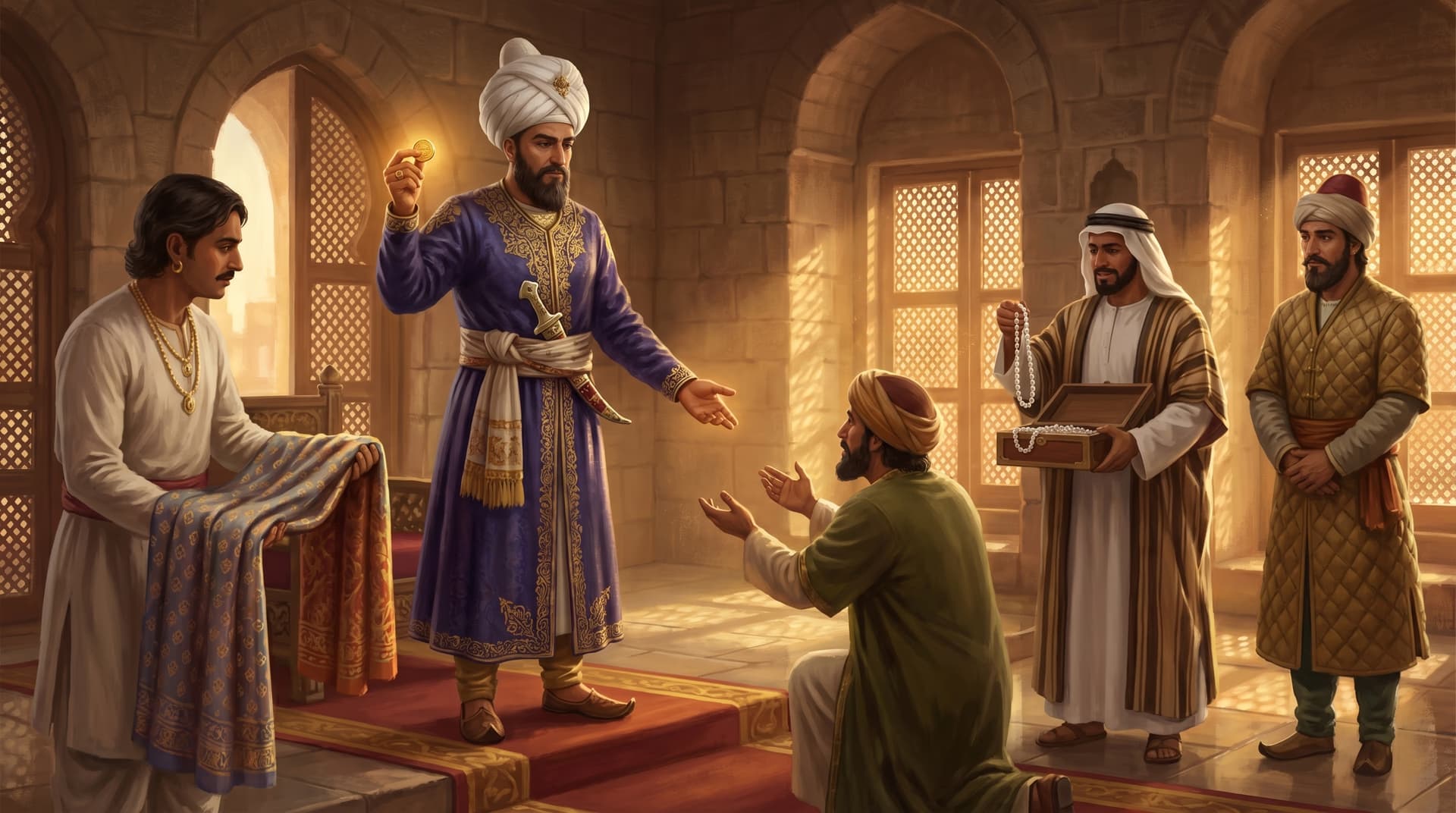
Everything we have covered so far is recent. Living memory, give or take a generation. The next three chapters go further back. Way further. And the question I want you holding is, why has this particular waterway, this particular country, been at the center of every confrontation about who controls global trade for the last five hundred years? It is not a coincidence. It is the geography. And the geography starts mattering well before the United States existed.
In 1507, a Portuguese admiral named Afonso de Albuquerque sailed into the Persian Gulf with a tiny fleet. Six ships. He was looking at the island of Hormuz, which was then the wealthiest trading hub between India and Europe. Pearls, silk, spices, horses, every commodity worth carrying came through it.
Albuquerque seized the island. With six ships. He built a fortress. He installed himself as the toll-keeper for global trade.
For the next hundred and fifteen years, Portugal taxed every ship that passed through. Ships that did not carry Portuguese papers got burned. The first toll booth on world commerce.
In 1622, the Persian Shah Abbas the First cut a deal with the English East India Company. The unlikely Anglo-Persian alliance laid siege to the Portuguese fortress. After several months, the Portuguese surrendered. Persia got its strait back.
The strategic value of this body of water predates oil by four hundred and seventy years. The Portuguese understood it. The British understood it. The Americans understand it. The Iranians have understood it longer than any of them. When Tehran closes the strait today, it is not acting out of desperation. It is pulling on a lever it has been aware of since before there were Europeans in the room. Whoever holds it controls the flow. Iran knows it because Iran lost it once, and got it back.
Chapter 8: The Assassins of Alamut, 1090-1256
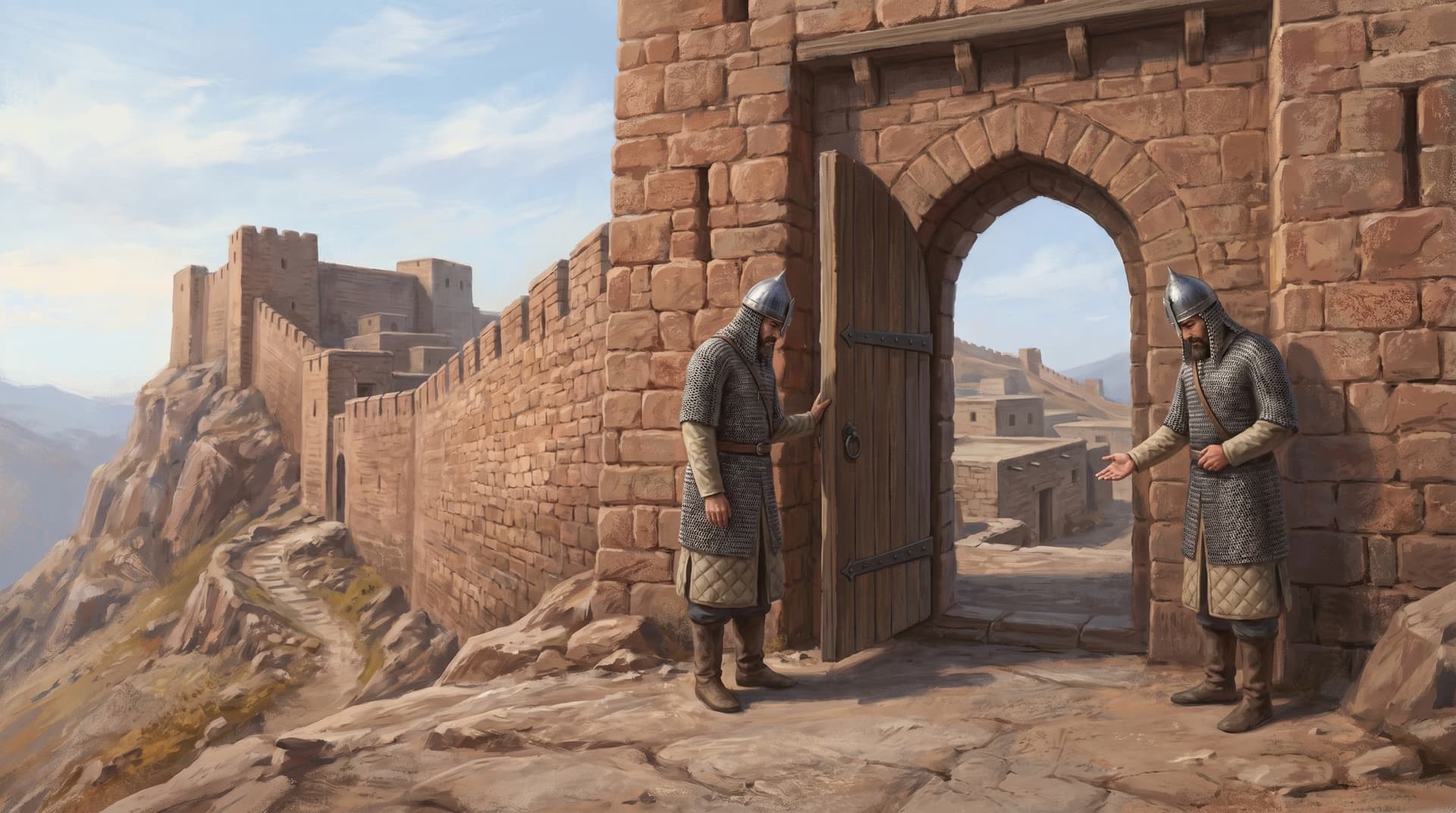
Modern Iran fights through proxies. Hezbollah in Lebanon. The Houthis in Yemen, who shut down the Red Sea two years ago. Various militias in Iraq and Syria. The Western press calls this "Iran's shadow network" or "Iran's asymmetric warfare doctrine," as if it is some kind of recent invention. It is not recent. It is a thousand years old. And it was invented by a man who lived in a single fortress, on a single mountaintop, in northern Iran.
In 1090, an Ismaili scholar named Hassan-i Sabbah, exiled from the mainstream Islamic establishment, walks up a mountain in northern Iran to a fortress called Alamut. The Eagle's Nest. He does not besiege it. He converts the garrison from inside.
From this single fortress, he builds something the world has never seen. The Order of Assassins. Not an army. A network. Embedded operatives, scattered across hostile territory, trained in patience and disguise, available for one task. Targeted killing.
His first major target is Nizam al-Mulk, the most powerful vizier in the Seljuk Empire. Stabbed in his litter by a man dressed as a Sufi mystic.
For a hundred and sixty-six years, the Assassins punch insanely above their weight. They take out viziers. Caliphs. Crusader lords. They leave daggers on the pillows of sleeping enemies. The message is, we can reach you anywhere.
The Mongols finally end them in 1256. Hulagu Khan's army takes Alamut, burns the library, kills the last Grand Master. The fortress falls. The order ends.
But the strategy did not fall with the fortress. A small, committed network. Embedded across hostile territory. Punching above its weight by using precision instead of mass. That is not Hezbollah. That is not the Houthis. It is what those organizations are modeled on. The Iranian Revolutionary Guard's external arm, the Quds Force, does not run anything Hassan-i Sabbah did not run a thousand years ago. The vocabulary is different. The doctrine is identical. Iran is not using an asymmetric strategy because it cannot field a conventional army. It is using a strategy that, in this region, has been winning for a thousand years.
Chapter 9: Alexander Burns Persepolis, 330 BC
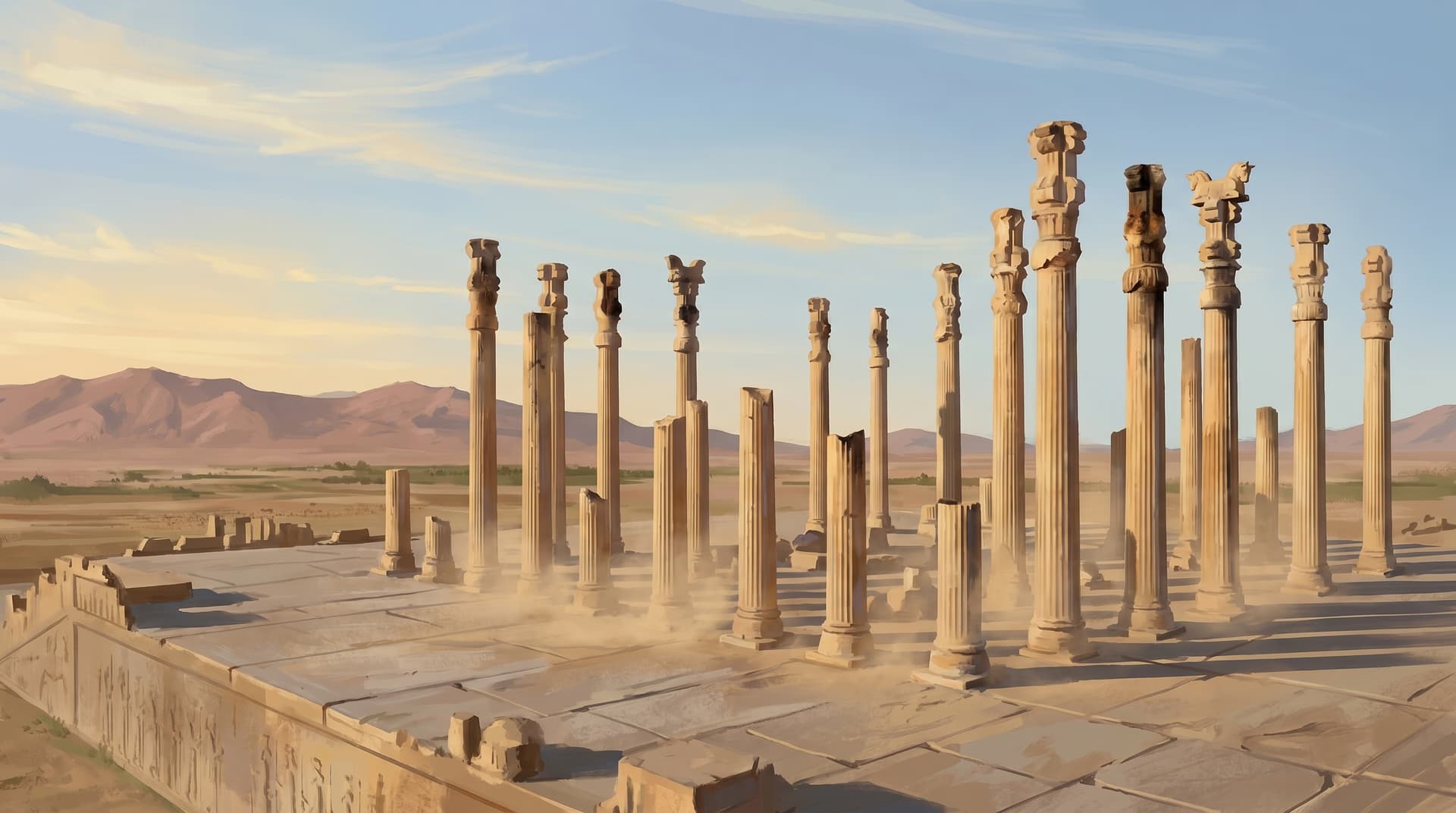
One last chapter. The longest pull back of all of them. We are going all the way to 330 BC. And the reason it has to be in this video is that the most recent thing it explains happened a few weeks ago.
In the early weeks of this war, American and Israeli airstrikes damaged a series of historic Iranian sites. Golestan Palace, in Tehran. Chehel Sotoun, in Isfahan. The Masjed-e Jame, the oldest Friday mosque in the country. UNESCO formally protested. Iranian state media called it cultural genocide.
Iranians, watching the news, were not seeing a 2026 event. They were seeing a pattern. A pattern with a 2,300-year-old precedent.
In 330 BC, Alexander the Great defeated the Persian king Darius the Third and conquered the Persian Empire. He then marched on Persepolis. The ceremonial capital. Not a political capital. A statement. A palace complex of grand staircases, relief carvings of every conquered nation bringing tribute, the Apadana hall that could hold thousands. The most magnificent palace the ancient world had ever produced.
His army looted it for months. The treasury, by some accounts, was so vast it took twenty thousand mules and five thousand camels to carry it out.
Then, one night, the palace burned.
Why? The ancient sources do not agree. Maybe it was calculated revenge for the Persian sack of Athens, a hundred and fifty years earlier. Maybe it was a drunken decision egged on by a courtesan named Thais. Maybe it was a deliberate signal, in fire, that the Persian Empire was dead.
Alexander reportedly regretted it almost immediately. He ordered the fires put out. It was too late.
The columns of Persepolis are still there, in the Iranian desert. Burned, broken, but standing. Iranians visit them the way Americans visit the Statue of Liberty. Not as ruins. As proof of who they are, and how long they have been there.
When bombs hit Golestan Palace, the Iranian narrative was already written. It was written in 330 BC. The frame, in Tehran, is not "an American airstrike happened to damage a heritage site." The frame is, "Western armies have been trying to erase us for twenty-three centuries, and they have not yet succeeded." That is not propaganda. It is a fact, and it is a fact that has shaped how Iran negotiates, fights, and survives. The Persians have a saying. In niz bogzarad. "This too shall pass." They have been saying it for twenty-five hundred years. And every single time, they have been right.
Outro
So.
The Strait of Hormuz is barely moving. The supreme leader is dead. The talks are live, and fragile. Oil is still rattled. The ceasefire is holding, sort of.
If you watch the news on any given day, you will get one frame. Iran is the aggressor, or America is the aggressor, depending on which channel. Iran is religious, or Iran is rational. Iran is desperate, or Iran is calculating.
None of that is the actual story. The actual story is the one we just walked through. A democracy overthrown by the West, in living memory. A revolution that severed the line between two countries forty-six years ago and never rebuilt it. A founding national wound that turns dying with dignity into a strategy. A waterway that has been the world's choke point for half a millennium. A doctrine of small-network warfare older than most countries on the map. And a 2,300-year reflex of a civilization watching foreigners try to burn it down, and refusing to be burned.
You do not have to agree with Iran to understand what Iran is doing. You just have to understand what Iran is remembering. Because that is what every line of every negotiation, every choice in every battle, every closure of every strait, is built on top of.
The next round of talks could go a hundred different ways. The ceasefire could hold. It could break tomorrow. None of that is what this video was about. This video was about what is underneath all of it. And whatever happens next, the chain you just watched is the chain the rest of it sits on.
If you want to go deeper, the full deep-dive on each chapter is one click away. The playlist is on your screen right now. Click it. Every story is also linked in the description. And subscribe if you want more like this. I will see you in the next one.
