The Day Saladin Took Jerusalem
The Predator's Patience
For ten years, Saladin waited.
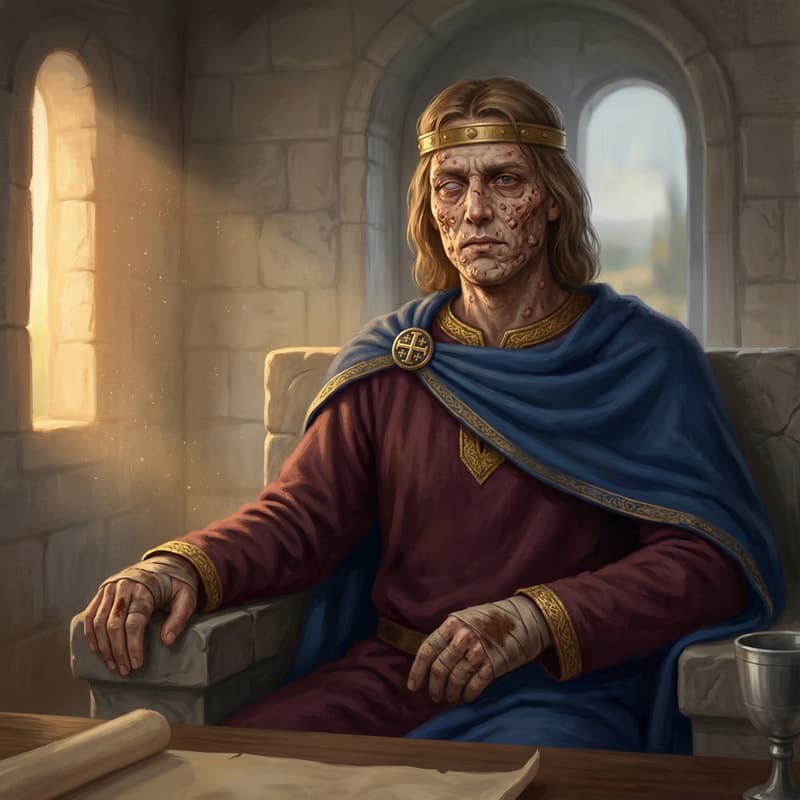
He watched a dying boy hold together a kingdom that should have collapsed. He watched that boy ride into battle blind. He watched him issue commands while his flesh rotted from his bones. And he did nothing.
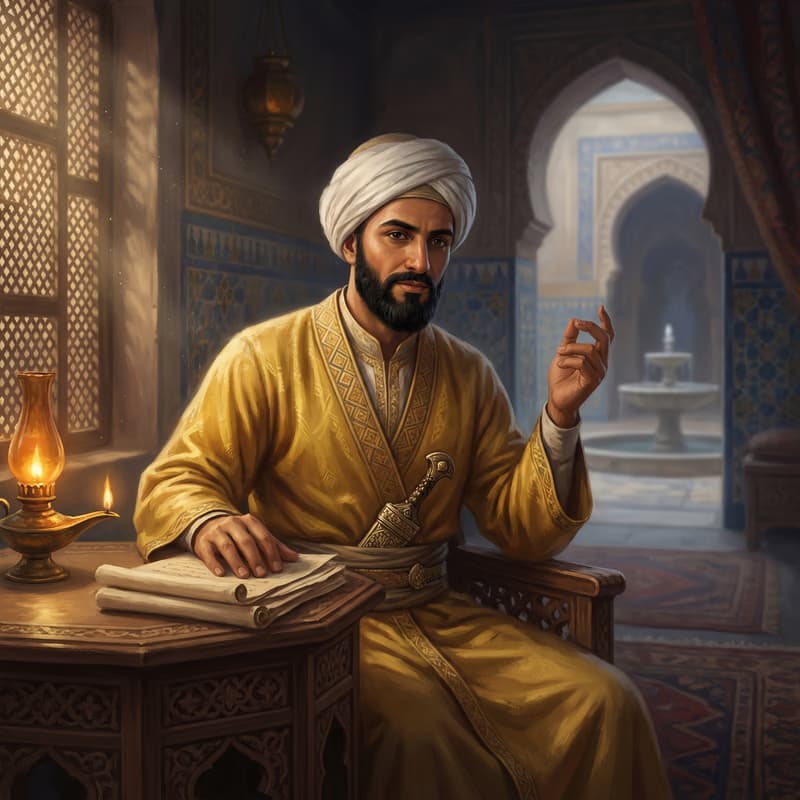
Because Saladin understood something his generals didn't: you don't fight a man who has nothing to lose. You wait for him to stop breathing.
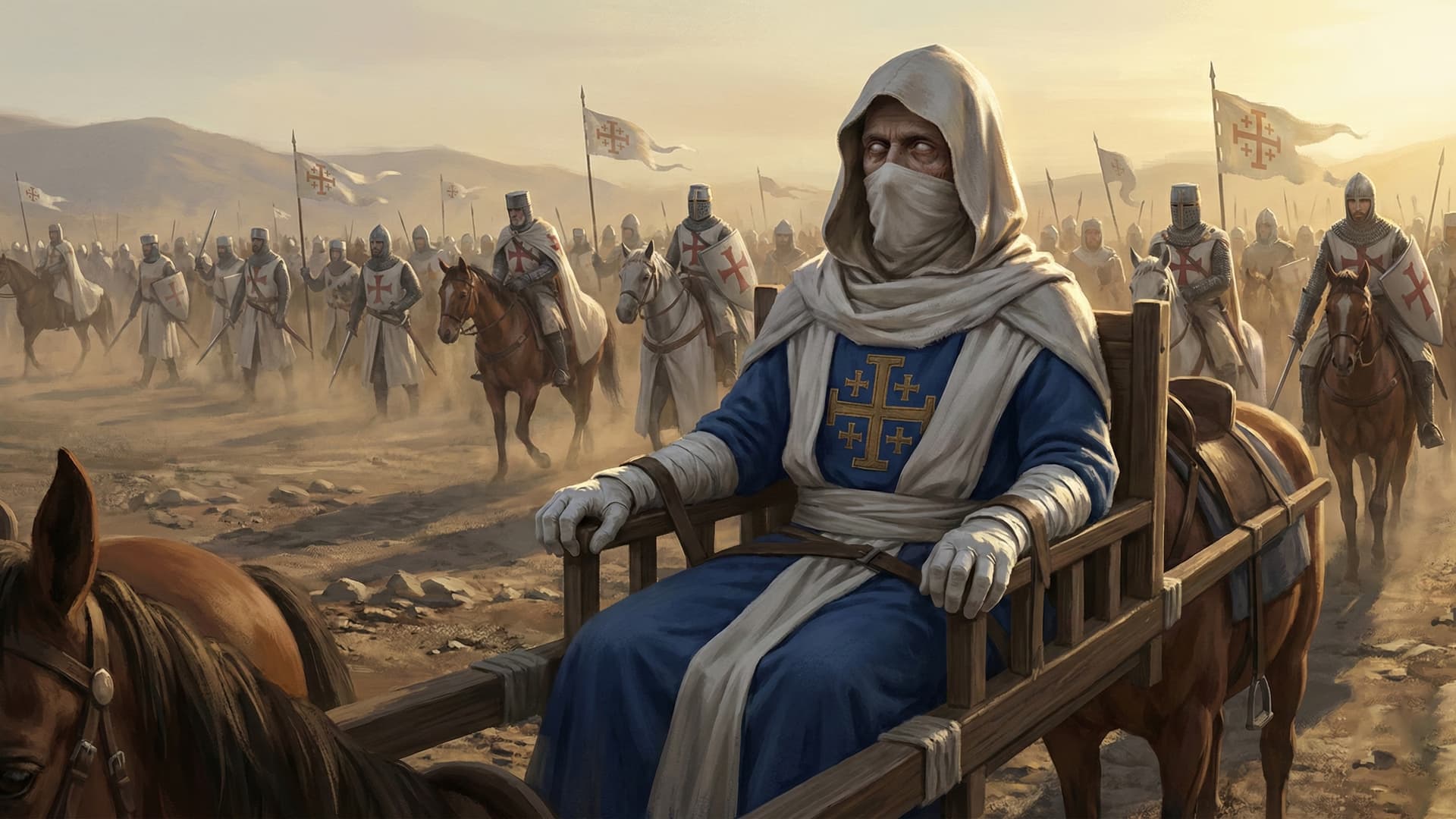
On March 16, 1185, Baldwin IV finally died. He was twenty-three years old. He had been king for eleven of those years, and in all that time, Saladin never took a single city that mattered.
Two years later, Saladin owns everything.
The kingdom Baldwin built lies in ruins. The army Baldwin trained is dead or in chains. The walls Baldwin defended are surrounded by sixty thousand soldiers.
And the only thing standing between Saladin and total victory is a knight who wasn't even supposed to be here.
The Knight Who Couldn't Leave
Three weeks earlier, Balian of Ibelin had made a simple request.
His wife Maria and their children were trapped in Jerusalem. He wanted to get them out. That's all. He went to Saladin's camp under a white flag and asked for safe passage--one day in Jerusalem, just long enough to collect his family and leave.
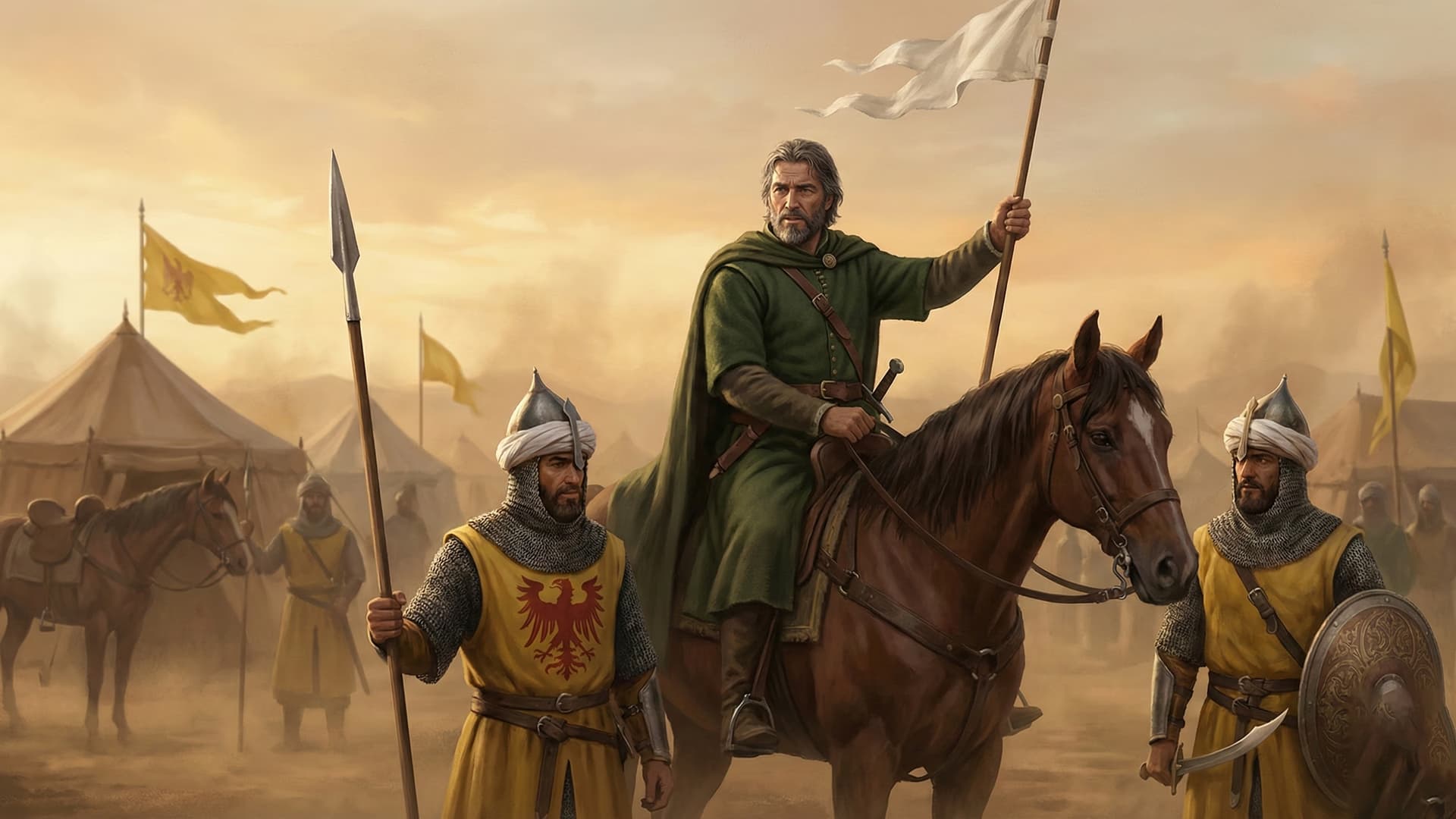
Saladin smiled. He liked Balian. A man of honor in a kingdom of fools. He granted the request with one condition: Balian would not take up arms against him.
Balian swore the oath. What choice did he have?
When he rode through Jerusalem's gates, he found something worse than he expected. The streets were choked with refugees--farmers, merchants, women clutching infants--all fleeing from the cities Saladin had already taken. They had nowhere else to go.
And there were almost no soldiers. The army had died at Hattin. Balian counted the knights in the city: fourteen. Some sources say two.
Subscribe to Nightfall History on YouTube
Join our community on YouTube for more historical deep dives and visual storytelling
Patriarch Heraclius met him at the Church of the Holy Sepulchre. Queen Sibylla was there, her husband Guy rotting in Saladin's prison. They didn't beg. They simply told him the truth: if he left, everyone in this city would die or be enslaved.
Balian had sworn an oath to Saladin. Breaking it would make him an oathbreaker--the worst thing a knight could be.
Heraclius offered to absolve him. The needs of Christendom, he argued, outweighed any promise made to a Muslim.
Balian looked at the refugees in the streets. He thought of his wife and children. He thought of what Saladin would do to sixty thousand people who couldn't defend themselves.
He broke his oath.
The strange thing is, Saladin didn't seem to mind. When Balian wrote to explain his situation and asked for safe passage for his family, Saladin not only agreed--he sent an armed escort with gifts. He treated Maria and the children as honored guests.
It was almost chivalrous. Almost merciful.
But Balian understood what it really was: confidence. Saladin had spent ten years watching Baldwin fight him with a rotting body and a handful of knights. Now Baldwin was dead, and Balian had what--sixty new knights he'd made by tapping burgesses on the shoulder with a sword?
Saladin could afford to be generous. He knew how this ended.
The Siege
On September 20, 1187, Saladin's army surrounded Jerusalem.
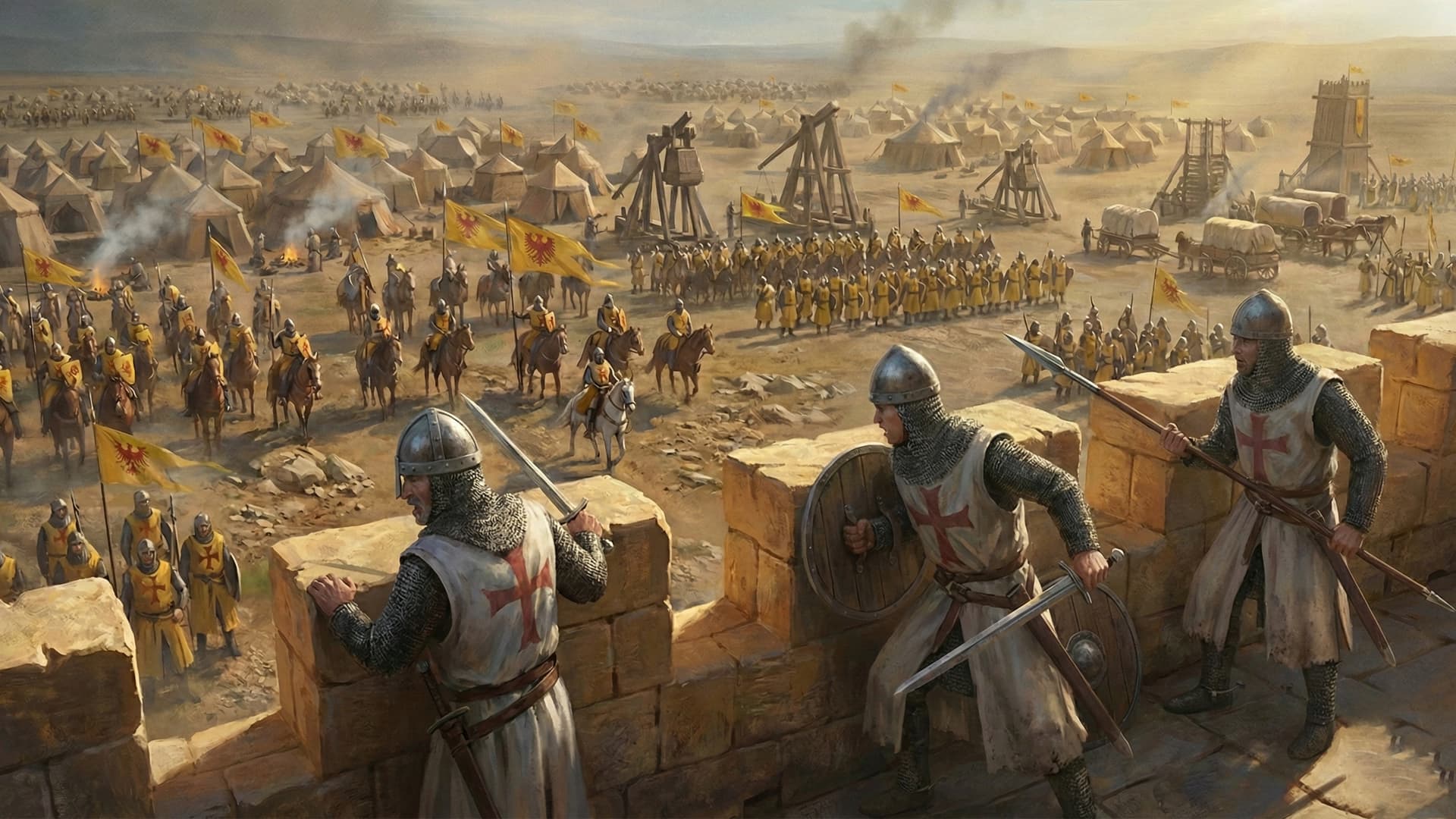
Sixty thousand soldiers against a city designed to hold thirty thousand civilians. The walls were old but strong. The defenders were few but desperate. For six days, Saladin threw his forces against the northern walls, and for six days, the defenders held.
Then Saladin did something clever.
He moved his entire camp to the Mount of Olives, on the eastern side of the city. There was no major gate there--no way for the defenders to launch a counter-attack. It was the same spot where Godfrey de Bouillon had breached the walls eighty-eight years earlier, when the First Crusade took Jerusalem.
Saladin knew his history. He wanted to take the city from the exact same place.
His engineers began digging. Sappers tunneled under the walls while siege engines pounded the stone above. The defenders could hear the scraping beneath their feet, could feel the vibrations in the walls, but there was nothing they could do.
On September 29, the wall collapsed.
The Banner
Saladin's soldiers poured through the breach. They planted their banners on the walls of Jerusalem--the first Muslim flags to fly there in eighty-eight years.
It was over. Everyone knew it. The city had fallen.
Stay in the Loop
Get notified when new articles and videos drop. Unsubscribe anytime.
Balian walked out to negotiate. When he reached Saladin's tent, the sultan was already celebrating. He gestured dismissively at the walls behind Balian, where his banners flew.
"One doesn't negotiate the surrender of a city that has already fallen," Saladin said.
Balian turned to look. As he watched, the Muslim banners were thrown down. Jerusalem's banners rose in their place. His men hadn't given up.
It bought him one chance.
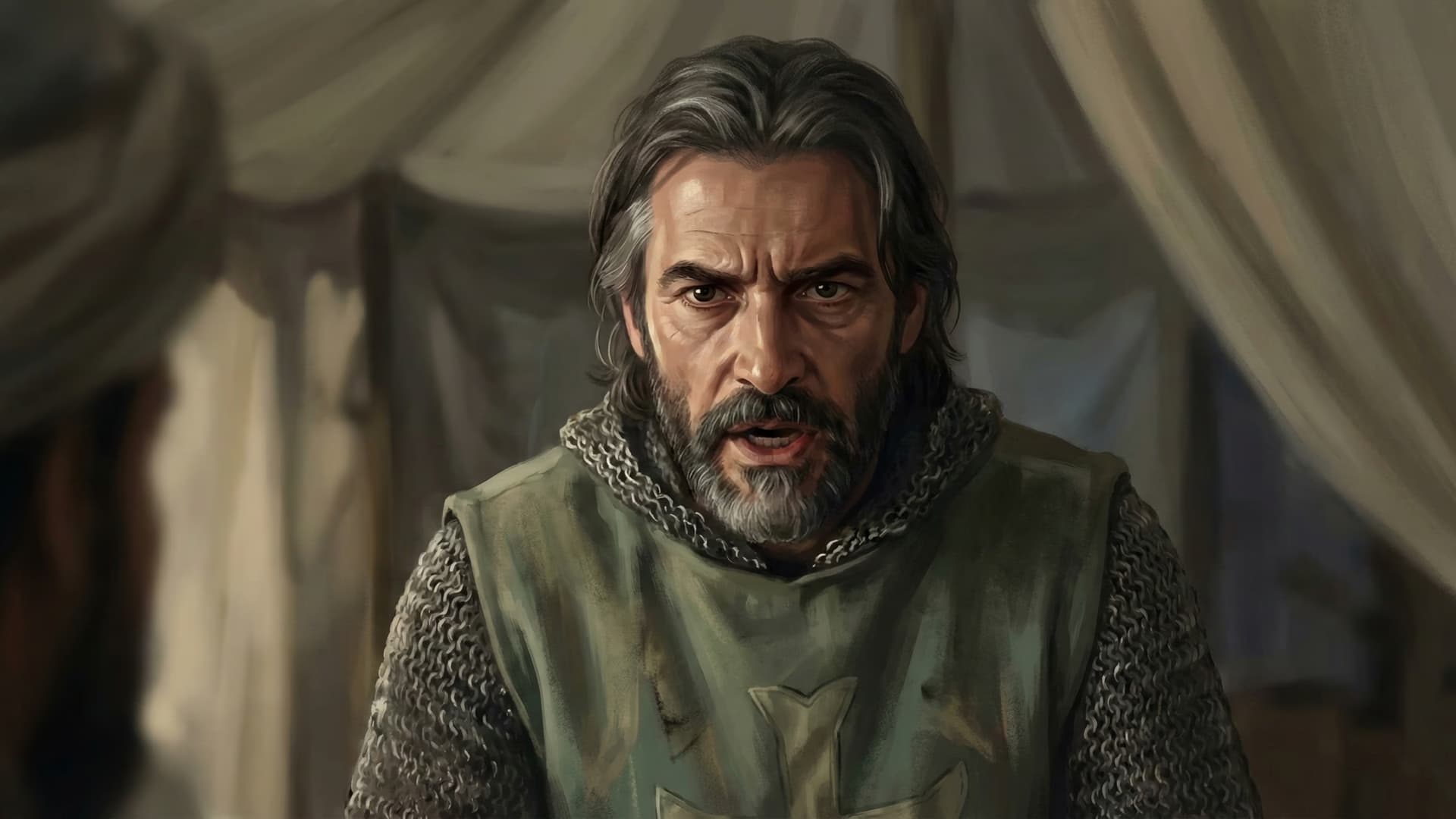
Balian didn't waste it.
"If you won't give us terms," he said, "then hear what we'll do. We'll kill every Muslim prisoner we hold--all five thousand of them. We'll destroy the Dome of the Rock and the Al-Aqsa Mosque, stone by stone. We'll slaughter our own families so you can't take them as slaves. We'll burn every treasure in the city and tear down every building. And then we'll come out and fight until the last man falls."
He let that hang in the air.
"You'll be king of rubble and corpses. Nothing else."
Saladin's face changed. This wasn't what he wanted. He hadn't spent ten years waiting for Baldwin to die just to rule over ashes. The Al-Aqsa Mosque was the whole point--the third holiest site in Islam, held by Christians for almost a century. He needed it intact. He needed to walk through those doors as a liberator, not a conqueror of ruins.
Balian watched the calculation happen. Saladin wasn't moved by mercy. He was moved by mathematics.
The sultan agreed to negotiate.
The Price of Freedom
The terms were simple: pay a ransom or become a slave.
Ten dinars for a man. Five for a woman. One for a child. Everyone had forty days to raise the money.
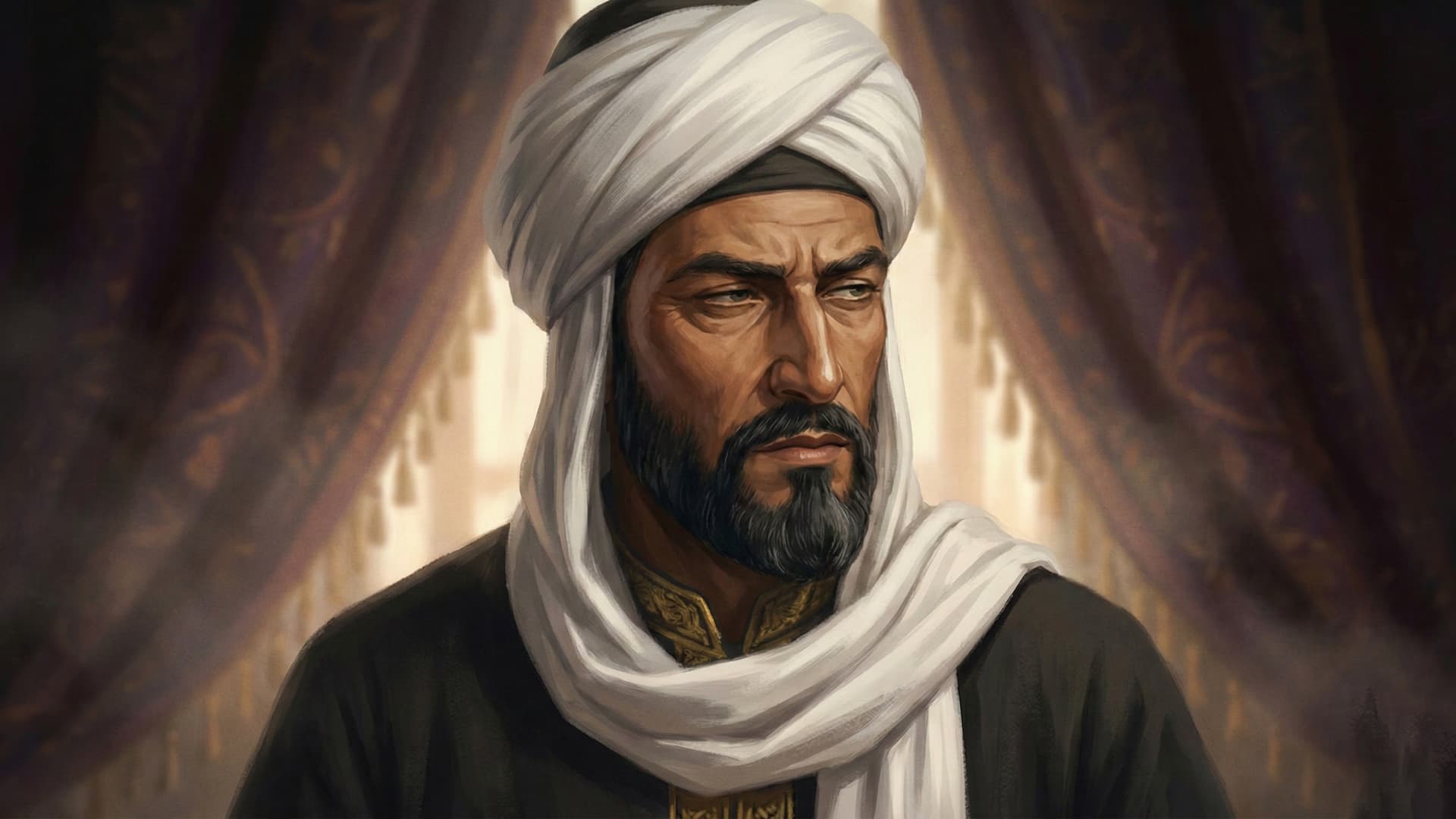
Balian told Saladin there were twenty thousand people in the city who could never pay that amount. Saladin shrugged. He knew. He'd set the price deliberately.
They haggled. Balian scraped together thirty thousand dinars from the city treasury--money that King Henry II of England had deposited with the Knights Hospitaller for a crusade he never came on. It would buy freedom for seven thousand paupers. Maybe eighteen thousand, depending on how you counted.
That still left fifteen thousand people who couldn't pay.
Balian offered himself as a hostage. Patriarch Heraclius offered himself. Saladin refused. He didn't want hostages. He wanted slaves.
The forty days began.
The Exodus
What happened next is what Saladin's admirers don't like to talk about.
Fifteen thousand Christians--seven thousand men, eight thousand women and children--were marched out of Jerusalem in chains. They had lost everything: their homes, their possessions, their families. Now they lost their freedom.
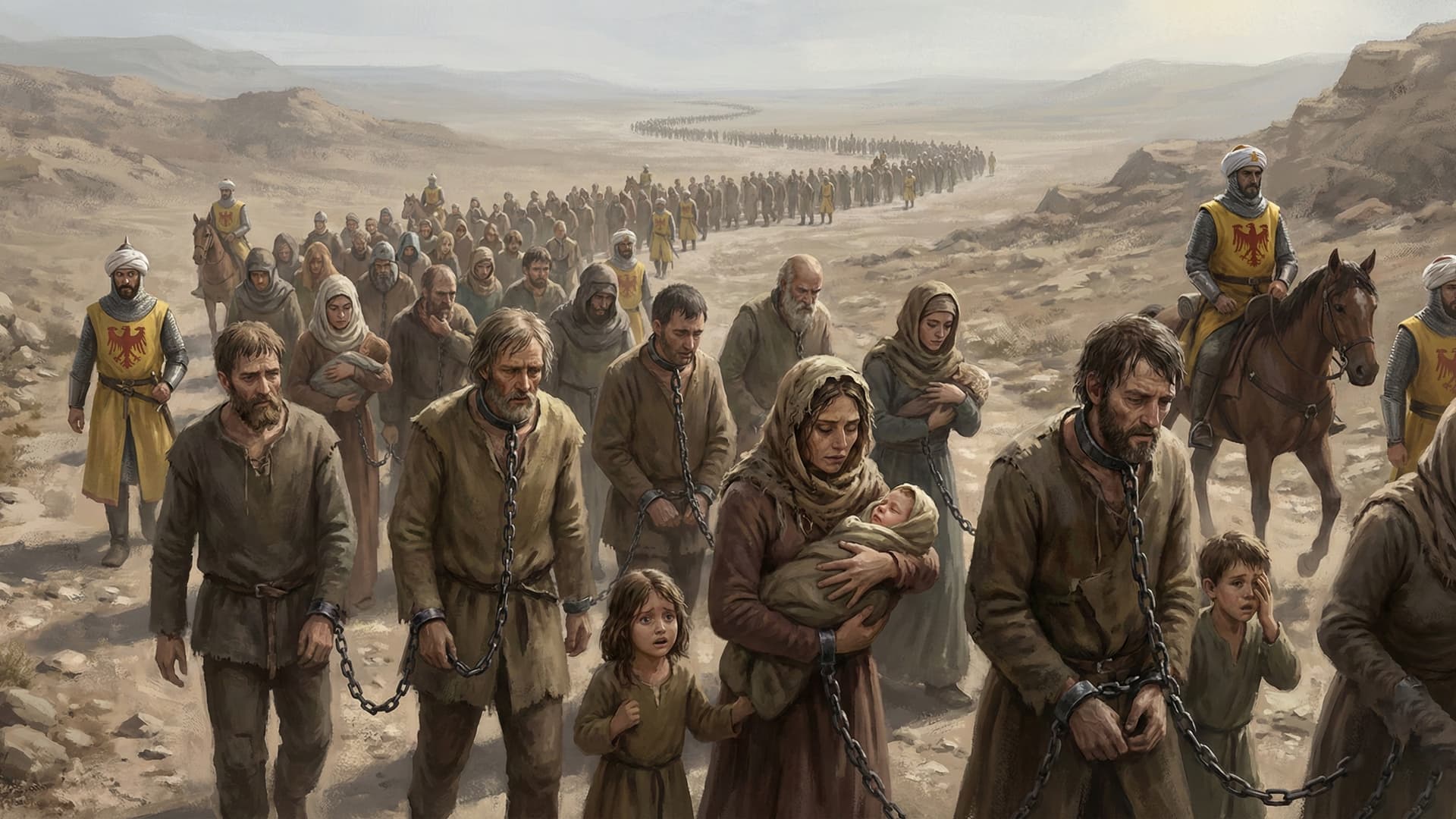
The columns stretched for miles. Women carried infants. Old men stumbled on the rocky roads. Muslim soldiers walked alongside them, counting inventory.
Some were freed. Saladin's brother al-Adil asked for a thousand slaves as a "reward for his service" and immediately released them. Heraclius negotiated seven hundred free. Balian got five hundred. Saladin himself freed the elderly who couldn't march.
These acts of mercy were recorded by chroniclers. They made Saladin look noble.
What the chroniclers spent less time on: the other fifteen thousand. The ones who weren't lucky enough to catch a general's eye. The ones who simply disappeared into the slave markets of Damascus and Cairo and were never heard from again.
And then there was Patriarch Heraclius.
The spiritual leader of Jerusalem paid the ten-dinar ransom for himself and a few servants. Then he loaded his wagons with treasures from the churches--gold chalices, silver plates, rare carpets, holy relics. Muslim chroniclers estimated the value at two hundred thousand dinars.
Two hundred thousand dinars. Enough to free twenty thousand slaves.
Heraclius rode out of Jerusalem past columns of the poor being marched into slavery. He did not stop. He did not look.
The Conqueror's Prayer
On October 2, 1187--a Friday, deliberately chosen--Saladin entered Jerusalem.
It was the 27th of Rejeb on the Islamic calendar: the anniversary of the Prophet's night journey to the city. Saladin had planned this for years. Every detail was symbolic.
His soldiers removed the toilets and grain stores the Crusaders had installed in the Al-Aqsa Mosque. They covered the floors with precious carpets. They scented the air with rosewater and incense. They tore down the Crusader cross.
For the first time in eighty-eight years, the call to prayer echoed from the Temple Mount.
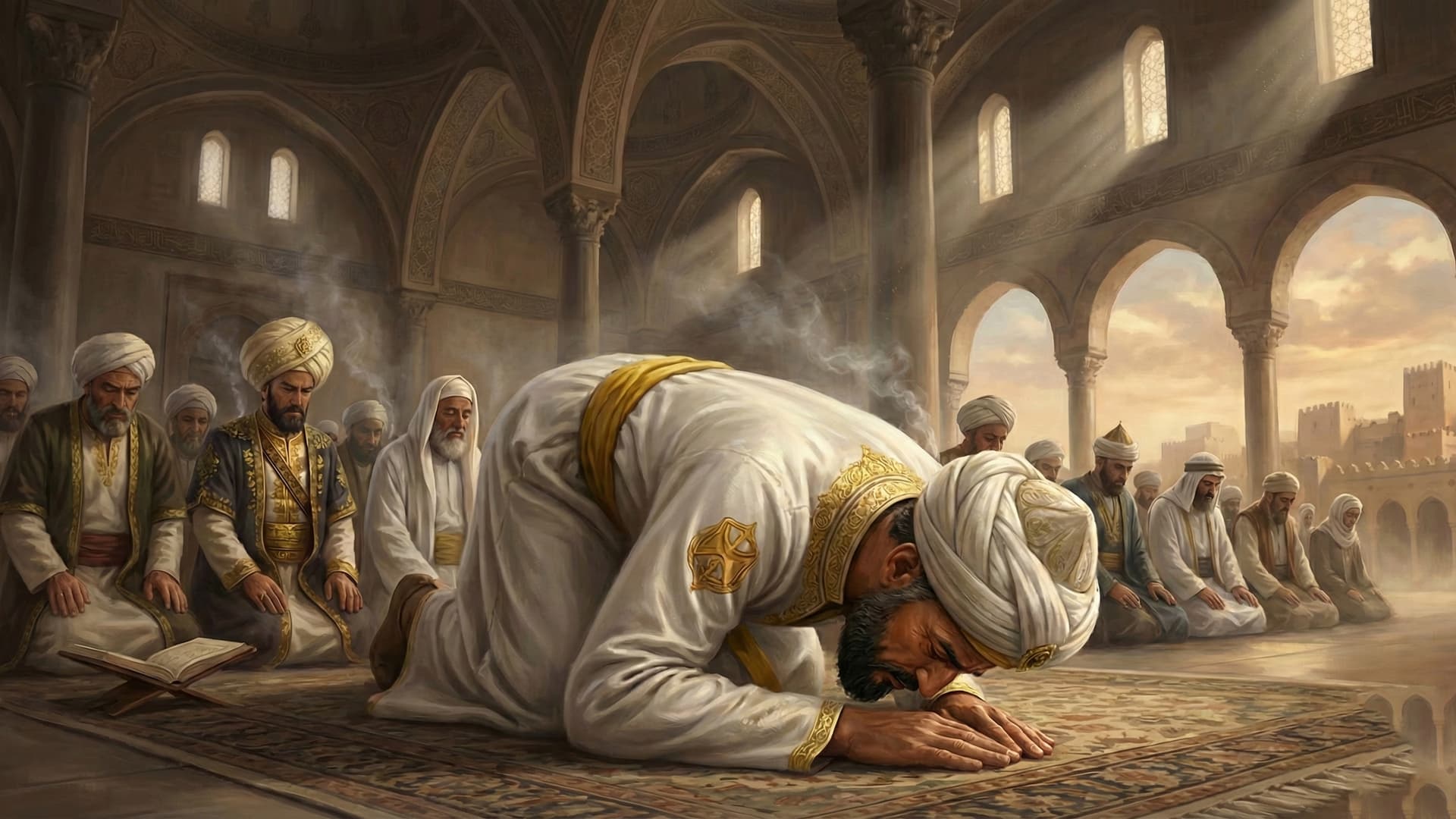
Saladin walked into the mosque surrounded by his generals, his chroniclers, his holy men. There was a competition for who would deliver the first sermon. Everyone wanted to be part of history.
And in a sense, they were right. This was the moment Saladin had waited his entire life for. The moment he had watched Baldwin die for. The moment he had let fifteen thousand people march into slavery for.
He knelt on the carpets and prayed.
The Ghost
The chroniclers wrote about Saladin's mercy. They compared him to the Crusaders of 1099, who had waded through blood up to their ankles. They praised his restraint, his honor, his magnanimity.
They were right about the comparison to 1099. The First Crusade had massacred tens of thousands--Muslims and Jews slaughtered in the streets, burned alive in synagogues. Saladin didn't do that.
But mercy isn't measured against a massacre. It's measured against what you could have done instead.
Saladin could have freed everyone. He had two hundred thousand dinars walking out the gate with Heraclius. He had generals volunteering to buy slaves just to release them. He had the power to be remembered as a liberator.
Instead, fifteen thousand people lost their freedom so he could keep his victory profitable.
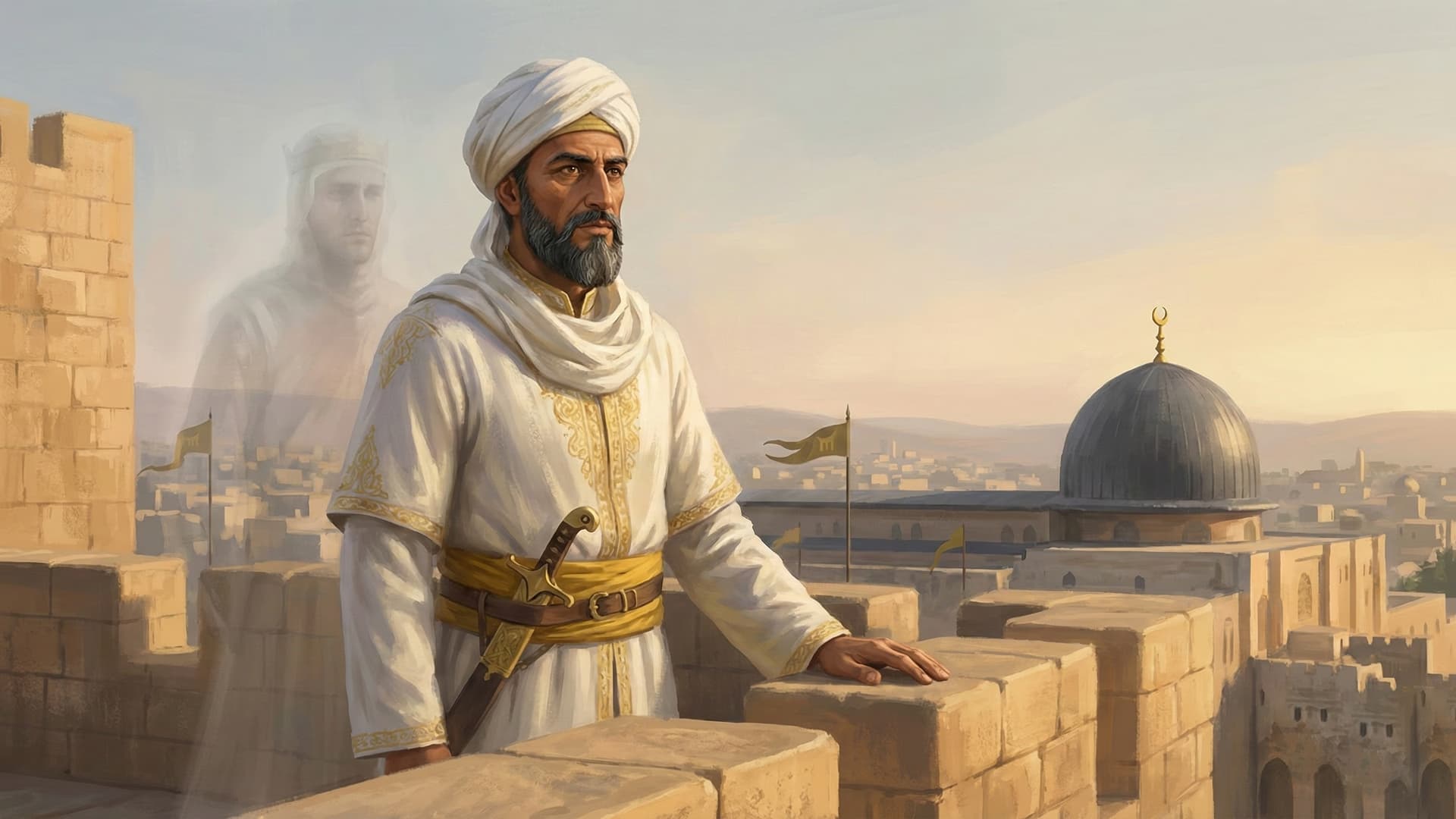
Meanwhile, a leper's ghost haunted every street.
For ten years, Baldwin IV had held these walls with a body that was falling apart. He had ridden into battle when he couldn't walk. He had issued commands when he couldn't see. He had never stopped fighting, not once, not until his heart finally gave out.
Saladin had waited. Healthy, powerful, patient--he had simply waited for a dying boy to die.
The walls fell two years after Baldwin drew his last breath. Not because Saladin was stronger. Because Baldwin was gone.
That's the truth they don't put in the chronicles. Saladin didn't conquer Jerusalem. He outlived the only man who could stop him.
The leper king fought until his body betrayed him. The sultan just waited. That's the difference between them.
And fifteen thousand slaves paid the price.