The Unfinished Corpse
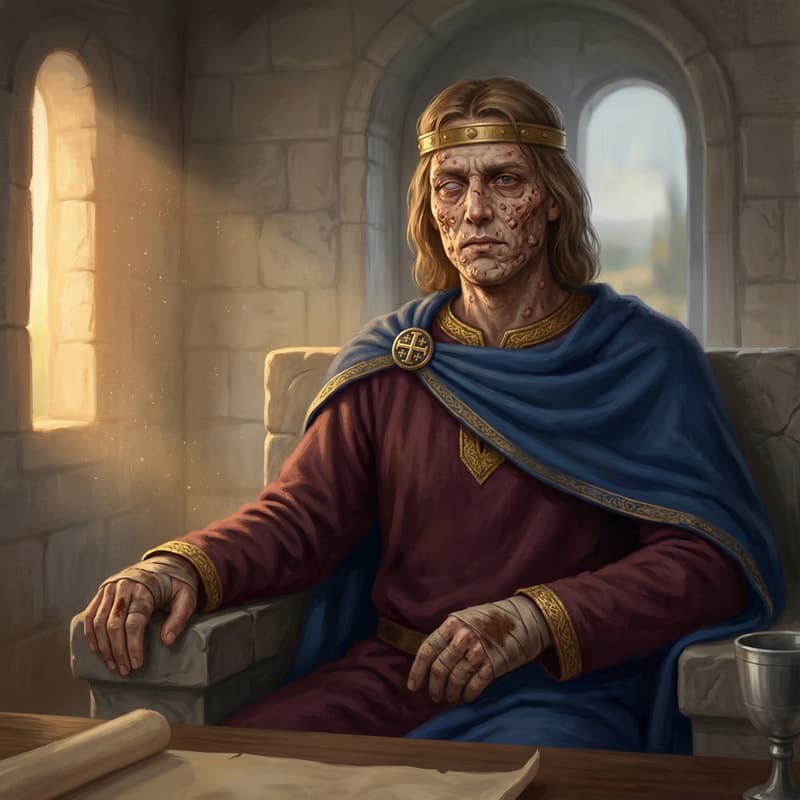
November, 1183. A king lies strapped to a litter slung between two horses, his body wrapped in bandages soaked through with pus and blood. He cannot see--his eyes have gone milky and useless. He cannot walk. He cannot grip a sword or pull the reins of a horse. The smell of his rotting flesh announces his presence before any herald could.
And yet Saladin, the most powerful sultan in the Islamic world, is retreating.
Six years earlier, this same king destroyed Saladin's invasion force at Montgisard, sending him fleeing back to Egypt with a tenth of his army. Since then, Saladin has invaded again and again. He has won battles. He has razed fortresses. He has killed thousands of crusaders.
But Jerusalem still stands. And this dying boy is the reason.
Saladin's scouts watched from the ridgeline as the litter disappeared into the dust. They had their orders: report when the leper finally stops breathing. Until then, there was nothing to do but wait.
The Unraveling
Baldwin had been dying since he was nine years old. By the time he turned eighteen, the leprosy had moved from secret to spectacle--his hands curling, his face beginning to disfigure, the numbness spreading like a tide that would eventually drown everything.
But he could still ride. He could still fight. He could still win.
Then came Marj Ayyun.
June 1179. Baldwin's scouts had found Saladin's raiding party returning with plunder near the Litani River. It should have been a simple interception--catch them loaded down with loot, cut them apart, ride home in triumph.
The Templars struck first, scattering the raiders. The crusaders relaxed their formation, sensing victory.
They didn't see Saladin's main force until it was already among them.
Subscribe to Nightfall History on YouTube
Join our community on YouTube for more historical deep dives and visual storytelling
The sultan had held back his heavy cavalry, waiting for exactly this moment. They crashed into the disorganized crusaders like a hammer striking glass. Knights went down screaming. The Templar Grand Master was dragged from his horse and hauled away in chains.
Baldwin was unhorsed in the chaos. He hit the ground hard, armor clanging against stone. He tried to push himself up, but his arms wouldn't respond. The leprosy had stolen the strength from his hands. He couldn't grip anything--not the ground, not his shield, not the reins of his horse standing three feet away.
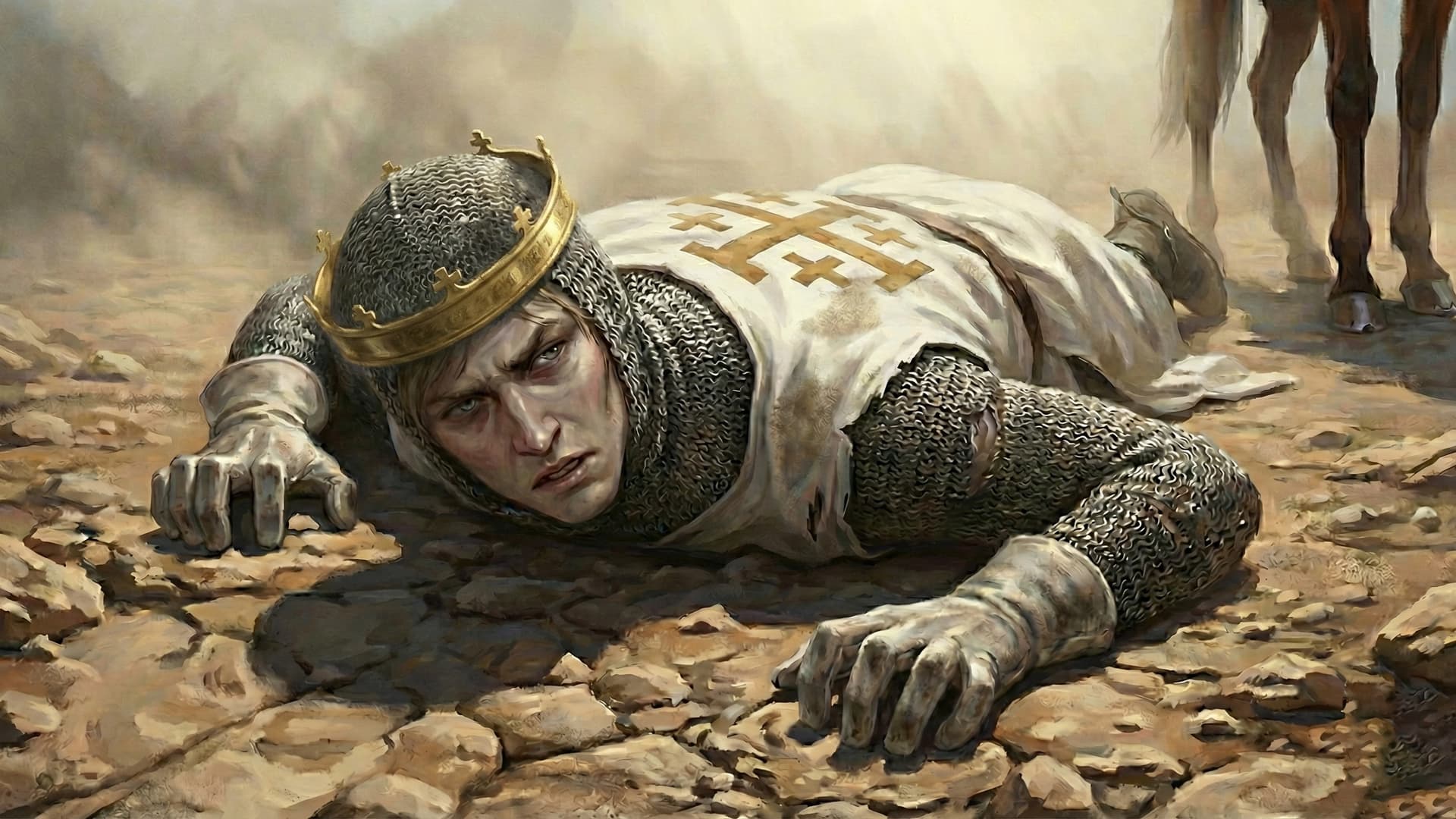
A Frankish knight spotted him, dismounted, and hauled the king across his shoulders like a sack of grain. He carried Baldwin off the field while their army shattered around them.
That night, safe in Beaufort Castle, Baldwin stared at his hands--at what was left of them. The numbness had spread. His fingers were curling inward, the muscles atrophying. He was nineteen years old, and he had just learned what his body could no longer do.
The Ford
Two months later, Saladin came for Jacob's Ford.
Baldwin had built the castle himself--or rather, had ordered it built, had watched it rise stone by stone on the only crossing of the upper Jordan for fifty miles. It was supposed to be the lock on Jerusalem's northern door. Saladin had offered sixty thousand dinars to stop construction. Then a hundred thousand. Baldwin refused both.
Now the sultan's sappers were tunneling beneath its walls.
The siege lasted six days. On the final morning, fire roared through the tunnel supports, and the northeastern tower collapsed into a screaming avalanche of stone and men. Saladin's soldiers poured through the breach.
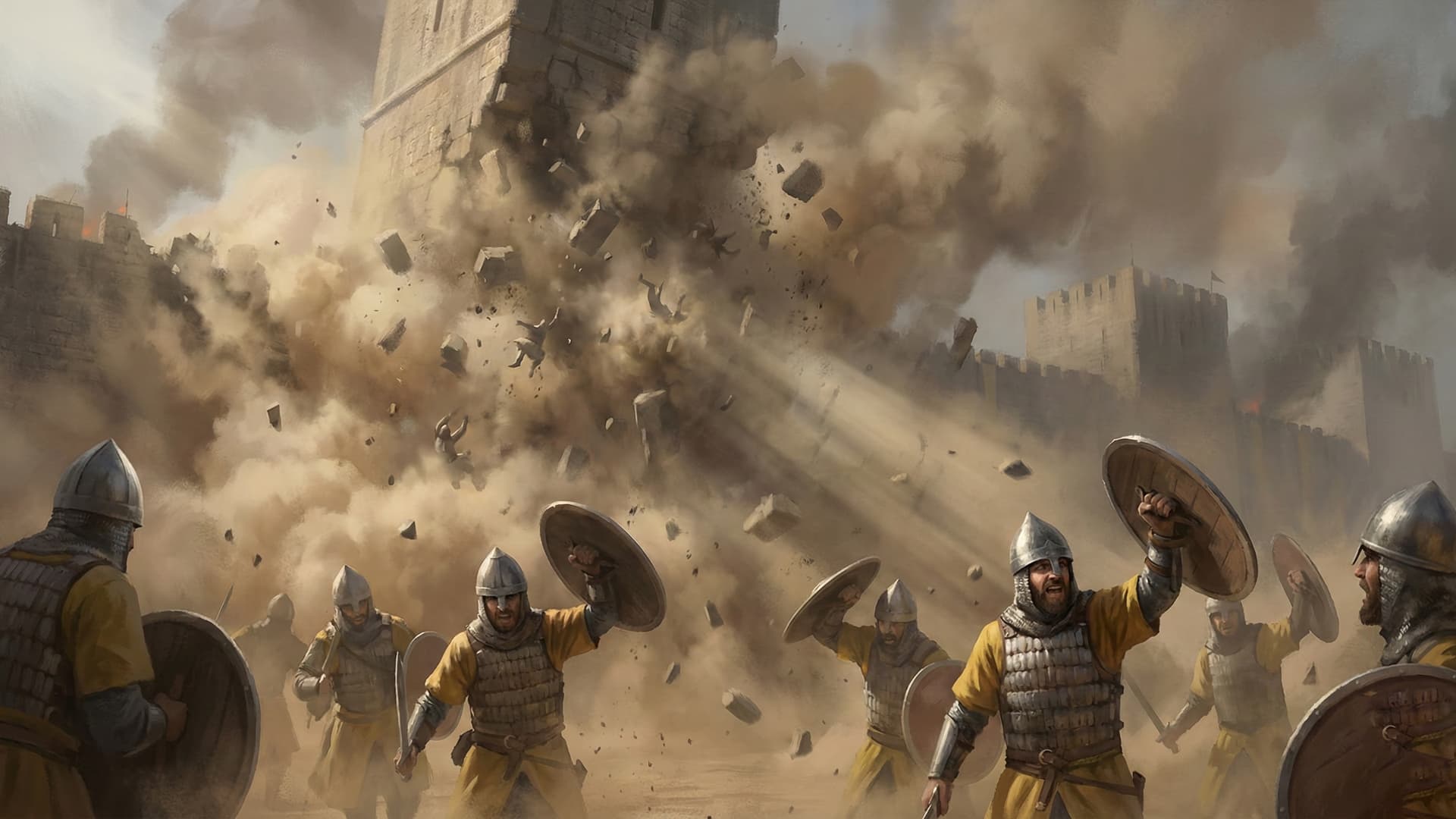
Eight hundred defenders died in the rubble. Seven hundred more were dragged into slavery, stumbling through the smoke in chains. The elite Templar garrison--the men Baldwin had trusted to hold the door--made their last stand in the inner courtyard. They fought until the stones were slick with blood, and then they died.
When it was over, Saladin walked through the ruins personally. He helped his men tear out the foundation stones with his own hands. He ordered the corpses thrown into the castle's cistern--eight hundred bodies rotting in the water supply, a message to anyone who thought of rebuilding.
The lock on Jerusalem's door had been ripped from its hinges.
The Paradox of Defeat
Anyone watching from outside would have assumed the Kingdom of Jerusalem was finished. Baldwin couldn't mount a horse. His hands were rotting. His face was beginning to disfigure. Every faction in his court was positioning for the succession, certain he would be dead within months.
Saladin knew better than to believe it.
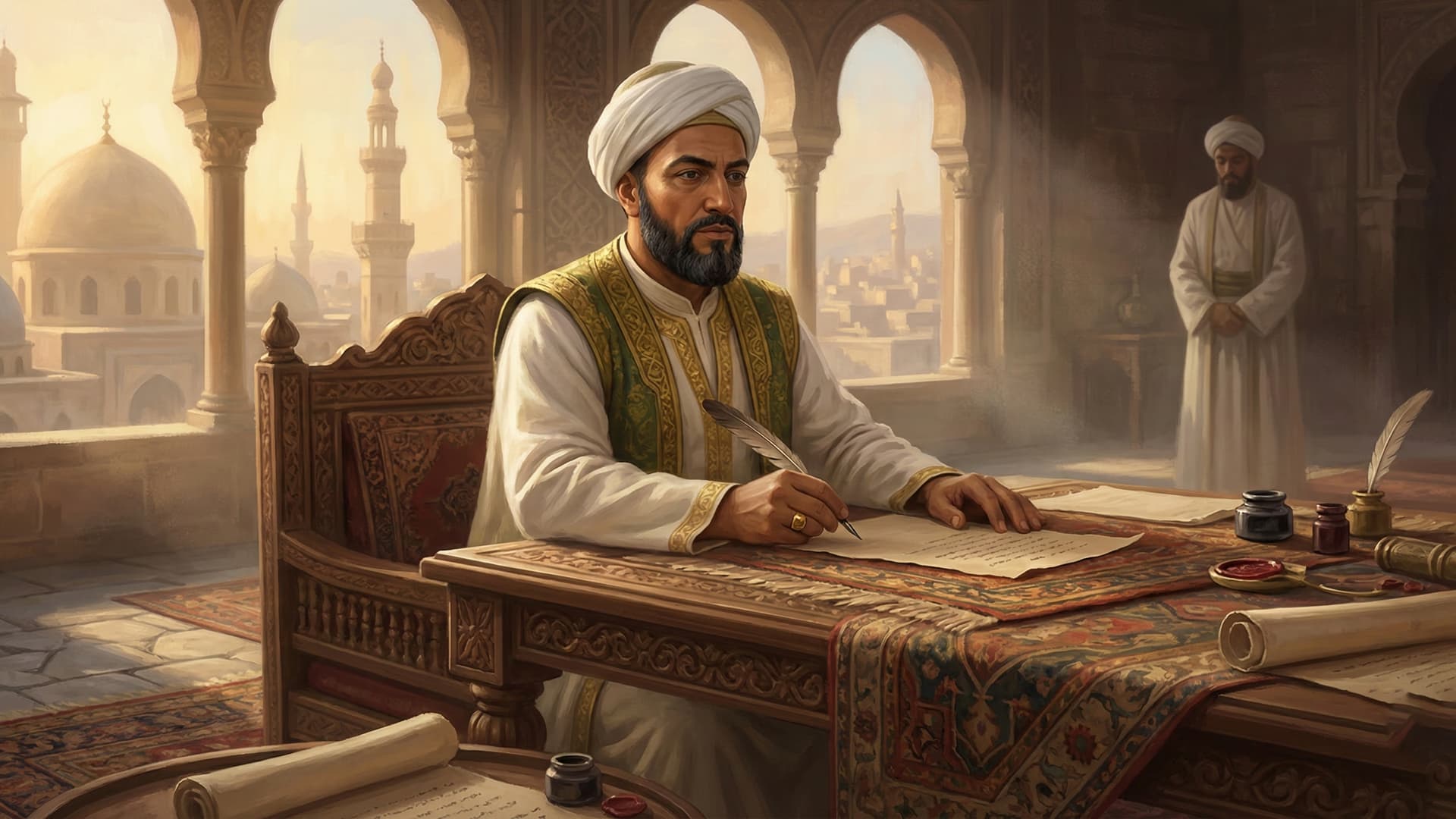
In 1180, the sultan signed a truce. He needed time to consolidate his conquests in Syria and Mesopotamia, to absorb Aleppo and a dozen other cities into his empire. The leper king was contained. Jerusalem could wait.
But Baldwin wasn't contained. He was learning.
The defeat at Marj Ayyun taught him something that would keep Jerusalem safe for five more years: he couldn't fight Saladin the way his predecessors had. He couldn't lead cavalry charges or duel enemy champions. His body had closed those doors forever.
So he found other doors.
Stay in the Loop
Get notified when new articles and videos drop. Unsubscribe anytime.
The Mind Against the Sword
July, 1182. Saladin crossed the Jordan with the largest invasion force he had assembled since Montgisard. His cavalry spread across the Christian lowlands, burning crops, slaughtering livestock, driving refugees toward the coastal cities.
Baldwin gathered his army at Belvoir Castle to intercept. He could no longer ride a horse--servants carried him in a covered litter. He could no longer hold a sword--his commanders translated his gestures into orders. He could barely speak above a whisper.
But his mind was sharper than ever.
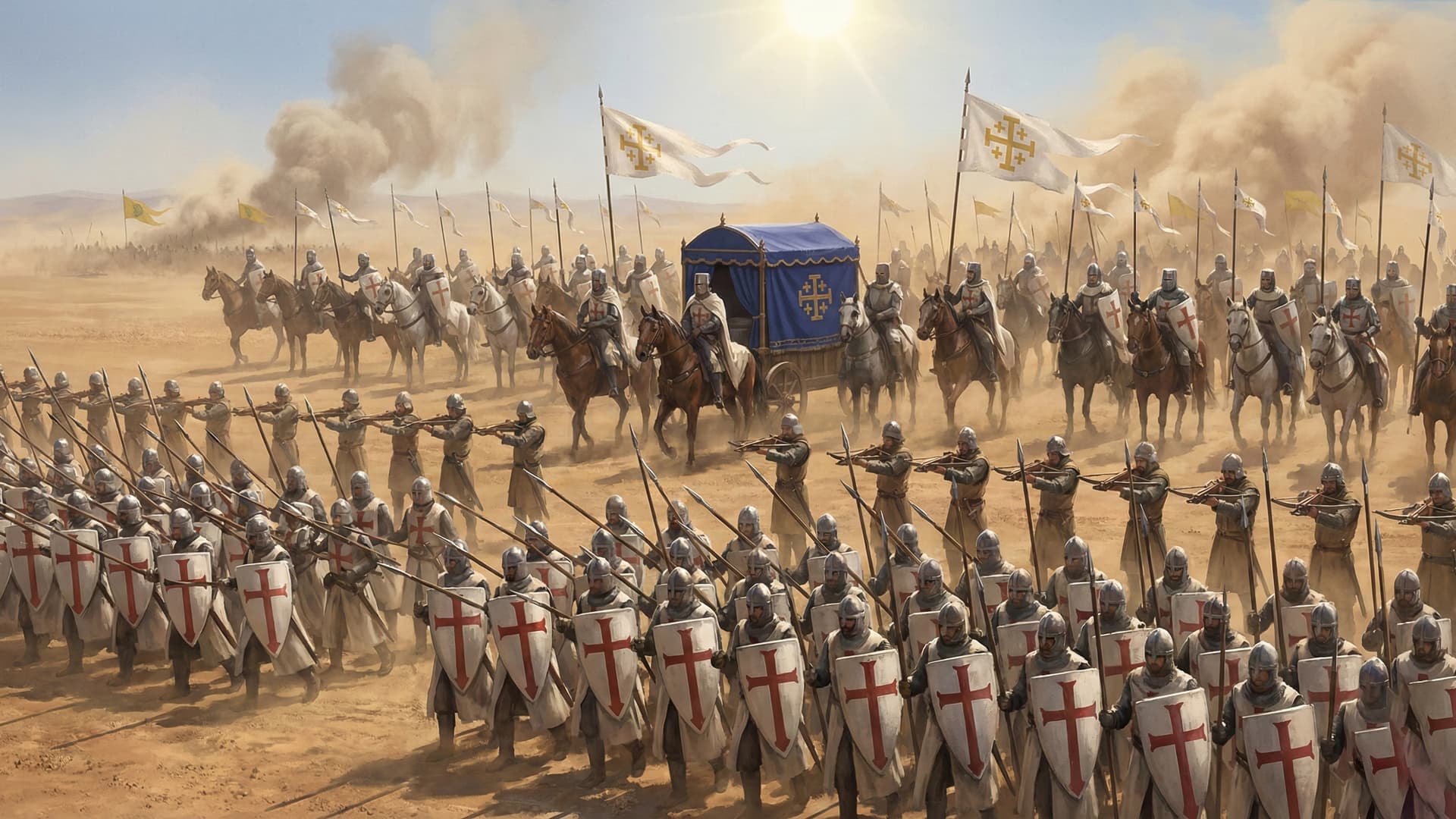
When Saladin's army appeared, the crusaders advanced in their traditional formation: infantry in close order, archers keeping the Muslim horse archers at distance, cavalry waiting behind the shield wall for the moment to strike. Baldwin had drilled this formation until his men could execute it in their sleep.
The heat that day was brutal. Men collapsed from sunstroke on both sides--William of Tyre would later note that as many died from the sun as from enemy steel. But the crusaders held their formation. They advanced when Baldwin ordered them to advance. They halted when Baldwin ordered them to halt. They never broke.
Saladin probed their lines for hours, looking for the weakness that had let him triumph at Marj Ayyun. He found nothing. The leper king had learned his lesson.
When evening came, Saladin pulled back across the Jordan. He hadn't lost the battle--but he hadn't won it either. And the crops he'd burned, the villages he'd sacked--none of it mattered if he couldn't destroy the army defending them.
The crusaders returned to their strongholds intact. Baldwin was carried back to Jerusalem on his litter, his useless hands folded across his chest, his face hidden behind gauze.
He had stopped the invasion without swinging a single sword.
The Shadow War
The following year, everything fell apart--not because of Saladin, but because of Baldwin's own court.
His sister Sibylla had married a Frankish adventurer named Guy de Lusignan. Baldwin had initially supported the match, hoping Guy would provide the military leadership the kingdom needed when the king's body finally failed completely.
He was wrong.
Guy was handsome, confident, and catastrophically stupid. The barons of Jerusalem despised him. Raymond of Tripoli, the most powerful lord in the kingdom, refused to serve under his command. Even Baldwin's own mother worked against her son-in-law.
And Baldwin's body had finally passed the point of no return.
By the summer of 1183, he was blind. His feet were covered in ulcerations that wept constantly through their bandages. He could no longer walk at all. The smell of his decay was so powerful that courtiers held perfumed cloths over their faces when they approached his throne.
Desperately, he appointed Guy as regent. It was a mistake.
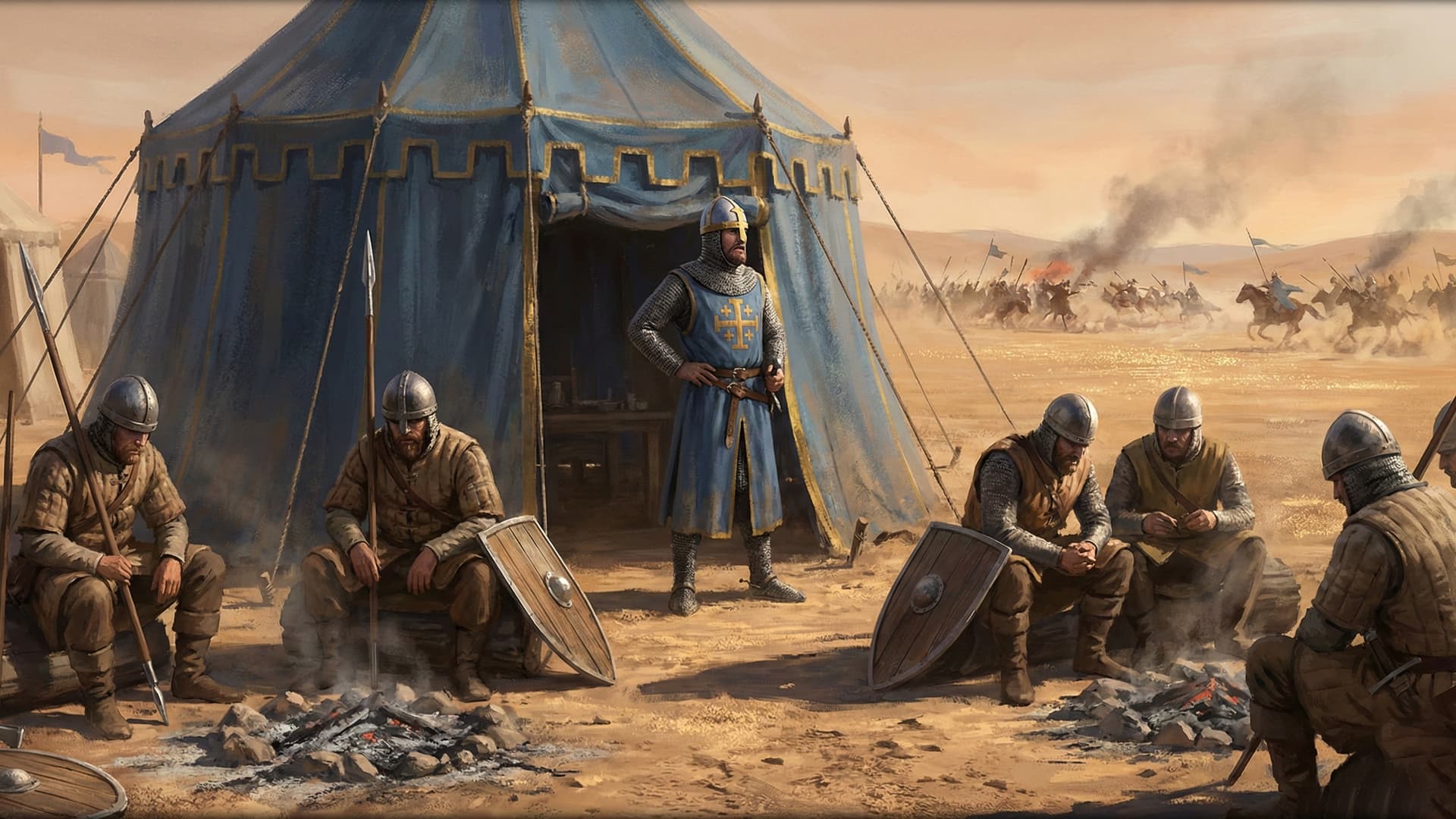
When Saladin invaded that autumn, Guy assembled the army--and then refused to fight. He marched his forces to the frontier, made camp within sight of the enemy, and did nothing. For weeks, the two armies stared at each other across the plain while Saladin's raiders burned everything they could reach.
The barons were furious. Several threatened to withdraw their forces entirely rather than serve under Guy's paralyzed command.
The Litter Rides to War
That November, Saladin struck at Kerak.
The castle belonged to Raynald de Chatillon, a reckless warlord whose Red Sea raids had nearly provoked a holy war by threatening Mecca itself. Saladin had sworn to kill Raynald personally--and now he had the perfect opportunity. The castle was hosting a wedding. Half the nobility of Jerusalem was trapped inside.
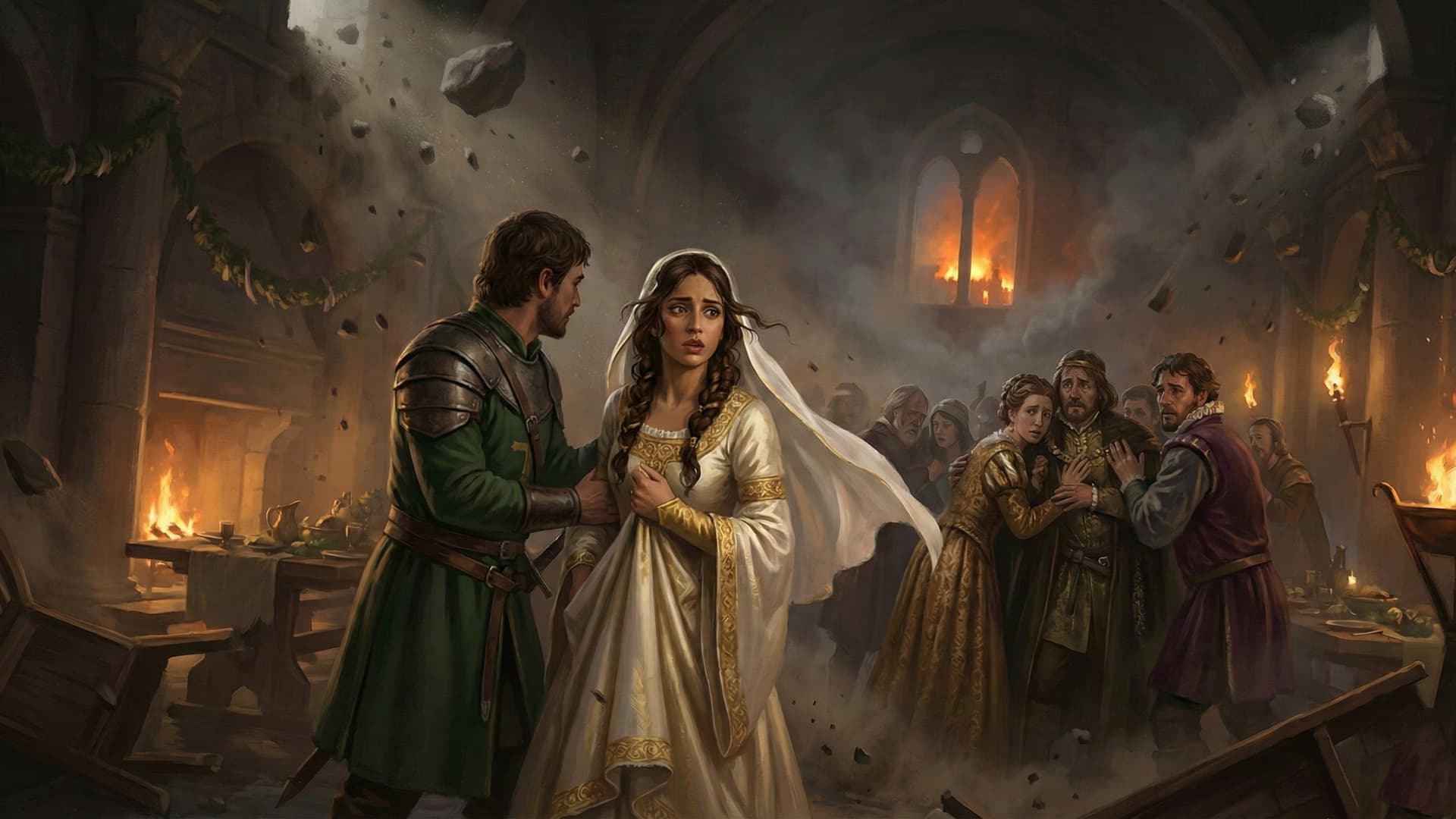
Baldwin heard the news in Jerusalem. He was blind, paralyzed, rotting alive--and he ordered his army to march.
A beacon was lit on the Tower of David. The signal fire that told every crusader stronghold in the kingdom: the king rides to war.
They strapped Baldwin to a litter slung between two horses. They wrapped his ruined body in clean bandages and propped him upright so the men could see him. He couldn't see them--would never see anything again--but they could see him. And that was enough.
The army that assembled was larger than anyone expected. Lords who had refused to serve under Guy rode to join their king. Knights who had been negotiating surrender terms with Saladin's emissaries suddenly remembered their oaths. The dying boy on the litter had accomplished what the healthy regent could not.
The march to Kerak should have taken four days. Baldwin's commanders pushed for three, driving the column through the night, knowing that every hour mattered. Saladin's siege engines were already battering the walls. Inside the castle, the wedding feast had become a wake--guests listening to stones crash against the towers while they waited to learn if they would be ransomed or killed.
On the second night, outriders reported movement on the southern ridge. Saladin had sent a screening force to delay any relief column--five hundred cavalry, enough to pin Baldwin's army in the passes while the siege continued.
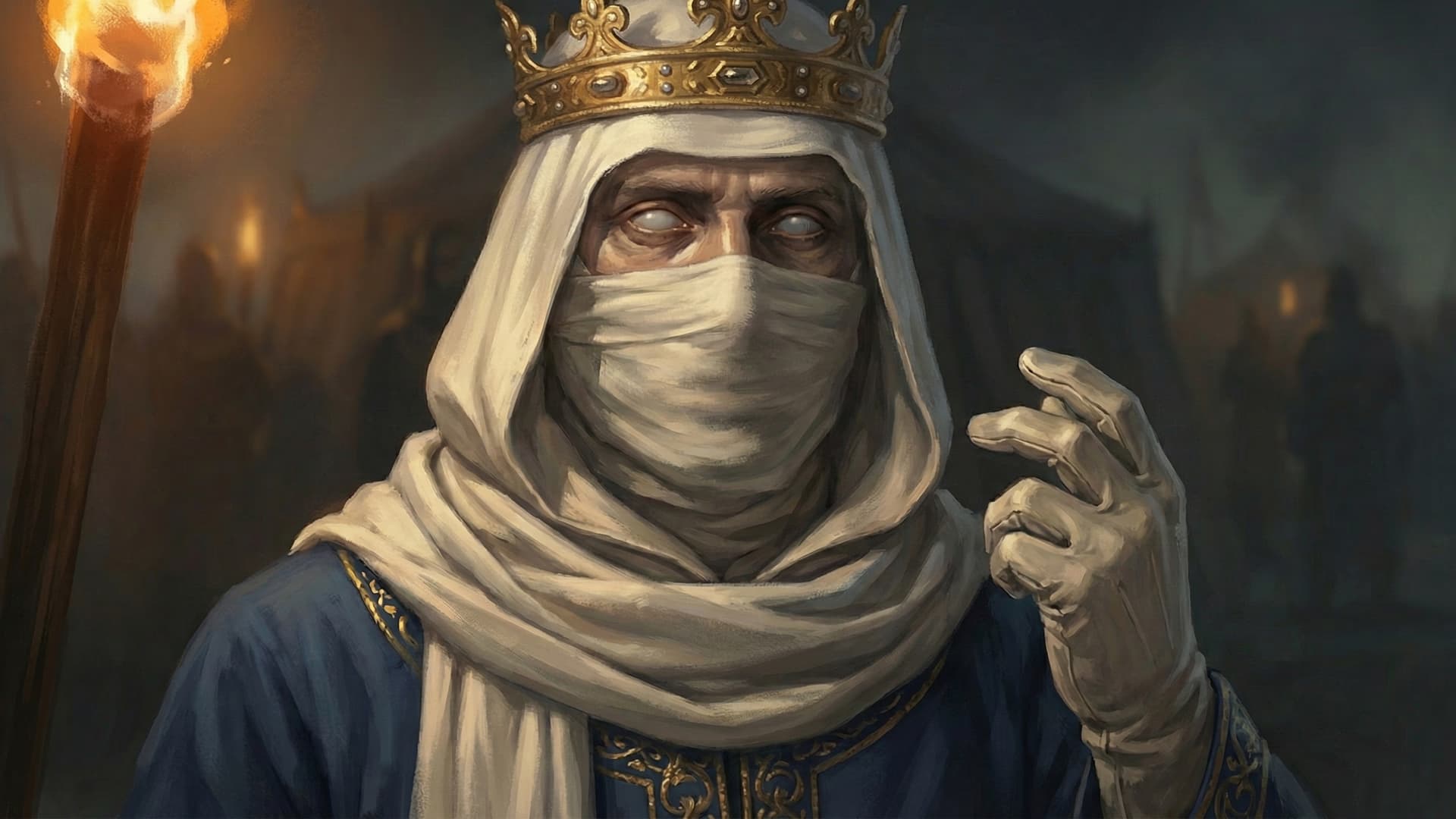
Baldwin couldn't see the tactical map his commanders spread before him. He couldn't point to positions or trace routes with his finger. But he could listen. And he could think.
"Split the vanguard," he ordered. "Send the Templars wide around the eastern slope. When the screening force commits to block our main column, the Templars hit their flank. They'll break or they'll die. Either way, we don't stop moving."
It worked. The Templars swept around the ridge under cover of darkness, and when Saladin's cavalry charged the main column at dawn, they found themselves caught between two forces. The screening force scattered. Baldwin's army pushed through.
When Saladin's scouts reported that Baldwin was personally leading the relief force--that the leper king had somehow survived the march and broken through the screen--the sultan ordered the siege lifted immediately. He would not be caught between the walls of Kerak and the army of a king who had already beaten him once.
The crusaders found the siege lines abandoned. Kerak was saved. The wedding guests stumbled out into the daylight, weeping with relief.
Baldwin was carried back to Jerusalem in triumph. He never saw it.
The Last Maneuver
In the months that followed, Baldwin dismantled Guy's power piece by piece. He stripped him of the regency. He crowned his five-year-old nephew as co-king to block Guy from the succession. He tried repeatedly to annul his sister's marriage.
Guy responded by barricading himself in Ascalon and refusing Baldwin entry. The king--blind, paralyzed, carried on a litter by servants--was forced to knock ceremonially on the gates of his own city while his treasonous brother-in-law watched from the battlements.
Baldwin couldn't storm the walls. His body was past even the pretense of military action. But he could still think. He installed new governors in the surrounding towns, cutting Guy off from his supporters. He appointed Raymond of Tripoli as regent in his place. He arranged for trusted men to control every lever of power in the kingdom.
If his body couldn't save Jerusalem, his mind would have to do it.
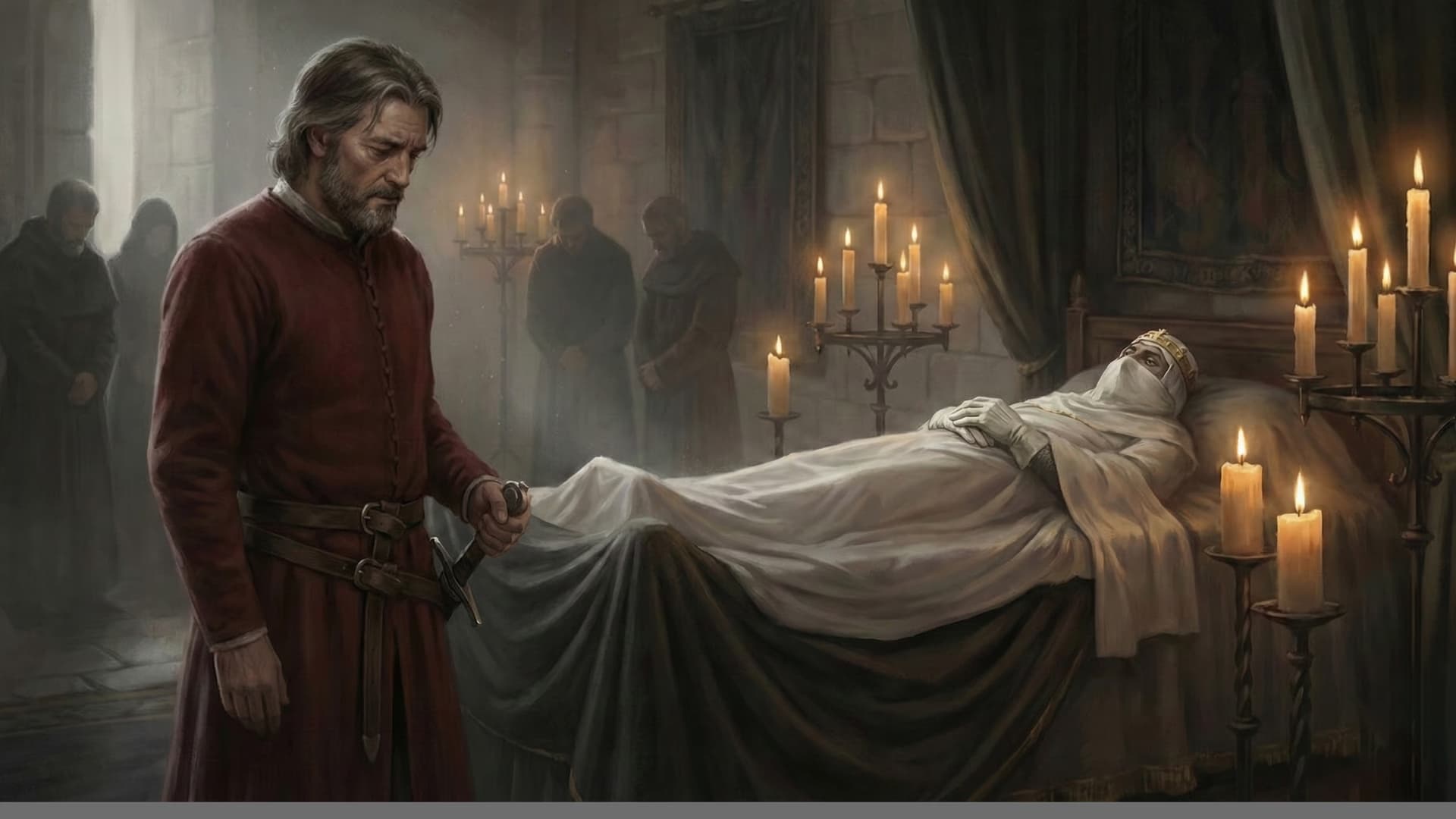
By early 1185, the fevers came constantly. The infections had spread everywhere. Baldwin could no longer eat without assistance. He drifted in and out of consciousness, issuing final orders in moments of lucidity, silent for hours or days at a time.
In March 1185--or perhaps a few weeks later, the chronicles disagree--Baldwin IV of Jerusalem finally died. He was twenty-four years old.
The Reckoning
Saladin waited.
He had been waiting for years. The leper king had defeated him, frustrated him, humiliated him--but he had also been visibly dying since the day they first met on the battlefield. Saladin knew that time was his ally. He knew that Baldwin's successors would be weaker. He knew that the court politics that Baldwin had barely controlled would tear the kingdom apart the moment his corpse was cold.
He was right.
Baldwin's nephew died the following year, not yet nine years old. Guy de Lusignan finally claimed the throne through his wife Sibylla. And in the summer of 1187, Guy made the exact mistake Baldwin had spent a decade avoiding.
Remember Guy's paralyzed command at the frontier in 1183--how he'd assembled the army and then refused to fight, letting Saladin's raiders burn the countryside while his men stood watching? This was the same instinct, inverted into catastrophe.
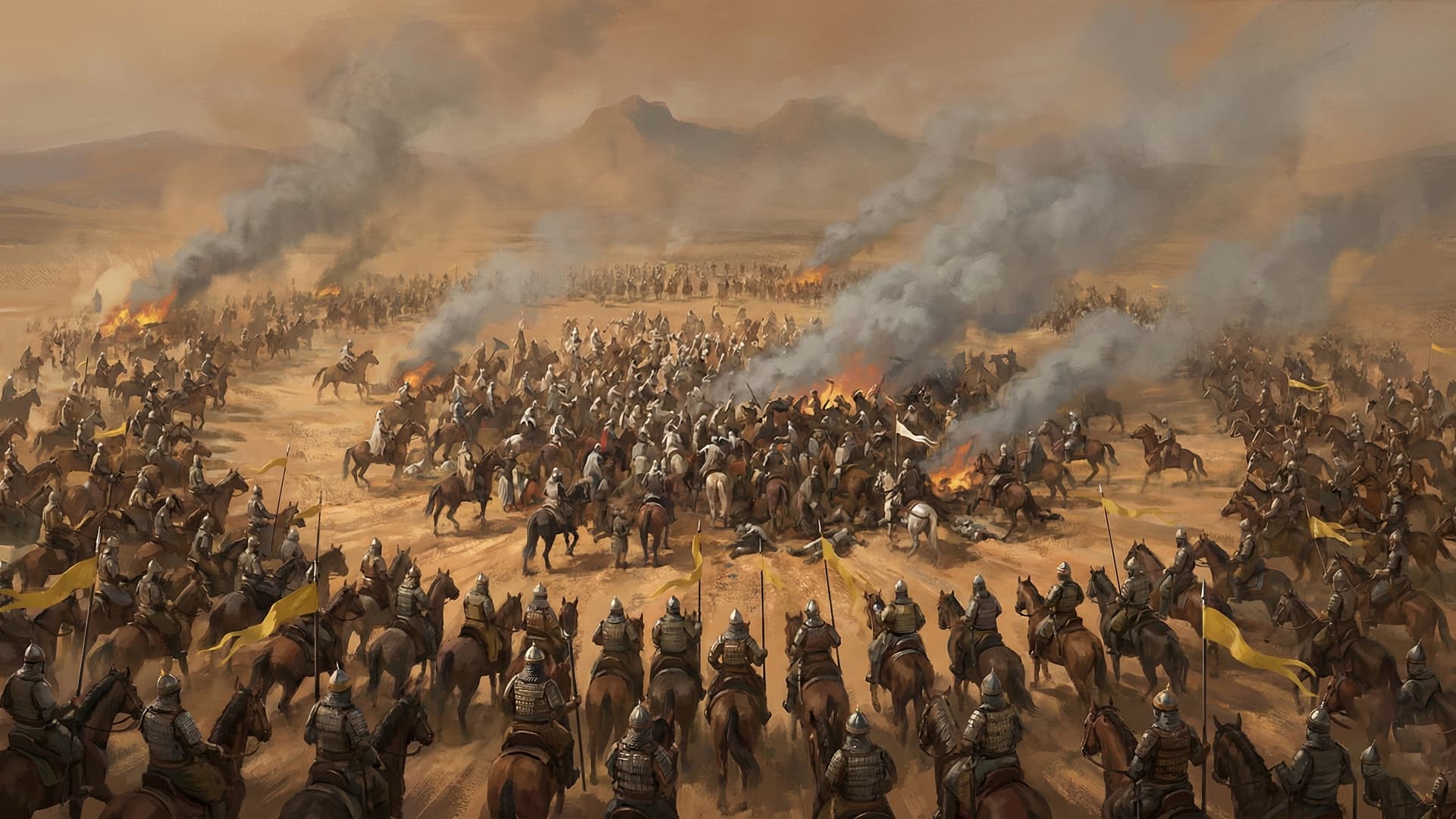
At the Horns of Hattin, Guy led the entire army of Jerusalem into a waterless wasteland, exactly where Saladin wanted them. No discipline. No formation. No plan except to march straight at the enemy and hope for the best. Everything Baldwin had learned at Marj Ayyun, everything he'd taught his commanders at Belvoir--Guy ignored all of it.
The sultan's cavalry surrounded the crusaders and destroyed them utterly. Nearly every knight in the kingdom was killed or captured. Guy himself was dragged from the field in chains--the same man Baldwin had tried so desperately to keep away from power.
Three months later, Jerusalem fell.
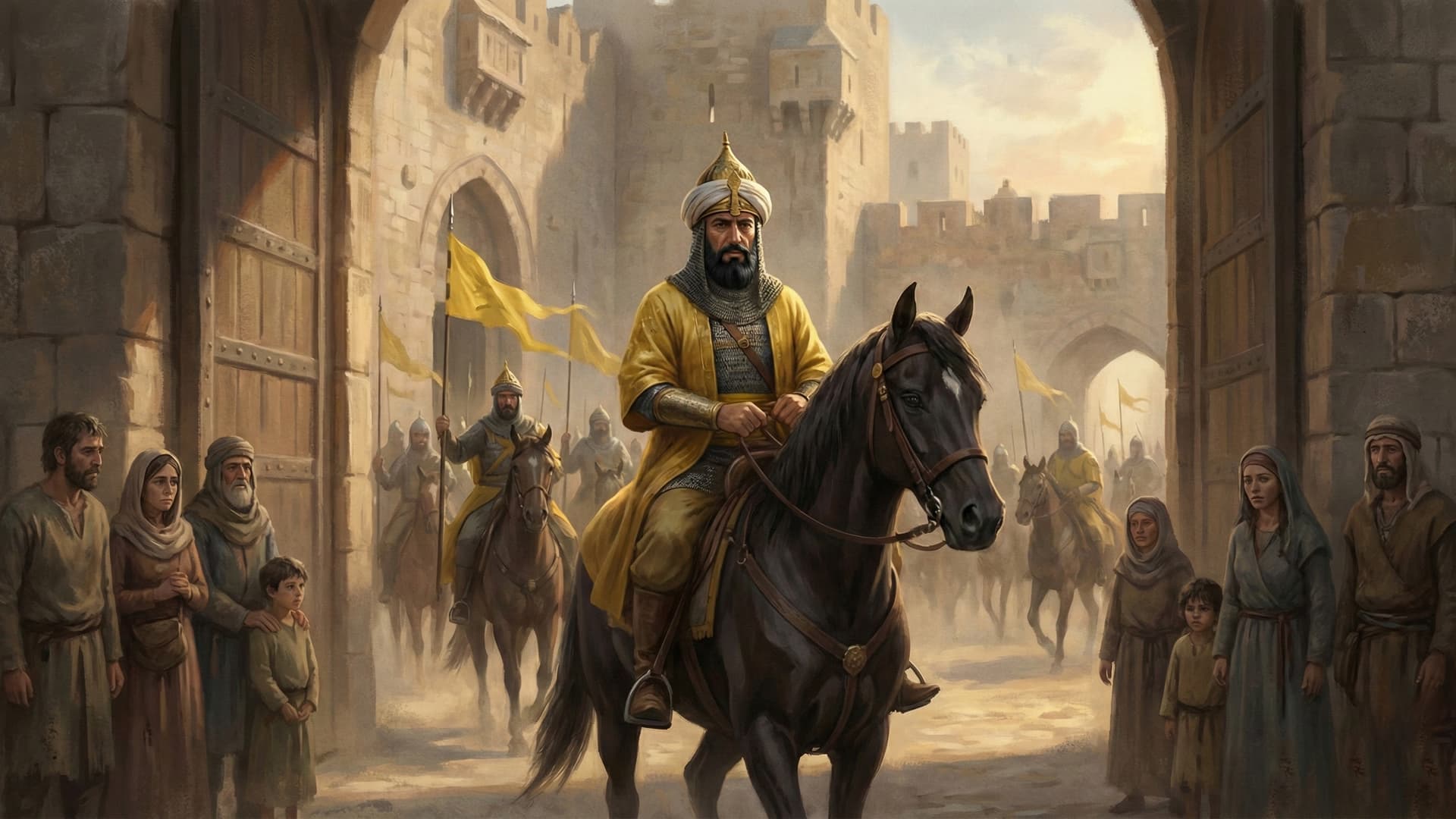
It had taken Saladin two years after Baldwin's death to accomplish what he couldn't achieve in ten years of trying against a blind, paralyzed boy who commanded his armies from a litter.
What Saladin Understood
The chronicles say that Saladin and Baldwin respected each other. Some sources claim Saladin sent his own physicians to treat the leper king. Others describe moments of chivalry exchanged across the battle lines--food sent during sieges, prisoners treated with unusual courtesy.
Whether these stories are true or embellished, they point to something real: Saladin recognized what he was fighting. Baldwin IV wasn't just an enemy commander. He was a problem that couldn't be solved by military force alone.
Every time Saladin invaded, the leper king found a way to stop him. Not always through victory--Baldwin lost battles, lost castles, lost thousands of men. But he never lost the war. He never gave Saladin the knockout blow that would break Jerusalem's defense forever.
And every year, Baldwin got weaker. His body surrendered more territory to the disease. His hands curled into useless claws. His eyes went dark. His flesh rotted on his bones while he was still using it.
Saladin could afford to wait. Baldwin could not.
That was the decade: a dying king racing against his own body while the most powerful sultan in the Middle East watched the clock run down.
Baldwin won every battle of that race except the last one. And even then, he bought Jerusalem two more years by making his nephew king and keeping Guy away from power as long as humanly possible.
It wasn't enough. In the end, nothing could have been enough.
But for one decade, against all logic and all evidence, a boy whose body was actively decomposing held the line against an empire.
The chronicles call him "the Leper King." Saladin probably had another name for him.
The one I couldn't kill.